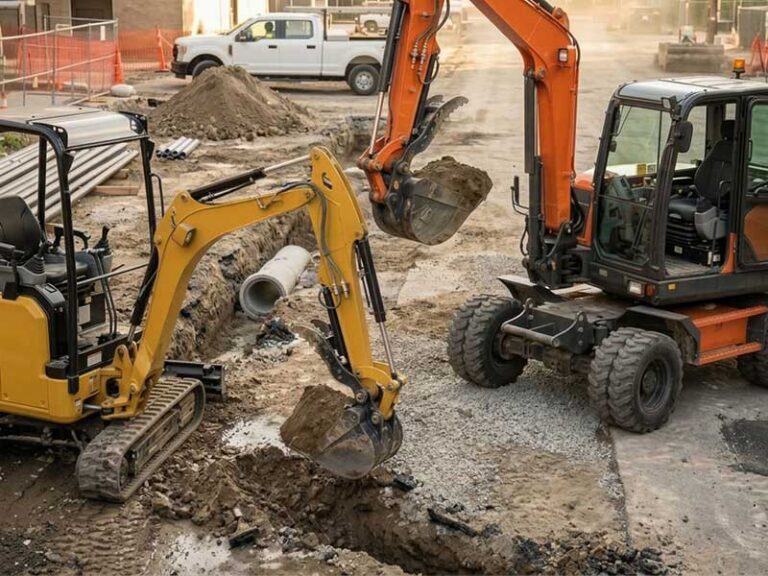



10 Practical Strategies to Optimize Heavy Equipment Parts Procurement
For construction, agriculture and trailer‑fleet operators, heavy equipment parts represent one of the largest operational expense lines. Many procurement teams fall into a common trap: squeezing suppliers for lower unit prices as the primary lever for cost reduction.
Industry research indicates that blind price‑only negotiation delivers limited long‑term savings, while unoptimized inventory, unexpected downtime, poor casting quality and multi‑layer distribution channels can add 30‑35% in hidden total costs across the supply chain.
Real, sustainable savings come from systematic optimization across requirements, part specifications, supplier base, procurement models, inventory, logistics, quality control and payment terms.
Industry Benchmark: According to heavy‑duty aftermarket surveys, enterprises adopting full‑cycle procurement optimization can achieve 15‑22% total cost reduction on heavy equipment parts, compared with 4‑7% savings achieved by pure price pressure on existing suppliers.
10 Practical Strategies to Optimize Heavy Equipment Parts Procurement
Blind price squeezing often leads to shortened service life, higher failure rates and costly equipment downtime. The table below summarizes core tactics, cost‑saving potential and implementation complexity for B2B procurement teams.
| Strategy | Core Practice | Cost‑Saving Potential | Implementation Difficulty |
|---|---|---|---|
| 1. Parts Standardization | Eliminate redundant brands, models and specifications; build unified part catalog | ★★★★★ | Medium |
| 2. Dual‑Track OEM & Aftermarket Sourcing | Compare genuine OEM parts with high‑quality certified replacement parts | ★★★★★ | Medium |
| 3. Annual Framework Agreements | Secure volume‑based pricing against 12‑month forecast demand | ★★★★ | Low |
| 4. Structured Supplier Competition | Standardized RFQ, multi‑supplier bidding and periodic re‑tendering | ★★★★ | Low |
| 5. Total Cost of Ownership (TCO) Evaluation | Evaluate full lifecycle cost instead of unit price only | ★★★★ | Medium |
| 6. Inventory Rationalization | Right‑size safety stock and eliminate dead / slow‑moving stock | ★★★★ | Medium |
| 7. Procurement Batch Optimization | Consolidate orders, minimize fragmented spot buying | ★★★ | Low |
| 8. Direct Sourcing from Manufacturers | Remove unnecessary intermediate distribution layers | ★★★★ | Medium |
| 9. Logistics & Packaging Optimization | Consolidate shipments, optimize international landed cost | ★★★ | Medium |
| 10. Quality & Return Control | Minimize premature part failure, rework and downtime losses | ★★★★★ | Medium |
Table 1: Heavy equipment parts procurement optimization strategies overview

1. Establish Parts Standardization Catalog
A widespread waste point in heavy‑equipment operations: functionally identical components are purchased under dozens of different OEM part numbers, brands and specs. For one hydraulic system, buyers may source genuine Caterpillar, Komatsu, SKF, Parker, Bosch Rexroth, local aftermarket and Chinese casting‑based alternative parts simultaneously.
Build a centralized standard parts library following this structure:
Equipment → System → Component → OEM Part Number → Approved Alternative Part Number → Supplier List → Historical Price → Service Life
Classify components into three tiers to prioritize improvement opportunities:
- Class A: Mandatory OEM: Engine core assemblies, critical transmission components, ECU controllers, safety‑related parts. Avoid uncertified replacements.
- Class B: Certified Alternatives: Bearings, seals, filters, hydraulic hoses, belts, chains, selected hydraulic castings. Largest potential for cost optimization.
- Class C: General Commodities: Bolts, gaskets, O‑rings, standard lamps, electrical auxiliary parts. High volume, easy to standardize.
Most achievable savings reside within Class B and Class C parts.
2. Adopt Dual‑Track OEM / Aftermarket Procurement
Do not simply select the lowest quoted unit price. Build a three‑tier supply portfolio:
Genuine OEM → Premium aftermarket replacement → Economical aftermarket parts.
Use cost per operating hour as your core comparison metric.
| Part Option | Unit Price | Average Service Life | Cost Per Operating Hour |
|---|---|---|---|
| OEM Genuine | $1,000 | 5,000 h | $0.20 / h |
| Premium Replacement A | $700 | 4,500 h | $0.156 / h |
| Economy Replacement B | $500 | 2,500 h | $0.20 / h |
Table 2: Example of cost‑per‑hour comparison for heavy‑duty wear parts
As shown above, the cheapest unit price does not guarantee the lowest operational cost. A low‑cost casting component that fails prematurely can trigger expensive equipment downtime.
3. Lock Volume Discounts via Annual Framework Contracts
Monthly spot purchasing of 10‑30 pieces positions you as a regular spot‑market customer with limited negotiating leverage. Instead, share your 12‑month forecast volume (e.g. 1,000 units total, phased delivery) to secure framework pricing.
Benefits you can negotiate:
- Volume tiered discounts
- Fixed contract pricing against raw‑material volatility
- Reserved supplier stock
- Shorter lead‑times
- Subsidized or free delivery
- Improved payment terms
This strategy works best for high‑frequency consumables: filters, bearings, seals, belts, hydraulic hoses, cast wear parts and trailer suspension components.
4. Run Structured RFQ for Supplier Competition
Avoid vague requests such as “give me your best price”. Issue standardized RFQ documents requiring each supplier to quote the full commercial package: unit price, MOQ, lead‑time, warranty, payment terms, packaging cost, freight, duty & tax, annual rebate, quality indemnity clauses and emergency order surcharges.
Always compare suppliers on identical specifications and identical trade terms. A $100 FOB quote can end up more expensive than a $110 DDP offer once freight and customs are added.
5. Make Decisions Based on Total Cost of Ownership (TCO)
TCO = Part purchase price + transportation + inventory holding cost + installation cost + equipment downtime loss + maintenance cost + return & quality failure cost.
A casting component saving you $300 on unit price may trigger $2,000 in downtime losses after premature failure. For every high‑value SKU, track three key metrics: purchase price, MTBF (Mean Time Between Failures) and expected service life, together with downtime risk assessment.
6. Unlock Hidden Value from Inventory Optimization
Many heavy‑equipment operators do not overpay for parts — they simply buy too many parts. Common pain points include multi‑year stockpiles, obsolete parts for retired equipment, duplicate SKUs for functionally identical castings, and slow‑moving inventory locking working capital.
Segment inventory into Fast‑Moving, Slow‑Moving and Dead Stock:
- Fast‑moving items: Maintain controlled safety stock
- Slow‑moving items: Deploy supplier consignment / VMI
- Low‑usage parts: Purchase on demand only
- Dead stock: Pursue supplier buy‑back, internal stock transfer or secondary‑market liquidation
Vendor Managed Inventory (VMI) or consignment stock delivers powerful results for high‑volume consumables. Suppliers maintain stock inside your warehouse; you only settle payment for units actually consumed. This cuts capital tie‑up, reduces stock‑out risk and lowers emergency procurement costs. Industry benchmarks show consignment models can reduce inventory capital occupation by approximately 20% for heavy‑equipment fleets.
7. Shorten Supply Chains: Reduce Intermediate Layers
Many heavy‑equipment parts flow through
OEM → 1st‑tier agent → 2nd‑tier reseller → local dealer → end‑user.
For standard cast components, trailer suspension parts and general commodities, evaluate direct‑from‑manufacturer sourcing or purchase directly from authorized primary distributors.
Important caveat: Never sacrifice warranty coverage, technical support and quality assurance solely to cut out middlemen.
8. Bring Logistics & Landed‑Cost Into Negotiations
For international procurement of casting and precision trailer components, product price reduction can be completely offset by inflated logistics spend. Apply these proven tactics:
- Monthly consolidated container shipments
- Replace air freight with sea freight for non‑urgent orders
- Combine multiple POs per supplier
- Consolidate multiple supplier cargo at a shared consolidation warehouse
- Optimize packaging dimensions to reduce container space usage
- Separate emergency‑order express shipments from regular sea freight
Always evaluate landed cost, not only ex‑works or FOB unit price.
9. Data‑Driven Spend Analysis: Focus on High‑Impact SKUs
Apply the 80/20 rule: roughly 80% of your total procurement spend concentrates on 20% of your part SKUs. Pull 12‑month historical procurement data and run spend analysis, prioritizing high‑value components rather than spreading limited resources thinly across thousands of minor parts.
| Part Category | Annual Spend | Number of Suppliers | Margin Level | Cost‑Reduction Priority |
|---|---|---|---|---|
| Hydraulic Components & Castings | $2,000,000 | 18 | High | 🔴 Very High |
| Filters & Consumables | $800,000 | 12 | Medium | 🔴 Very High |
| Bearings | $600,000 | 8 | Medium | 🟠 High |
| Seals & Gaskets | $300,000 | 15 | High | 🔴 Very High |
| Standard Fasteners | $100,000 | 20 | Low | 🟢 Medium |
Table 3: Sample spend analysis for heavy‑equipment parts procurement
Concentrate negotiation, standardization and alternative‑sourcing work on your top‑spend SKUs; improving these delivers far larger business impact than squeezing marginal savings from low‑value commodities.
10. Optimize Casting & Machining Cost at Source
For wear parts such as excavator bucket teeth, ripper teeth, agricultural casting components and trailer suspension parts, casting and CNC machining represent major cost drivers. Three key technical levers help lower total cost without sacrificing performance:
Mold Cost Amortization via Annual Volume Consolidation
Casting mold costs (wood mold, aluminum mold, steel mold) are largely fixed. Small‑batch orders push up per‑unit mold amortization. Use 12‑month demand forecasts for large‑batch production with phased delivery. For small‑size cast components, push your casting supplier to implement multi‑cavity mold designs (2‑cavity, 4‑cavity or 8‑cavity). Standardize interfaces across different equipment models to boost total order volume and realize scale economies.
Material & Heat‑Treatment Optimization, Avoid Over‑Engineering
Many components use over‑specified high‑alloy steel containing expensive nickel and molybdenum. Well‑controlled micro‑alloy boron steel (example: 30MnB) plus precise quenching‑and‑tempering heat treatment can deliver comparable hardness and impact toughness for many wear‑part applications, reducing raw‑material cost by 15‑30%. Another practical approach: low‑alloy steel base body with local hard‑facing / carbide overlay only on high‑wear surfaces.
Core principle: downgrade material grade while upgrading heat‑treatment process. Qualified casting manufacturers can achieve near‑premium mechanical performance with more cost‑effective base material.
Near‑Net‑Shape Casting to Reduce CNC Machining Allowance
Every extra millimeter of machining allowance increases tool wear, machine time and labor expense. Select precision casting processes such as investment casting or coated‑sand casting to shrink rough‑casting tolerances. Reduce machining allowance from 3‑5 mm down to 1‑2 mm, even zero‑machining for non‑functional surfaces. Remove unnecessary high‑tolerance requirements for non‑contact casting surfaces. Optimize draft angles and transition fillets to lower casting reject rates and eliminate redundant milling work.

2. Recommended 5‑Phase Implementation Roadmap for Procurement Teams
Phase 1: Data Discovery
Extract 12‑month procurement data; classify by SKU, supplier, brand and equipment model. Identify top‑50 high‑spend SKUs, top‑20 high‑frequency parts and items with volatile pricing.
Phase 2: Alternative‑Sourcing Assessment
For each top‑50 SKU, evaluate: is OEM mandatory? Are qualified aftermarket or casting‑based replacements available? Can specifications be standardized? Can dual‑supplier qualification be implemented?
Phase 3: Strategic Supplier Re‑negotiation
Propose annual‑volume framework contracts with tiered pricing, volume rebates, improved payment terms, fixed lead‑times and formal quality‑guarantee clauses.
Phase 4: Inventory Clean‑Up
Target slow‑moving, excess and obsolete stock via consignment, internal transfer or liquidation. Roll‑out VMI for high‑volume consumables.
Phase 5: Build Long‑Term KPIs
Shift KPI focus from “unit‑price reduction percentage” to actual total cost saving = baseline total cost − realized total cost. Measure performance based on TCO improvement, not isolated unit‑price cuts.
3. Conclusion
Reducing heavy equipment parts procurement cost is a system‑wide exercise spanning specification design, casting manufacturing, supplier governance, inventory management and logistics. The most effective practical workflow is:
Retain OEM for safety‑critical Class‑A parts →
Deploy certified alternatives for Class‑B cast & wear parts →
Standardize Class‑C general commodities →
Competitive RFQ for key suppliers →
Sign annual framework agreements →
Implement VMI consignment →
Rationalize dead inventory →
Consolidate international logistics.
This structured approach delivers sustainable savings superior to isolated requests for 10% supplier price cuts. When you stop only negotiating unit price and start optimizing the full supply chain, procurement becomes a genuine profit‑driving function for your business.
TrueCast Engineering is specialized OEM & aftermarket casting manufacturer for heavy‑duty construction, agricultural and trailer suspension components, delivering high‑quality cast parts with optimized total cost for global B2B buyers. Cotact US for More.