


2026 Global Market Insights for Trailer Suspension Parts
Trailer Suspension Parts: 2026 Global Sales, Types, Manufacturing & Sourcing Guide
Trailer suspension parts are critical components that connect a trailer’s chassis to its axles, absorbing road shocks, supporting payloads, and ensuring stable, safe transportation. As global logistics, construction, and agriculture sectors expand, demand for high-quality trailer suspension parts continues to rise.
This article explores the 2026 global sales landscape, common types, manufacturing methods, and key strategies for sourcing reliable suppliers.
2026 Global Sales Overview of Trailer Suspension Parts
The global trailer suspension parts market is projected to reach USD 6.18 billion in 2026, growing at a CAGR of 5.71% from 2025, driven by rising freight volumes, fleet modernization, and replacement demand (average component lifespan: 5–10 years). Regional market shares are distributed as follows:
| Region | Market Share (2026) | Key Drivers |
|---|---|---|
| North America | 34% | Mature logistics, heavy-duty trailer demand, strict safety regulations |
| Europe | 26% | Agricultural & construction transport, lightweighting trends |
| Asia-Pacific | 30% | Rapid industrialization, e-commerce growth, low-cost manufacturing hubs |
| Middle East & Africa | 10% | Infrastructure development, cross-border trade expansion |
Key segment insights: Leaf spring suspensions dominate (60% of sales) due to cost-effectiveness, while air suspension parts grow fastest (CAGR 7.2%) for premium heavy-duty trailers.
Common Types of Trailer Suspension Parts & Functions
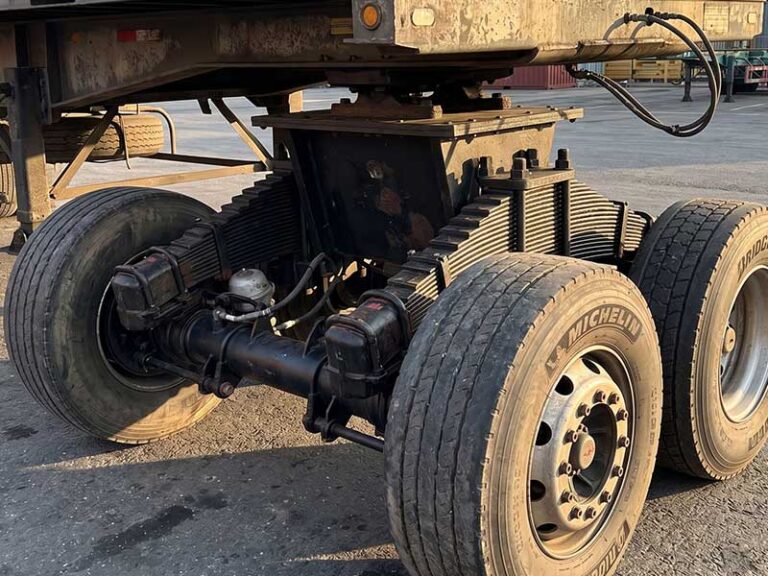
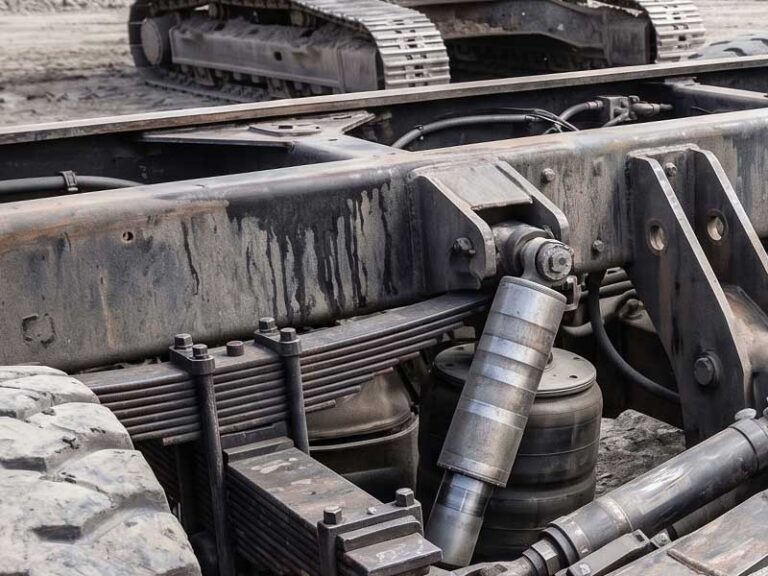
Trailer suspension systems consist of interconnected components tailored to load capacity and application. Below are the most common parts and their roles:
| Component | Function | Material | Typical Lifespan |
|---|---|---|---|
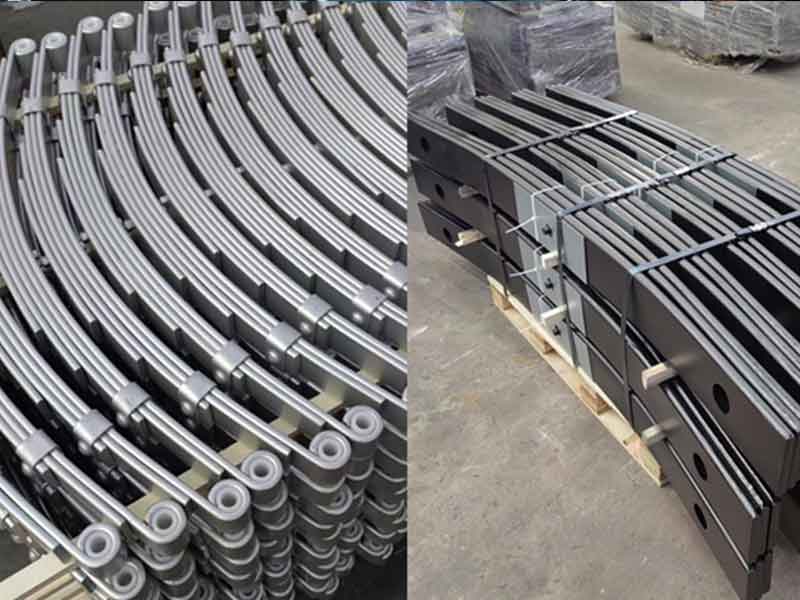
| Leaf Spring | Supports payload, absorbs shocks via flexible steel leaves | High-carbon steel | 5–10 years |
| Torsion Axle | Integrates rubber torsion arms for independent wheel movement, smooth ride | Steel + rubber | 8–12 years |
| Spring Hanger | Mounts leaf springs to trailer frame, enables pivot movement | Powder-coated steel | 8+ years |
| Shackle | Connects spring eyes to hangers, accommodates spring length changes | Forged steel | 7–12 years |
| Equalizer | Distributes load between tandem axles, reduces uneven wear | Cast/forged steel | 6–9 years |
| Bushing | Reduces friction at pivot points, dampens vibration | Rubber/polyurethane | 3–6 years |
| Shock Absorber | Controls spring oscillation, stabilizes ride | Steel + hydraulic fluid | 4–7 years |
Main Suspension System Categories
1. Leaf Spring Suspension:
Simple, durable, cost-effective; ideal for heavy-duty utility, cargo, and agricultural trailers. High load capacity but stiffer ride on rough terrain.
2. Torsion Axle Suspension:
Compact, low-maintenance, smoother ride; perfect for light-duty, boat, and small off-road trailers. Independent wheel movement reduces bounce but has lower load capacity.
3. Torsion axle suspension for trailer
Air Suspension: Uses air bags for adjustable ride height, superior shock absorption; common in premium heavy-duty and refrigerated trailers. Enhances cargo protection but higher cost and maintenance.
4. Air suspension parts for trailer
Independent Suspension: Features trailing arms and coil springs; designed for off-road and heavy-haul trailers. High ground clearance, excellent articulation, but complex and expensive.
Manufacturing Methods of Trailer Suspension Parts
Production processes vary by component type, balancing durability, cost, and precision. Key methods include:
1. Forging
Application: Leaf springs, shackles, equalizers, torsion arms.
Process: Heated steel billets are hammered or pressed into shape, enhancing strength and fatigue resistance.
Advantages: High structural integrity, ideal for heavy-load components.
2. Casting
Application: Spring hangers, mounting brackets, equalizer housings.
Process: Molten steel or iron is poured into molds, cooled, and machined.
Advantages: Cost-effective for complex shapes, scalable for mass production.
3. Stamping & Laser Cutting
Application: Suspension brackets, frame connectors, leaf spring clips.
Process: Steel sheets are cut via laser or stamped into precise shapes, then bent and welded.
Advantages: High precision, consistent quality, suitable for lightweight components.
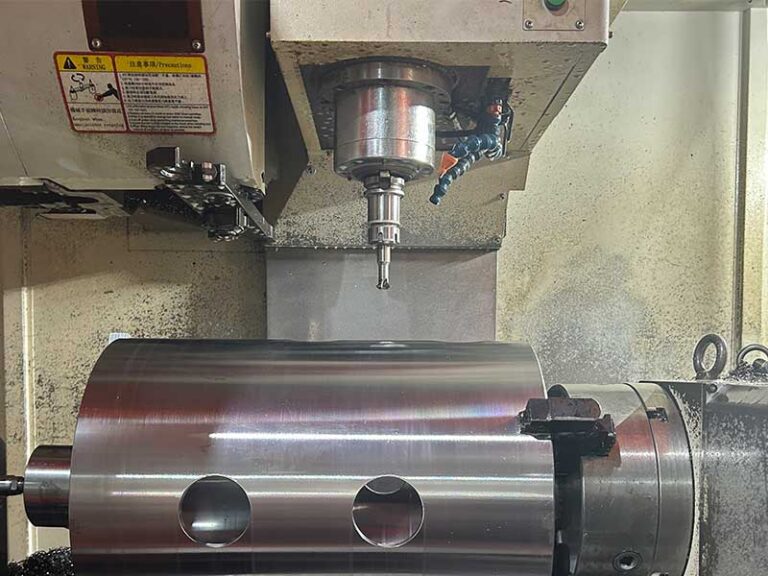
4. Machining
Application: Axle shafts, bushing housings, shock absorber components.
Process: CNC lathes and mills shape raw materials to tight tolerances.
Advantages: Exact dimensions, compatibility with other parts.
5. Surface Treatment
Methods: Powder coating, galvanization, painting.
Purpose: Prevent corrosion, extend lifespan, improve aesthetics. Critical for outdoor and marine trailers.
How to Find Reliable Trailer Suspension Parts Suppliers
Sourcing high-quality suppliers ensures consistent product performance, on-time delivery, and long-term cost savings. Follow this structured approach:
1. Verify Qualifications & Certifications
Prioritize suppliers with ISO 9001 (quality management) and TS 16949 (automotive industry) certifications.
Check compliance with regional standards: SAE/DOT (North America), CE (Europe).
Confirm experience in manufacturing trailer suspension parts (minimum 5 years preferred).
2. Evaluate Production Capacity & Capability
Assess facility size, equipment (CNC machines, robotic welding), and monthly output to meet your order volume.
Confirm customization ability: Can they design parts for specific trailer models, load capacities, or terrains?
Check prototyping support for new product development.
3. Inspect Product Quality & Testing
Review material sourcing: High-grade steel (ASTM standards) for structural components.
Request test reports: Fatigue, load, and corrosion testing results.
Order samples for physical inspection (fit, finish, durability) before bulk orders.
4. Assess Logistics & Delivery Performance
Check on-time delivery track record (target: ≥95% on-time rate).
Verify export experience: Familiarity with international shipping, customs, and documentation.
Confirm lead times: Balance speed and quality (avoid suppliers with unrealistically short lead times).
5. Evaluate After-Sales Support & Warranty
Ensure clear warranty policies (minimum 1–2 years for manufacturing defects).
Check technical support availability: Engineering assistance for installation, troubleshooting, and customization.
Confirm spare parts availability for long-term maintenance.
6. Compare Pricing & Payment Terms
Avoid overly low prices (often indicate poor quality materials or shortcuts).
Negotiate transparent pricing: Breakdown of material, labor, and overhead costs.
Confirm flexible payment terms (e.g., 30% deposit, 70% before shipment) to reduce financial risk.
Supplier Evaluation Checklist
| Criteria | Key Checks |
|---|---|
| Certifications | ISO 9001, TS 16949, SAE/DOT/CE |
| Production | CNC/robotic equipment, monthly capacity ≥5,000 units |
| Quality | Material test reports, sample approval, fatigue testing |
| Delivery | On-time rate ≥95%, export experience |
| Support | 1–2 year warranty, engineering support |
| Price | Competitive, no hidden costs |
About Truecasteng
The trailer suspension parts market in 2026 presents steady growth opportunities, driven by global logistics expansion and fleet modernization. Understanding component types, manufacturing methods, and supplier selection criteria is critical for businesses to source reliable, cost-effective parts. By prioritizing quality, certification, and long-term supplier partnerships, you can ensure your trailers deliver safe, efficient performance across diverse applications.
Founded in 1994, through unwavering dedication to quality and innovation, TrueCast Engineering has established itself as a trusted precision casting manufacturer, catering to a global clientele across various sectors, including farming parts, truck parts, and industrial machinery.Building long-term cooperative partnerships helps guarantee stable and safe operational performance of diverse trailer equipment.