


Control Arm Casting Solution: Precision Manufacturing for Modern Vehicle Suspension System
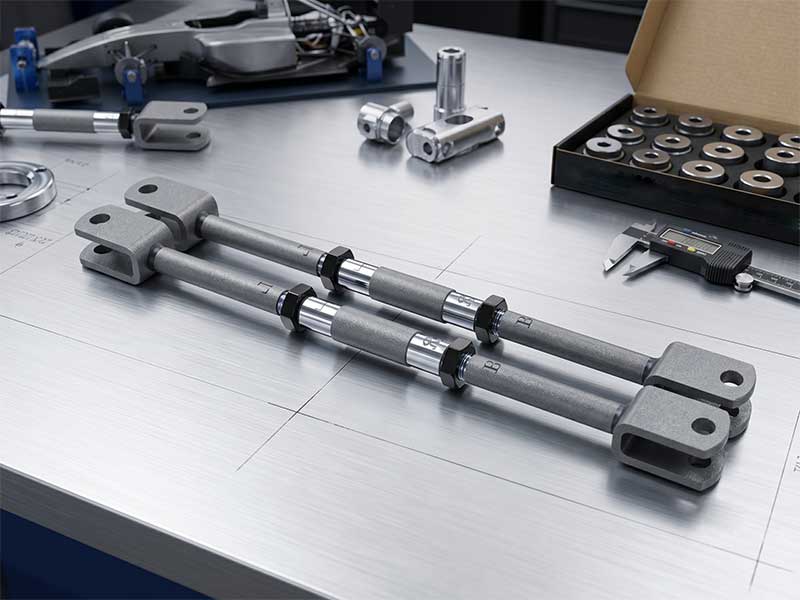
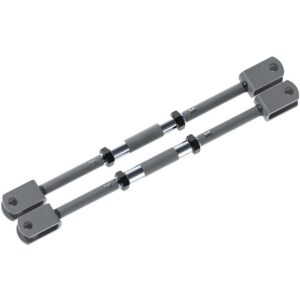
The control arm is a core load-bearing and connecting component of the vehicle suspension system, serving as a critical linkage between the vehicle frame, steering knuckle, and chassis. It undertakes vital functions including vibration damping, wheel positioning, load transmission, and driving stability control.
As the automotive industry advances toward lightweighting, high durability, and precise chassis control, traditional manufacturing methods can no longer meet the stringent dimensional tolerance, mechanical performance, and cost-control requirements of modern control arms. As a professional supplier focusing on automotive chassis parts, we provide customized control arm casting solution for global OEM clients and aftermarket distributors, leveraging precision casting technology to resolve the bottlenecks of conventional production processes and deliver high-quality suspension components.
Core Manufacturing Process of Precision Casting Control Arm
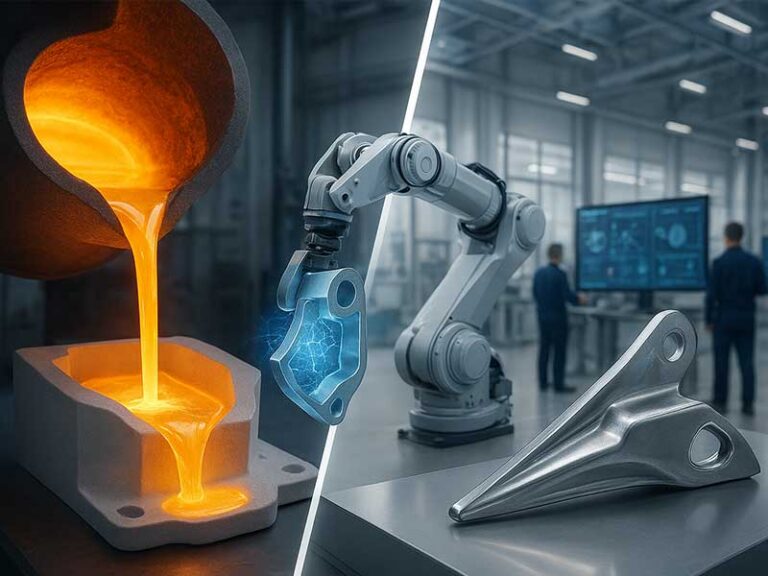
Precision casting, mainly including investment casting, low-pressure precision casting and differential pressure precision casting, has become the mainstream production process for high-end vehicle control arms, replacing traditional sand casting and partial forging processes. The standardized manufacturing flow of precision casting control arms covers the whole production chain from mold development to finished product delivery, fully adapting to mass OEM production and customized small-batch orders.
The complete process starts with precision mold design and manufacturing, where high-precision CNC equipment is used to create molds matching complex control arm geometric structures, ensuring consistent cavity accuracy.
Next, high-purity aluminum alloy, stainless steel and other automotive-grade raw materials are selected for melting and purification to eliminate impurities and optimize metal fluidity.
The molten metal is then poured into the precision mold cavity under controlled temperature and pressure, achieving one-time forming of complex control arm profiles.
After cooling and solidification, semi-finished products undergo deburring, heat treatment (T6 treatment), precise machining, surface treatment and strict quality inspection.
The whole process minimizes manual intervention, realizes high dimensional accuracy and excellent surface finish, and greatly reduces subsequent processing procedures.
Advantages of Precision Casting for Control Arm Production
Compared with traditional sand casting and forging processes, precision casting offers prominent technical and commercial advantages for control arm manufacturing, which is why it is widely adopted by global OEM manufacturers:
- First, it delivers superior precision and structural consistency. Precision casting achieves tight dimensional tolerances and a smooth surface finish with Ra 1.6–3.2µm, effectively avoiding dimensional deviations that affect suspension assembly accuracy. It can form complex hollow and special-shaped structures that traditional processes cannot realize, meeting the lightweight design requirements of new energy vehicles and luxury vehicles while ensuring accurate wheel positioning during driving.
- Second, it balances mechanical performance and lightweighting. Optimized casting parameters and professional heat treatment processes significantly improve the tensile strength, yield strength and fatigue resistance of control arms. Differential pressure precision casting, in particular, can raise the tensile strength of aluminum alloy control arms to over 310MPa, ensuring the components can withstand complex road loads and long-term alternating vibration. Meanwhile, precision casting reduces material redundancy, lowers the overall weight of the suspension system, and helps vehicles reduce energy consumption and improve driving comfort.
- Third, it provides outstanding cost and batch production advantages. For medium and large-batch OEM orders, precision casting realizes one-time near-net-shape forming, greatly reducing material waste and secondary machining workload. The standardized process ensures consistent quality of each batch of products, lowers post-production rejection rates and after-sales maintenance costs, and brings stable cost benefits for downstream automakers and component distributors.
Disadvantages and Industry Challenges of Control Arm Precision Casting
Despite its wide application advantages, precision casting for control arms still faces unavoidable technical and production challenges in actual mass production, which are key pain points for most manufacturers and OEM purchasers:
In terms of technical limitations, the precision casting process involves multiple complex procedures, and process parameter control is highly difficult. Unreasonable cooling rates and unstable pouring pressure can easily cause internal defects such as shrinkage cavities, porosity and residual stress, leading to reduced fatigue resistance and potential safety hazards for control arms. In addition, the production of ultra-precision small-size structures and special thin-wall control arms still has certain technical thresholds, with high requirements for equipment precision and worker operational experience.
In terms of production cost and efficiency, the initial investment of precision casting equipment and customized molds is high, making it less cost-effective for ultra-small-batch customized orders. The multiple production steps including melting, casting, heat treatment and inspection extend the production cycle, which may affect the delivery efficiency of urgent OEM orders. Moreover, the quality inspection of precision casting parts is highly difficult, and conventional detection methods struggle to fully identify micro internal defects, bringing risks to product batch consistency.
Professional Solutions for Control Arm Casting Defects and Production Pain Points
As an experienced control arm casting solution manufacturer, we target the above industry challenges and optimize the whole production process from technology, equipment and quality control dimensions to provide reliable OEM supporting solutions:
- First, intelligent process parameter optimization. We introduce full-automatic constant-temperature pouring and segmented cooling systems to precisely control molten metal temperature, pouring speed and mold cooling rate, effectively eliminate casting defects such as shrinkage cavities and deformation, and stabilize the internal grain structure of control arms. For thin-wall and complex structural control arms, we adopt optimized differential pressure casting technology to improve metal filling efficiency and ensure structural integrity.
- Second, flexible production and cost optimization. We realize flexible switching between mass OEM production and small-batch customized orders through standardized mold libraries and modular production lines. By optimizing material utilization and simplifying redundant processing procedures, we effectively reduce unit production costs while ensuring quality, and solve the cost dilemma of small-batch precision casting products.
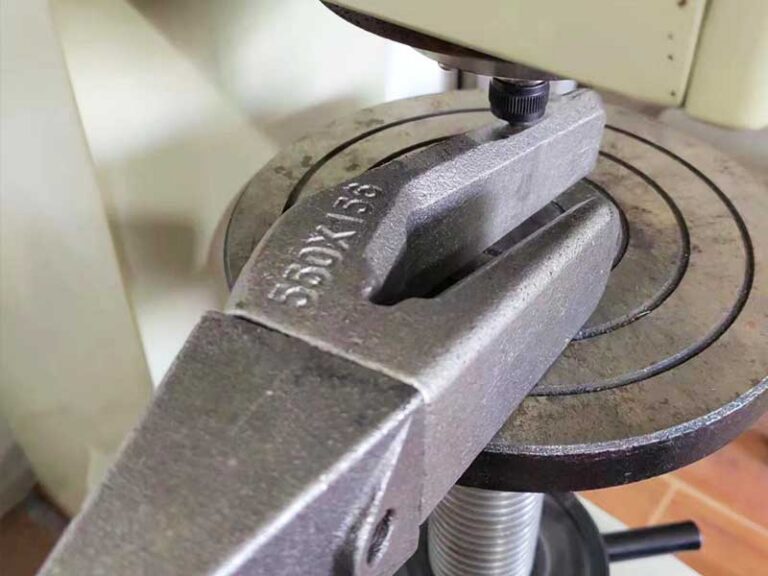
- Third, full-range quality inspection system. We equip professional non-destructive testing (NDT) equipment, including X-ray flaw detection and ultrasonic testing, to conduct 100% inspection of internal defects for batch products. Combined with dimensional precision testing and mechanical performance sampling tests, we ensure every delivered control arm meets OEM industry standards and road safety requirements, realizing zero-defect batch delivery.
Development Trends of Modern Control Arm Manufacturing Technology
Driven by the rapid iteration of new energy vehicles, intelligent driving technology, and global environmental protection regulations, the manufacturing technology of vehicle suspension system control arms is undergoing comprehensive upgrading. Traditional single precision casting processes are gradually evolving toward lightweight integration, intelligent manufacturing, multi-material compound molding, and green low-carbon production. These emerging trends not only solve the technical bottlenecks of conventional precision casting production but also fully meet the customized, high-precision, and high-durability procurement demands of global OEM clients, becoming the core competitiveness of top-tier control arm manufacturer enterprises. The mainstream manufacturing evolution trends and technical characteristics are systematically compared in the table below:
|
Development Trend
|
Core Technical Features
|
Advantages for Control Arm Production
|
Applicable Scenarios & OEM Value
|
|---|---|---|---|
|
Intelligent & Automated Precision Casting
|
Adopt full-automatic production lines with robotic feeding, constant-temperature intelligent pouring, segmented cooling control, and online real-time quality monitoring; integrate CAE simulation and AI topology optimization to guide product structural design and process parameter calibration
|
Reduce manual intervention by over 80%, eliminate human-caused dimensional errors and casting defects; shorten product R&D cycle from 8–12 weeks to 3–5 weeks; achieve stable batch consistency and ultra-low rejection rate
|
Mass production of standard control arms for passenger cars and new energy vehicles; greatly reduces OEM after-sales risk and comprehensive procurement costs, suitable for long-term bulk order cooperation
|
|
Multi-material Lightweight Compound Molding
|
Gradually replace single cast aluminum materials with high-strength 7-series aluminum alloy, carbon fiber composite materials, and aluminum-plastic hybrid structures; optimize precision casting process for thin-wall and hollow integrated molding
|
Reduce unsprung mass of the suspension system by 15%–25% while maintaining structural strength and fatigue resistance; effectively improve vehicle energy efficiency and driving stability
|
High-end luxury vehicles and pure electric vehicles with strict lightweight requirements; help OEMs meet global energy-saving and emission-reduction standards
|
|
Integrated Functional Intelligent Control Arm
|
Combine precision casting integral molding with sensor embedding technology; realize integrated production of control arm with vibration detection, load monitoring and posture sensing functions
|
Realize one-step molding of structural and functional components, avoid assembly gaps; support intelligent chassis adjustment and ADAS auxiliary driving system adaptation
|
Intelligent connected vehicles and autonomous driving models; upgrade traditional suspension components to intelligent sensing parts, enhancing OEM product differentiation
|
|
Green & Low-Carbon Sustainable Manufacturing
|
Adopt low-emission melting processes, recyclable high-purity casting materials, and environment-friendly three-valve chromium surface treatment technology; optimize mold recycling and material utilization rate
|
Comply with global environmental protection regulations; increase material utilization rate to over 95%; reduce production carbon emissions and environmental pollution
|
European and American high-standard OEM procurement projects; help downstream automobile factories complete green supply chain certification
|
|
Additive Manufacturing & Rapid Prototyping
|
Combine precision casting with 3D additive manufacturing technology; apply rapid printing for prototype verification and small-batch customized product production
|
Break the limitation of traditional mold opening cycle, quickly verify complex structural control arm solutions; support personalized customized design
|
New product R&D trial production and small-batch customized orders; shorten OEM new vehicle project iteration cycle
|
In addition to the above technological trends, modular production has also become a key development direction of the control arm industry. Professional control arm casting solution manufacturers continue to enrich standardized mold libraries and modular process systems, realizing flexible switching between mass standardized production and small-batch customized production. This mode perfectly balances production efficiency, product quality and cost control, and can quickly respond to the diverse product iteration needs of global automakers.
In the future, with the continuous upgrading of new energy vehicles and intelligent driving technology, control arm manufacturing will further develop toward higher precision, lighter weight, stronger functionality and greener production. Only manufacturers with continuous technological innovation capabilities and systematic casting solution customization capabilities can maintain long-term competitive advantages in the global OEM supply chain.
About Truecasteng Casting Solution Supplier
Founded in 1994, TrueCast Engineering Casting Company has earned its reputation as a leading player in the casting and metallurgy industry. Over the years, through unwavering dedication to quality and innovation, TrueCast Engineering has established itself as a trusted precision casting manufacturer, catering to a global clientele across various sectors, including farming parts, truck parts, and industrial machinery.
Truecasteng is dedicated to high-precision casting parts, focusing on R&D, customized production and OEM supporting services of vehicle suspension system control arms. We have rich industry experience in precision casting process optimization and control arm casting solution customization, serving numerous global automakers and auto parts distributors. Our high-performance control arms are engineered to deliver precision, durability, and reliability for a wide range of vehicles. With strict production standards, stable batch quality, professional technical support and efficient delivery capabilities, we provide one-stop high-quality casting solutions for global B-end customers, and have won long-term trust and cooperative recognition from OEM clients and overseas distributors.