


Excavator Wear Parts: Manufacturing Challenges and Solutions
Excavator Wear Parts: Market Trends, Classification, Manufacturing Challenges and Optimized Solutions
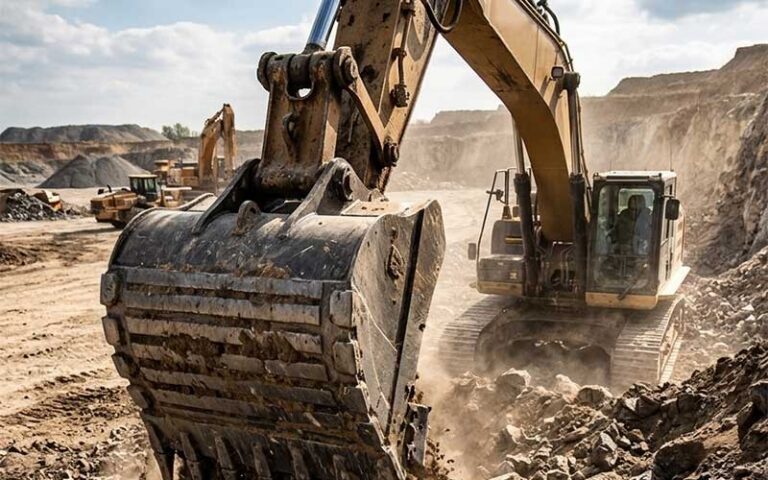
Excavator wear parts are core consumable components that endure continuous friction, impact, and abrasion during excavator operation, directly determining the service life, working efficiency, and operational safety of construction and mining machinery. As essential ground-engaging and chassis accessories, these parts cover Excavator Bucket Tooth, adapters, track shoes, rollers, and other key components.
With the booming global construction and mining industry, the demand for high-performance Excavator Wear Parts has maintained steady growth. China Wear Parts have occupied a pivotal position in the global market by virtue of cost advantages and mature industrial chains, while professional Wear Part Manufacturer and advanced Wear Part Casting technology continuously promote the iterative upgrading of the industry.
This article comprehensively analyzes the market sales trends, product classification, core manufacturing difficulties, and targeted optimization solutions of excavator wear part, providing industry insights for practitioners and purchasers.
1. Global Sales and Market Development Trends of Excavator Wear Parts
The global excavator wear parts market has entered a stable growth stage, driven by large-scale infrastructure construction, mining resource development, and equipment maintenance demand worldwide. According to industry market data, the global wear parts market size was valued at USD 14.25 billion in 2025 and is projected to reach USD 23.5 billion by 2033, with a compound annual growth rate (CAGR) of 6.23% from 2026 to 2033. Among them, excavator-specific wear parts account for more than 38% of the overall market share, becoming the largest segmented track in the construction machinery wear parts industry.
In terms of sales structure, the aftermarket dominates the market, contributing nearly 58% of the total product demand, as most excavator wear parts have a short replacement cycle of less than 6 months under high-intensity working conditions. In hard rock mining scenarios, 41% of excavator fleets need to replace bucket teeth and adapters within 1800 operating hours due to severe abrasion. Regionally, emerging markets in Asia-Pacific, Africa, and South America have become the main growth engines, thanks to vigorous infrastructure investment. As the world’s largest production and export base, China Wear Parts occupy more than 45% of the global medium and low-end market share, and high-end customized products are gradually replacing imported brands with improved casting technology.
In addition, the industry presents three obvious development trends. First, high durability and personalized customization have become mainstream, and end-users prefer high-hardness, impact-resistant alloy wear parts to reduce replacement frequency. Second, intelligent and lightweight upgrades are accelerating, and leadingWear Part Manufacturer integrate sensor technology into wear parts to realize wear monitoring. Third, green manufacturing is popularized, and low-energy-consumption casting processes and recyclable alloy materials are widely applied to meet global environmental protection standards.
2. Main Classification of Excavator Wear Parts
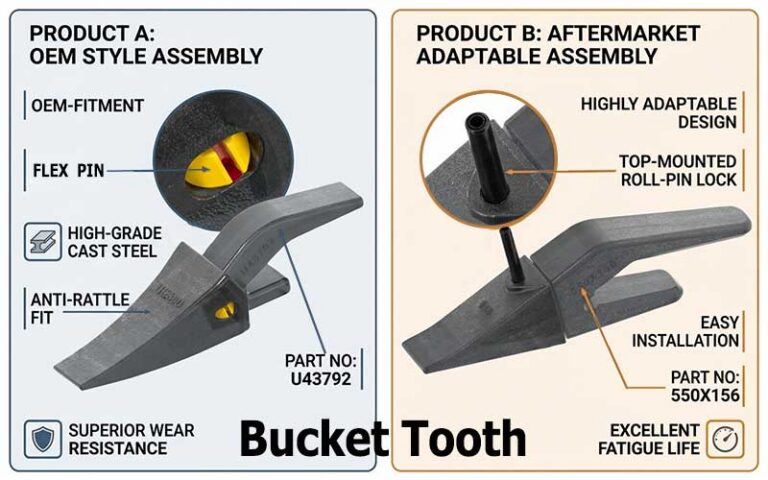
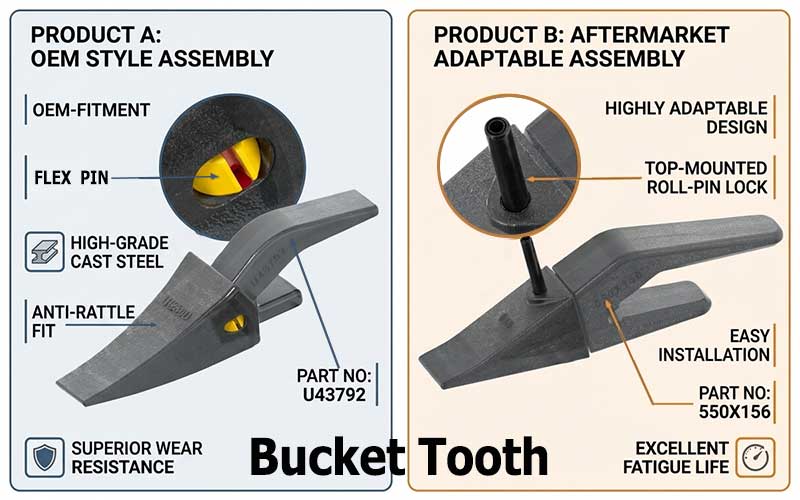
Excavator wear parts cover dozens of accessories with different functions and working conditions, which can be systematically classified according to working position, bearing stress, and manufacturing process. The core mainstream categories and product characteristics are shown in the table below, covering the representative product Excavator Bucket Tooth and common chassis wear parts:
|
Classification Category
|
Core Products
|
Working Characteristics
|
Main Manufacturing Process
|
Application Scenarios
|
|---|---|---|---|---|
|
Ground Engaging Wear Parts
|
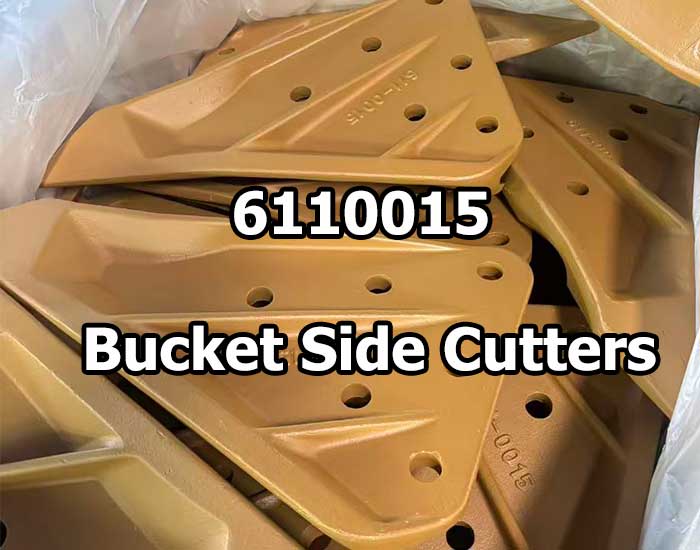
Excavator Bucket Tooth, Bucket Adapter, Cutting Edge, Side Cutter
|
Bear strong impact, extrusion and abrasive wear; highest loss rate
|
Wear Part Casting, precision forging, heat treatment
|
Rock mining, earthwork excavation, demolition, gravel handling
|
|
Chassis Walking Wear Parts
|
Track Shoe, Track Roller, Carrier Roller, Sprocket, Idler
|
Long-term friction and fatigue wear; prone to deformation and surface peeling
|
Investment casting, alloy welding, surface hardening
|
Long-distance walking, muddy and rocky road conditions
|
|
Connecting & Fastening Wear Parts
|
Track Bolt, Nut, Pin, Bushing, Shim
|
Bear shear force and friction loss; small size but high replacement frequency
|
Precision casting, cold heading, quenching and tempering
|
Full-scene excavator operation and daily maintenance
|
|
Hydraulic & Auxiliary Wear Parts
|
Seal Ring, Oil Seal, Wear Plate, Guide Sleeve
|
High-pressure friction, aging and corrosion failure
|
Molding, precision machining, surface coating
|
Hydraulic system operation and mechanical transmission
|
Among all categories, Excavator Bucket Tooth is the most consumed core product. It is divided into standard type, rock type, heavy-duty type and other subtypes according to working conditions, and its wear resistance and impact resistance directly affect the excavation efficiency of the whole machine. High-quality bucket teeth are mostly made of high-manganese alloy steel and processed by professional Wear Part Casting technology, which can effectively resist strong impact and abrasive wear in harsh working environments.
3. Core Manufacturing Difficulties of Excavator Wear Parts
Although the market demand for Excavator Wear Part is huge, the manufacturing process has high technical barriers. Most Wear Part Manufacturer face multiple bottlenecks in production, especially in precision casting, material matching and quality stability. The core difficulties are summarized as follows:
3.1 Difficult Balance Between Wear Resistance and Impact Toughness
Excavator wear parts, especially Excavator Bucket Tooth, need to withstand both strong impact force and continuous abrasive wear. High hardness can improve wear resistance but will reduce toughness, leading to brittle fracture; while high toughness materials are prone to rapid wear. It is difficult for conventional alloy materials and ordinary Wear Part Casting processes to balance the two performances, resulting in unqualified product durability and high failure rate in extreme working conditions.
3.2 Precision Casting Process Defects
Most wear parts rely on casting forming, and traditional casting processes are prone to internal defects such as pores, shrinkage cavities and sand holes. These tiny defects will become stress concentration points during operation, causing parts to crack and wear prematurely. In addition, the dimensional accuracy of cast products is unstable, resulting in poor assembly compatibility, which cannot meet the matching requirements of mainstream excavator models. Small and medium-sized Wear Part Manufacturer lack precise temperature control and mold calibration equipment, making process consistency difficult to guarantee.
3.3 Raw Material Cost Fluctuation and Formula Instability
High-performance wear parts need to use high-manganese steel, chromium-molybdenum alloy and other special raw materials. The price volatility of these alloy raw materials is strong, which increases the production cost pressure of enterprises. At the same time, many manufacturers have unstable material ratio formulas, and the content of alloy elements varies in different batches, leading to inconsistent product hardness, wear resistance and service life, seriously affecting product credibility. As the main production base, some low-end China Wear Part manufacturers have problems of cutting corners on materials, restricting the overall export reputation of the industry.
3.4 Insufficient Surface Strengthening Technology
The surface wear resistance of wear part determines the service life of products. Most traditional production processes only adopt simple overall quenching treatment, lacking targeted surface hardening, anti-corrosion and anti-wear treatment. In acidic mine slag, humid and corrosive environments, parts are prone to surface oxidation, peeling and accelerated wear, unable to adapt to high-intensity and harsh long-term operation scenarios.
4. Targeted Optimization Solutions for Manufacturing Difficulties
Aiming at the above manufacturing pain points, leading Wear Part Manufacturer in the industry have optimized and upgraded from material formula, casting technology, post-processing technology and quality management, effectively improving the comprehensive performance of Excavator Wear Parts:
4.1 Optimize Alloy Material Formula to Balance Mechanical Properties
Upgrade the traditional single high-manganese steel formula, adopt composite alloy materials such as high-chromium alloy and low-carbon martensitic stainless steel, and add micron-scale tungsten carbide reinforcing phases. This formula can maintain high toughness while improving surface hardness (up to 470 HB or above), effectively solving the contradiction between wear resistance and impact resistance. For Excavator Bucket Tooth used in mining scenarios, targeted material ratio optimization is carried out to make its wear rate 22% lower than that of ordinary products, and the service life is increased by more than 26%.
4.2 Upgrade Precision Wear Part Casting Technology
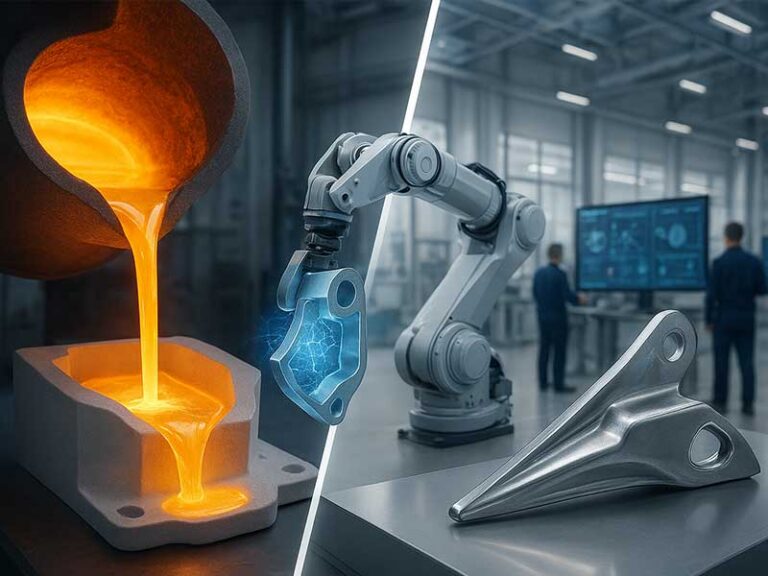
Replace traditional sand casting with investment precision casting and lost foam casting processes to reduce internal casting defects. Introduce intelligent temperature control systems to precisely control the melting, pouring and cooling temperature of molten steel, eliminate pores and shrinkage cavities inside the parts. At the same time, adopt high-precision integrated molds to improve the dimensional accuracy of products, ensure the assembly compatibility of different models of excavators, and reduce the failure rate of installation and use. Standardize the casting process flow to realize batch consistent production of products.
4.3 Stabilize Supply Chain and Standardize Material Management
Establish long-term cooperative relationships with high-quality raw material suppliers to avoid cost risks caused by raw material price fluctuations. Formulate unified alloy element content standards and batch detection mechanisms, conduct component analysis on each batch of raw materials and finished products, and eliminate unqualified products. Leading China Wear Parts enterprises have established national standard production systems, standardized material proportioning and production processes, and reversed the industry’s low-end and low-quality stereotype.
4.4 Add Professional Surface Strengthening Treatment Process
On the basis of overall heat treatment, add surface carburizing, quenching, laser cladding and polyurethane anti-wear coating processes. The surface hardened layer can effectively resist abrasive wear and impact damage, and the anti-corrosion coating adapts to humid and acidic working environments. For chassis wear parts such as track rollers and sprockets, targeted surface strengthening treatment is carried out to solve the problems of surface peeling and fatigue deformation, and extend the overall service life of the parts by 30%.
4.5 Build Strict Quality Inspection System
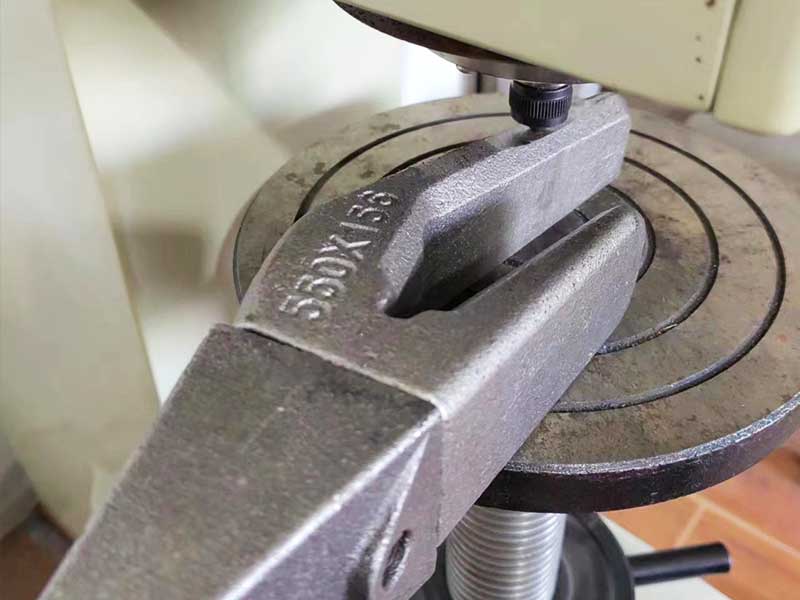
Equip professional testing equipment such as hardness testers, impact testing machines and metallographic analyzers to conduct full-performance testing on finished products. Simulate extreme working conditions such as rock impact and mud abrasion for durability tests, screen out high-quality products that meet international standards, and support customized production according to customer working condition needs, realizing personalized matching of products and scenarios.
5. Industry Outlook
With the continuous progress of global construction machinery intelligence and green manufacturing technology, the Excavator Wear Parts industry will develop towards high precision, high durability, intelligence and customization. High-end Wear Part Casting technology and new alloy materials will become the core competitive barriers of enterprises. As a global manufacturing center, China Wear Parts industry will further upgrade from quantity expansion to quality improvement, and excellent Wear Part Manufacturer will continue to expand global market share with technological innovation and standardized production. In the future, wearable monitoring intelligent wear parts and fully green casting production processes will become the mainstream development direction of the industry, bringing new growth momentum to the market.
Truecasting boasts over 30 years of professional casting manufacturing experience, focusing on the R&D and production of high-quality wear-resistant spare parts. The company’s core product lineup covers excavator wear-prone components including premium Excavator Bucket Tooth, full-range excavator accessories, trailer parts, and agricultural machinery parts. Adhering to mature and reliable Wear Part Casting craftsmanship, Truecasting provides one-stop, customized precision investment casting solutions for global clients. With strict quality control standards and rich industrial manufacturing experience, it effectively solves common pain points such as poor wear resistance, short service life and unstable product consistency of engineering wear parts, delivering cost-effective and high-durability wear parts products for various engineering machinery application scenarios.