



OEM Industrial Hoppers for Bulk Material Handling
Industrial hoppers and industrial dumping hoppers form the backbone of bulk material handling systems across mining, quarrying, agriculture, recycling, and construction.
According to Knowledge Sourcing Intelligence, the global industrial hoppers market reached USD 2.10 billion in 2025 and is projected to grow at a 5.33% CAGR through 2031, driven by investments in heavy-duty bulk handling infrastructure and stricter ESG compliance across North American and European industrial projects.
At TrueCast Engineering, we supply custom industrial hoppers and industrial dumping hoppers engineered to handle abrasive, high-impact bulk solids including ore, crushed stone, coal, grain, and metal scrap. Over years serving B2B industrial clients, we have identified six core evaluation dimensions that professional buyers use to qualify industrial hopper suppliers.
1. Material Grade & Wear Resistance Performance
Material selection directly determines service life for industrial hoppers, especially where constant sliding abrasion and material impact occur. Many low-cost fabricators use standard carbon steel without reinforced impact zones, leading to premature wall thinning, cracks, and unplanned shutdowns. Premium industrial hopper designs separate structural base plates from replaceable wear liners to balance structural integrity and maintainability.
Material Selection Reference for Industrial Hoppers
| Material Grade | Hardness (HBW) | Wear Resistance | Weldability | Recommended Application for Industrial Hoppers |
|---|---|---|---|---|
| Q355B / S355JR | 150–180 | Low | Excellent | General structure, low-abrasion grain & light bulk materials |
| NM400 | 360–440 | Good | Good | Medium abrasion, sand, gravel, agricultural bulk |
| NM500 / Hardox 500 | 470–540 | Excellent | Moderate | Heavy abrasion: ore, crushed rock, high-impact dumping hopper zones |
| 304 / 316L Stainless Steel | 160–200 | Medium | Good | Food-grade, corrosive chemical or wet environment applications |
- For high-wear locations such as impact zones at the hopper inlet, we add bolt-on wear liners made from NM400 or NM500 wear plate. This design avoids full hopper replacement and reduces maintenance downtime.
- For food processing or chemical environments, 304 or 316L stainless steel industrial hoppers are available to meet hygiene and corrosion requirements.
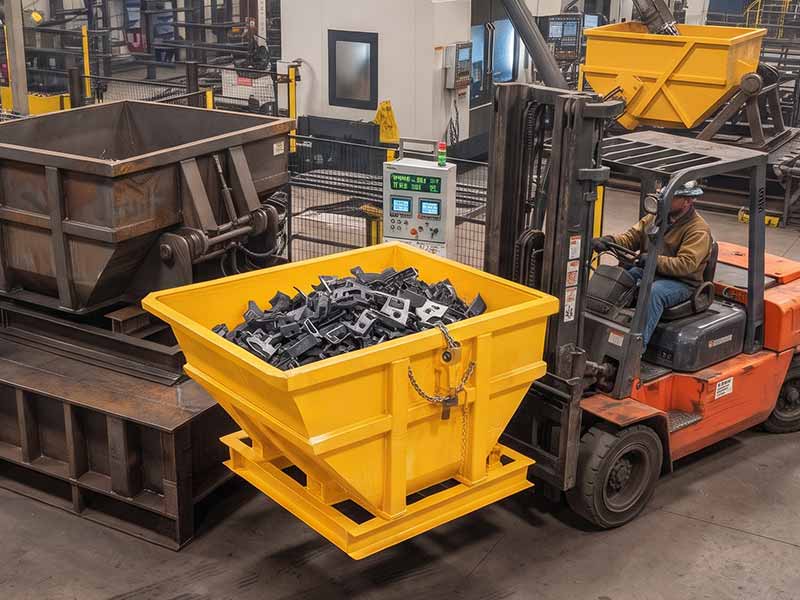
2. Manufacturing & Welding Quality Assurance
European and North American purchasers enforce strict welding and non-destructive testing standards for load-bearing industrial hoppers. Poor welding can create hidden cracks that fail under cyclic loading from repeated bulk material filling and discharge. Our workshop follows AWS D1.1 and ISO 3834 welding specifications, with certified welders and optional NDT inspection on critical weld seams.
Fabrication & Quality Control Benchmarks for Industrial Hoppers
| Inspection Item | Standard Requirement | Purpose |
|---|---|---|
| Welding Standard | AWS D1.1 / ISO 3834 | Guarantee structural weld integrity for heavy load |
| Welder Qualification | CWB / ASME certified welders | Consistent weld quality across production batches |
| Non-Destructive Test | MT (Magnetic Particle) / UT (Ultrasonic) | Detect hidden cracks and porosity on critical seams |
| Dimensional Control | CNC plasma cutting + precision bending | Match customer 3D STEP / SolidWorks drawings |
All industrial hoppers are built from CNC cut plates, reducing assembly stress and ensuring precise flange and outlet dimensions. Full dimensional checks are completed before surface treatment to avoid installation mismatches on-site.
3. Customization & System Integration Capability
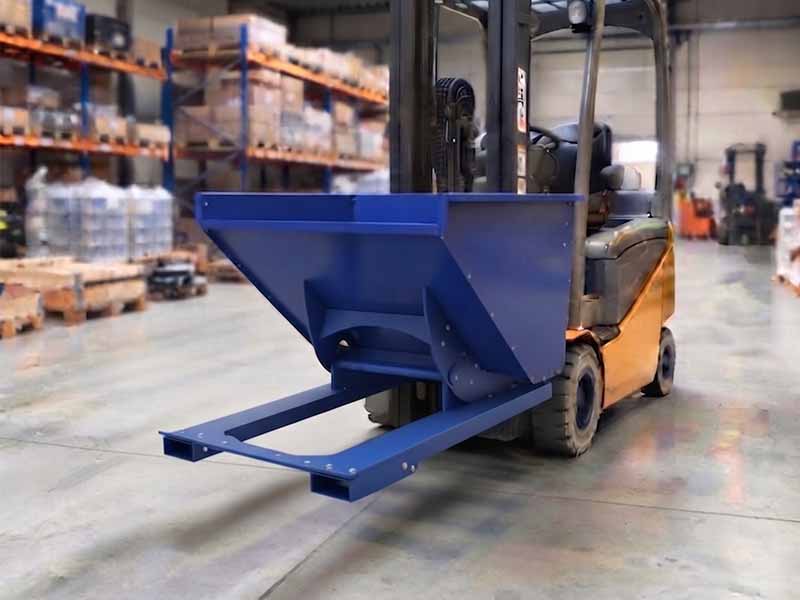
Industrial hoppers are rarely off-the-shelf products. Each unit must integrate with existing feeders, conveyors, chutes, valves, and support frames. The best industrial hopper manufacturers can adapt outlet geometry, tilt angles, flange connections, and pre-cut openings for auxiliary components.
Common customised features include observation windows, level sensor cutouts, vibration motor mounting brackets, dust covers, and pneumatic discharge valve interfaces.
Our engineering team works directly from client 3D models to produce industrial hoppers with perfect interface compatibility, eliminating field modification work.
4. Surface Treatment & Anti-Corrosion Systems
Outdoor mining, coastal, and humid agricultural sites expose industrial hoppers to rapid corrosion. Surface preparation and coating systems must be matched to site environmental class per ISO 12944. Poor blasting or thin coating leads to early rust formation and coating peeling.
Surface Treatment Options for Industrial Hoppers
| Coating System | Surface Prep | Expected Service Life (Outdoor) | Best Use Case |
|---|---|---|---|
| Epoxy Zinc-rich Primer + PU Topcoat | Sa 2.5 Blast | 8–12 years | Standard mining, quarry, construction industrial hoppers |
| Hot-dip Galvanizing | Blast & Pickling | 12–18 years | Agricultural grain hoppers, coastal humid sites |
| Powder Coating | Sa 2.5 Blast | 5–8 years | Indoor, low-abrasion food or light processing hoppers |
Sa 2.5 grade blast cleaning removes mill scale, rust and contaminants to maximise coating adhesion. For extreme marine or chemical exposure, we can upgrade coating build thickness and select chemical-resistant lining materials.
5. Supply Chain Compliance, Documentation & ESG
Today’s international buyers require full material traceability and factory compliance documentation before approving vendor lists. Material Test Reports (MTR), ISO 9001 certificates, production schedules, and VOC environmental compliance records are standard deliverables for every industrial hopper order.
Our factory maintains ISO 9001 quality management certification, with complete batch traceability for all raw steel plates. Truecast Engineering follows controlled paint booth VOC treatment processes to satisfy European and North American ESG audit requirements. We also design custom export packaging to prevent deformation and scratches during sea freight.
6. Total Cost of Ownership & After-Sales Support
Smart procurement moves beyond upfront purchase price to evaluate total cost of ownership (TCO). Industrial hoppers with replaceable wear liners reduce long-term operational costs significantly. The key support factors buyers review include:
- – Quick access to spare wear plates and liners
- – Clear English technical drawings and operation manuals
- – Responsive engineering support for design changes
- – Defect response and quality claim procedures
We deliver all industrial hoppers with complete documentation packages, including fabrication drawings, MTRs, coating reports and inspection records. Our technical team supports post-delivery installation guidance and spare part quoting for wear components.
TrueCast Engineering specialises in custom OEM industrial hoppers and industrial dumping hoppers for mining, agriculture, recycling and construction bulk handling applications. Contact our engineering team to discuss your project specifications and request a technical proposal.