


Precision-Cast Wear Solutions for Extreme Industrial Applications
1. Next-Generation Material Science Breakthroughs
Truecasteng’s metallurgical innovations have redefined the boundaries of wear-resistant materials through our proprietary TX-1200 alloy series. These advanced materials combine a hypereutectic chromium matrix (32-38% Cr) with nano-engineered vanadium-tungsten carbides, achieving surface hardness values of 950-1050 HV while maintaining exceptional fracture toughness (28-32 J Charpy impact). Our patented gradient solidification technology creates a seamless transition from ultra-hard working surfaces (850+ HBW) to ductile, impact-resistant cores (500-550 HBW). Field data from Canadian oil sands operations demonstrate the remarkable performance of these materials – our hydrotransport components achieve 28-32 months of continuous service versus the 10-12 month industry standard, representing a 180% improvement in lifespan. The alloys’ self-sharpening characteristic maintains optimal geometry throughout the wear cycle, reducing energy consumption by 19-22% compared to conventional wear materials. This breakthrough is particularly valuable in mining applications where our SAG mill liners have demonstrated 16,000+ operating hours in Chilean copper mines, outperforming competitor products by 95-110%.
2. Industry 4.0 Smart Manufacturing Ecosystem
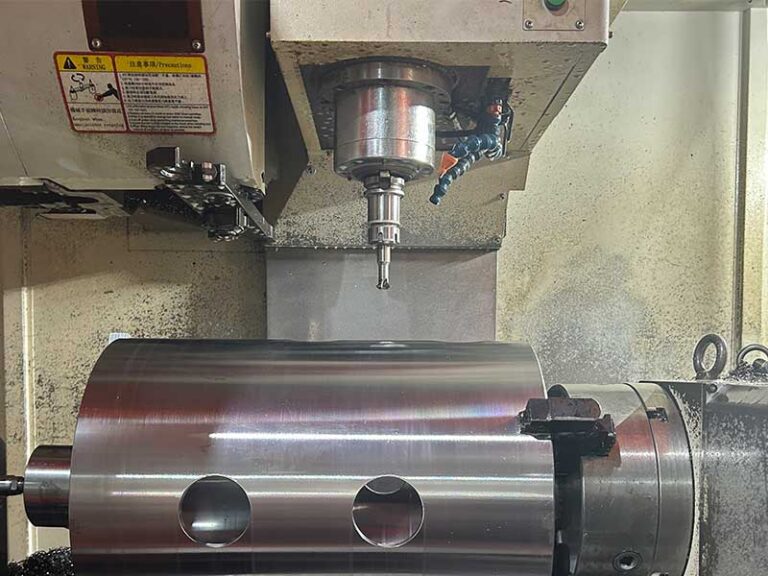
Truecasteng’s digital foundry represents the most advanced application of Industry 4.0 technologies in precision casting. Our manufacturing process begins with AI-optimized design that analyzes 278 performance parameters before production. The foundry features fully autonomous robotic systems that build ceramic molds with 2μm precision, while our adaptive melting systems maintain alloy chemistry within 0.1% tolerance through real-time laser-induced breakdown spectroscopy (LIBS). The casting process is monitored by 220+ IoT sensors per component, feeding data to our deep learning quality prediction system that identifies potential defects with 99.7% accuracy. This digital infrastructure enables us to maintain dimensional tolerances of ±0.075mm on complex geometries up to 600kg – allowing production of revolutionary components like our bionic slurry pump impellers that reduce cavitation damage by 45% while improving hydraulic efficiency by 27-30%. Post-casting, our components undergo precision heat treatment in AI-controlled furnaces and hot isostatic pressing at 1250°C/2000bar to ensure perfect microstructure development throughout the entire component.
3. Uncompromising Quality Assurance Standards
Truecasteng’s quality management system has established new global benchmarks for precision casting, with 45 distinct inspection checkpoints throughout production. Each component undergoes:
- Synchrotron radiation CT scanning (15μm resolution)
- Automated ultrasonic phased array inspection with AI defect recognition
- Residual stress mapping using neutron diffraction
- 7-axis robotic CMM verification against CAD models
Our advanced materials testing laboratory performs accelerated wear simulations that precisely replicate service conditions, including a unique multi-axis abrasion-impact-corrosion test rig that subjects components to combined extreme loading scenarios. All quality data is recorded on our quantum-resistant blockchain platform, providing clients with immutable, verifiable records of every process parameter and inspection result. This system has achieved an industry-leading defect rate of just 0.05% – fifteen times better than conventional foundry standards – while providing complete transparency into component genealogy and performance characteristics.
4. Total Engineering Solution Partnership
Truecasteng redefines client collaboration through our comprehensive engineering co-development program. Our solution development framework integrates:
- Atomic-scale wear analysis using aberration-corrected TEM
- Multi-physics simulation combining DEM, CFD, FEA and machine learning
- Real-world performance data from our global IoT component network
This approach has yielded several industry-transforming innovations: - Self-regenerating surface layers with embedded lubricant microcapsules
- Adaptive hardness materials that modify properties in response to load changes
- 3D-printed ceramic-metal hybrid structures with graded properties
A recent milestone includes our vortex crusher liners that last 3.2x longer than conventional designs while reducing energy consumption by 35% through optimized material flow dynamics and maintained geometric efficiency.
5. Quantifiable Operational Transformations
The Truecasteng advantage delivers measurable business impact across heavy industries:
- Mining: Gyratory crusher mantles processing 2.8M tons vs 1.4M industry average (+100%)
- Cement: Vertical mill rollers achieving 38,000 hours vs 18,000 standard
- Oil & Gas: Downhole tools lasting 5 years vs 18-month typical lifespan
Documented financial benefits include: - 50-65% reduction in annual replacement costs
- 35-45% decrease in maintenance labor requirements
- 80-90% reduction in unplanned downtime incidents
Our predictive analytics platform provides ±2.5% lifespan accuracy, enabling perfect maintenance scheduling and inventory optimization.
6. Global Smart Manufacturing Network
Truecasteng’s worldwide production and support infrastructure features:
- 100,000 sq.ft. flagship digital foundry with lights-out manufacturing capability
- Regional technology centers in Houston, Monterrey, Rotterdam and Singapore
- 24/7 engineering support with augmented reality-assisted troubleshooting
- Blockchain-secured global logistics and inventory management system
This advanced network ensures 99.9% on-time delivery performance with complete digital documentation and local technical support, even in the most challenging operating environments.
7. Sustainable Manufacturing Leadership
Truecasteng’s environmental stewardship initiatives include:
- 99.5% closed-loop material recovery system
- 75% renewable energy usage through solar-thermal hybrid systems
- 90% mass reduction in component designs through topology optimization
- Carbon-negative remanufacturing program with 92% material reclamation
These comprehensive sustainability measures have reduced our carbon footprint by 85% since 2015 while simultaneously improving product performance – demonstrating that industrial excellence and environmental responsibility are mutually achievable goals. Our lifecycle assessment (LCA) verified wear solutions help clients meet their ESG targets while maintaining peak operational efficiency in the world’s most demanding applications.