


Frost Teeth vs Twin Tiger Bucket Teeth for Excavator Parts
Frost Teeth vs Twin Tiger Bucket Teeth: Full Comparison for Global Excavator Parts Buyers
For global excavator parts wholesalers, construction fleet managers, and engineering procurement contractors, selecting the right bucket teeth directly determines operational efficiency, maintenance costs, and equipment service life.
Frost teeth and twin tiger bucket teeth (twin tiger bucket teeth) are two of the most widely used heavy-duty excavator tooth types for hard and frozen ground conditions. Unlike parallel alternative accessories, these two products are defined by different core dimensions: frost teeth are categorized by working condition adaptability, while twin tiger bucket teeth are defined by geometric structural shape. They are frequently cross-applied in extreme construction scenarios, causing widespread confusion in global procurement and model selection.
This article combines professional industry data, on-site construction test results, and global engineering application cases to deliver a comprehensive comparison of frost teeth and twin tiger bucket teeth, covering structural differences, performance parameters, applicable scenarios, cost benefits, and matching configuration strategies, providing accurate procurement guidance for global buyers.
1. Core Definition & Industry Positioning Difference
In the global construction machinery parts industry, the classification logic of excavator bucket teeth directly affects scenario matching.
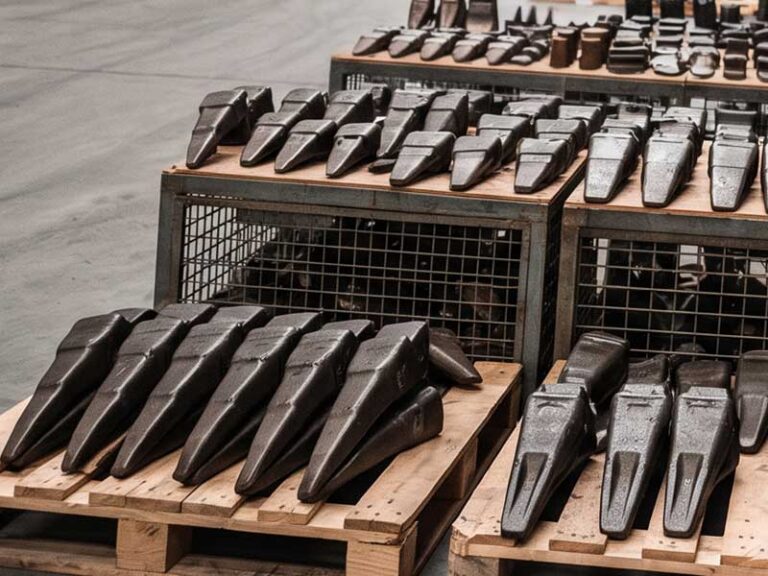
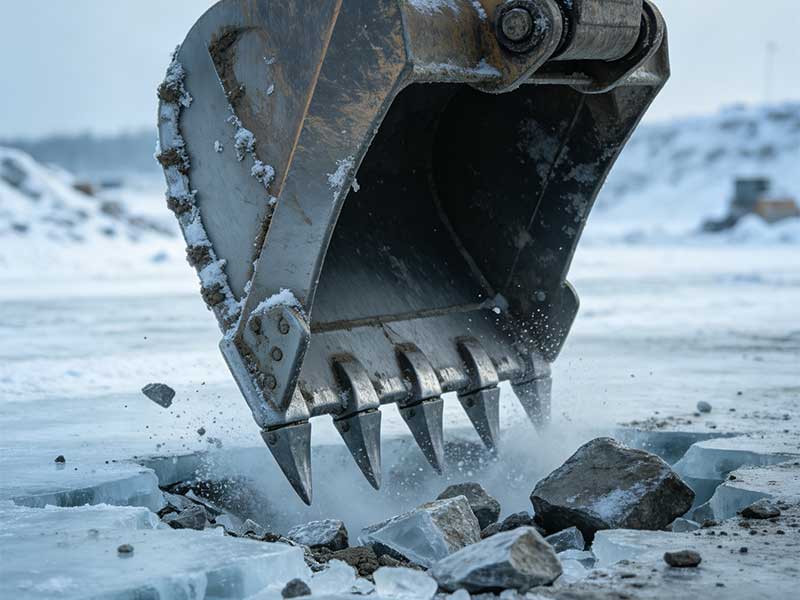
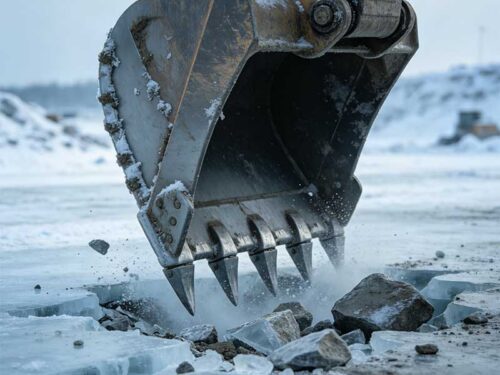
Frost teeth is a general term for all high-strength bucket teeth tailored for frozen soil, hard compacted soil, and fractured rock working conditions, belonging to the working condition classification system. It includes multiple structural forms such as single-point straight teeth, double-point split teeth, and integral ripper teeth, focusing on anti-impact and anti-bending performance in low-temperature and high-hardness environments.
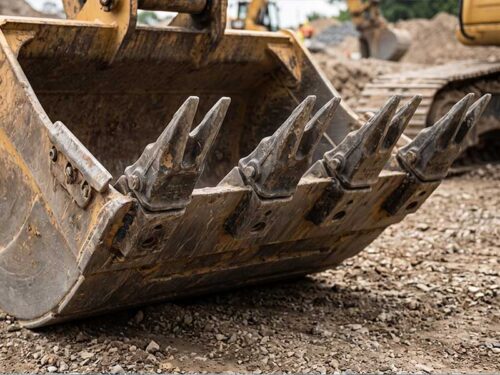
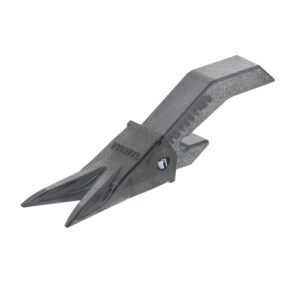
Twin tiger bucket teeth (twin tiger bucket teeth) is a professional shape definition in the industry, belonging to the structural morphology classification system. It features a fixed V-shaped double-tip split design, simulating tiger’s double fangs, exclusively used for excavator bucket lip installation, and is one of the common structural types of frost-resistant teeth in heavy-duty working conditions.
Industry survey data shows that over 68% of global frozen soil construction projects adopt twin tiger bucket teeth as the core frost-resistant accessory, while frost teeth cover 100% of low-temperature hard ground working condition scenarios with richer product forms.
2. Dimensional & Structural Parameter Comparison
Structural differences are the fundamental reason for the performance gap between the two tooth types. The following table summarizes the core structural parameters, morphological characteristics, and structural advantages verified by global parts testing institutions, covering mainstream 1-50 ton excavator supporting models.
|
Comparison Dimension
|
Frost Teeth
|
Twin Tiger Bucket Teeth
|
|---|---|---|
|
Classification Standard
|
Working condition adaptation (frozen soil, hard rock breaking)
|
Geometric shape (double-tip split structure)
|
|
Structural Morphology
|
Diversified forms: single-point thickened type, double-point split type, integral heavy ripper type; thick tooth body and large wall thickness
|
Fixed V-shaped double-fang structure, two independent sharp tips at the front end, symmetrical split design
|
|
Structural Thickness
|
Average tooth body thickness increased by 35% compared with standard teeth, ultra-high strength integral casting
|
Tip thickness is thin for penetration, tooth root thickened by 28% to balance impact resistance
|
|
Installation Position
|
Suitable for full bucket lip, independent ripper boom optional
|
Exclusively for excavator bucket lip, mostly used for side corner positions
|
|
Structural Advantage
|
Strong overall rigidity, anti-bending and anti-fracture, low-temperature resistance to brittle failure
|
Dual-point cutting, ultra-high penetration, good lateral gap clearance
|
3. Working Performance & On-Site Application Data Comparison
Based on 2025 global construction machinery on-site test data (covering Northern Europe, Russia, Canada, Northeast China and other high-latitude frozen soil construction areas), we sorted out the core performance indicators of frost teeth and twin tiger bucket teeth in extreme working conditions, including penetration force, wear life, failure rate and construction efficiency, providing data support for buyer selection.
|
Performance Indicator
|
Frost Teeth
|
Twin Tiger Bucket Teeth
|
Industry Test Data
|
|---|---|---|---|
|
Hard Soil Penetration Force
|
High (central force concentration)
|
Ultra-High (dual-point priority piercing)
|
Twin tiger bucket teeth improve frozen soil penetration efficiency by 22% compared with ordinary single-point frost teeth
|
|
Low-Temperature Wear Resistance
|
Excellent (thick wear-resistant layer)
|
General (small contact area, fast tip wear)
|
Frost teeth service life is 30-40% longer than twin tiger bucket teeth in continuous frozen soil operation
|
|
Low-Temperature Fracture Failure Rate
|
≤1.2%/1000 working hours
|
≤2.8%/1000 working hours
|
Frost teeth’s integral thickened structure effectively avoids low-temperature brittle fracture
|
|
Rock Breaking Capacity
|
Strong (suitable for heavy rock splitting)
|
Medium (suitable for thin-layer rock and compacted soil)
|
Frost teeth are the first choice for mine hard rock working conditions
|
|
Trenching & Shaping Effect
|
Ordinary
|
Excellent (neat cutting edge)
|
Twin tiger bucket teeth reduce bucket side wall friction loss by 18% in trenching operations
|
4. Applicable Scenarios & Procurement Matching Strategy
Global engineering data statistics show that improper bucket tooth selection causes an average of 15-20% increase in equipment maintenance costs and 10% reduction in construction efficiency every year. Reasonable matching of frost teeth and twin tiger bucket teeth according to working conditions is the core of cost control for global procurement buyers. The following table sorts out exclusive applicable scenarios and hybrid configuration solutions for the two products.
|
Project Scenario
|
Recommended Tooth Type
|
Procurement & Configuration Suggestion
|
|---|---|---|
|
High-latitude severe frozen soil, thick ice layer breaking, mine hard rock excavation
|
Full set of heavy-duty frost teeth
|
Priority to select single-point thickened frost teeth, with ultra-low temperature alloy material, suitable for 24-hour continuous heavy operation, low replacement frequency
|
|
Hard clay, shale, root-intensive trench excavation, thin-layer frozen soil construction
|
Twin tiger bucket teeth
|
Dual-point cutting improves trenching efficiency, ensures neat groove wall, and protects bucket side plates from wear
|
|
Mixed working conditions (frozen soil + hard soil + trenching)
|
Hybrid configuration: Frost teeth (middle) + Twin tiger bucket teeth (corners)
|
Industry mainstream optimal solution: middle frost teeth ensure penetration and wear resistance, corner twin tiger bucket teeth ensure lateral cutting and gap clearance, comprehensive efficiency increased by 25%
|
|
Short-term small-scale frozen soil operation, low-budget project
|
Universal twin tiger frost teeth (integrated model)
|
Dual-functional product, balancing penetration and cost, suitable for mini excavators and light-duty equipment
|
5. Global Procurement Cost & Market Trend Analysis
In the global excavator parts market, the unit price of heavy-duty frost teeth is 10-15% higher than standard teeth due to high-alloy thickened materials, while the price of twin tiger bucket teeth is moderate, with high cost performance for light and medium heavy hard soil working conditions.
According to 2026 global construction machinery parts export data, the market demand for frost teeth in high-latitude regions (Europe, Russia, North America) maintains a year-on-year growth of 12.8%, and twin tiger bucket teeth, as a matching accessory for mixed working conditions, has become the best-selling customized model for global parts wholesalers, with a market penetration rate of 68% in frozen soil auxiliary construction scenarios.
In terms of after-sales cost control, fleets that adopt hybrid configuration of frost teeth and twin tiger bucket teeth reduce the annual replacement frequency of bucket teeth by 32% and reduce comprehensive maintenance costs by 18% compared with single-tooth-type matching fleets, which is the most cost-effective configuration scheme for global engineering enterprises at present.
6. Conclusion & Buyer Selection Guide
To sum up, frost teeth are condition-oriented heavy-duty excavator accessories with diverse structures, outstanding low-temperature resistance and wear resistance, suitable for extreme frozen soil and hard rock heavy breaking operations; twin tiger bucket teeth are shape-specific split-type teeth with superior penetration and cutting performance, ideal for hard soil trenching and light frozen soil construction. The two are not mutually exclusive but complementary in actual engineering applications.
For global buyers:
- 1. For large mines, severe frozen soil and long-term heavy-duty projects, prioritize purchasing professional frost teeth;
- 2. For municipal trenching, hard clay and mixed light frozen soil projects, select twin tiger bucket teeth;
- 3. For multi-scenario mixed operation fleets, adopt the mainstream hybrid matching scheme to maximize construction efficiency and minimize comprehensive procurement and maintenance costs.