


How Longer Forklift Forks Reduce Rated Load Capacity?
Forklift forks are the primary load-bearing attachment of counterbalance forklifts, and choosing the wrong length or grade of forklift tines is one of the most common safety mistakes in industrial material handling.
Many B‑buyers assume longer forklift forks simply extend reach without changing lifting limits, but load capacity follows the lever principle: as fork length increases, the load’s centre of gravity moves outward, which reduces the forklift’s effective lifting capacity proportionally.
A widely cited industry rule of thumb states “if fork length doubles, rated load typically halves”, though this estimate is only a rough guideline. The official derated capacity must always come directly from your forklift’s data plate and manufacturer specification sheet, not field rules of thumb.
1. Lever Principle & Load Centre: Why Longer Forklift Tines Cut Lifting Capacity
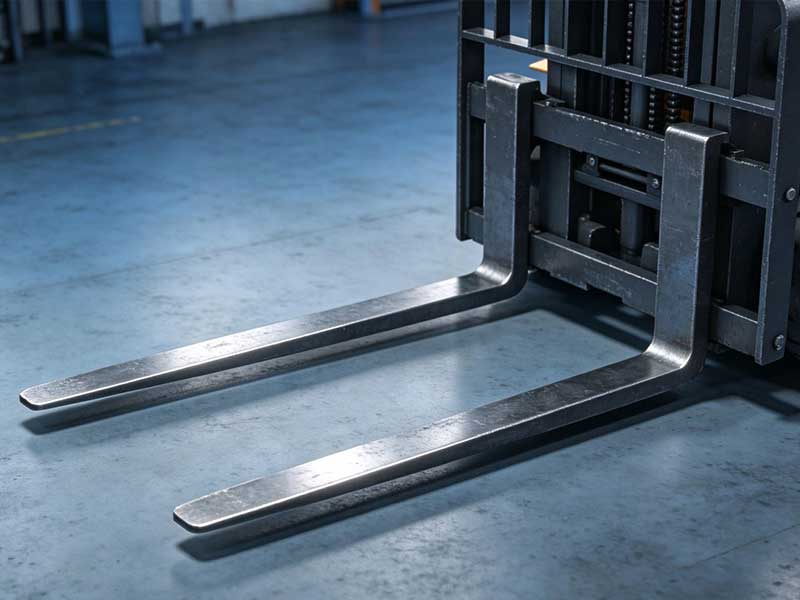
Every counterbalance forklift has a standard rated load centre, commonly 500 mm or 600 mm per ISO 20297‑1. The machine’s published rated capacity assumes pallet weight is centred at this distance.
When you install extended forklift forks to handle oversize pallets, long timber, steel beams or bundled goods, the pallet’s centre of gravity shifts further forward. This increases the forward tipping moment. The counterweight at the forklift rear can only resist a fixed tipping force, so the allowable maximum load drops as that moment rises.
It is vital to clarify: the fork itself may still be mechanically strong enough, but the forklift truck’s stability is the limiting factor. Even if your new forklift forks are heavy‑duty forged alloy steel, the whole lift truck’s safe working load is derated.
High or off‑centred loads add extra risk. Some operators mistakenly use short forklift forks to lift tall, top‑heavy cargo, creating extreme instability. In such cases, extended forklift forks, paired with reorienting the pallet, can distribute weight better — but buyers must still recalculate the new reduced capacity before lifting.
Safety reminder: Never exceed the derated capacity. No modification, reinforcement or welding on forklift forks can restore the original truck rating. Damaged, bent or cracked forklift tines must be retired immediately.
|
Fork Length
|
Effective New Load Centre
|
Derated Safe Working Load
|
Notes
|
|---|---|---|---|
|
1200 mm (standard)
|
600 mm
|
3000 kg
|
Matches factory nameplate rating
|
|
1500 mm extended
|
750 mm
|
2400 kg
|
Moderate extension, common for wide pallets
|
|
1800 mm extended
|
900 mm
|
1950 kg
|
Significant derating; pre‑use engineering review recommended
|
|
2400 mm long tines
|
1200 mm
|
1450 kg
|
Length doubled from standard; capacity much less than half for this truck model
|
Note: This table is for illustration only. Actual derated values depend on truck model, mast height, tire type and carriage class. Always verify with OEM capacity charts before deployment.
2. How to Choose Suitable Extended Forklift Forks?
Selecting qualified extended forklift tines is not simply choosing longer dimensions. Professional procurement requires compliance with industry safety rules, matching load scenarios, verifying forklift compatibility, and balancing safety, efficiency and cost.
2.1. Follow Core Industry Safety Rules for Extension Length
Two universal industry safety standards govern extended forklift forks selection, widely adopted by OSHA and European material handling regulations, to eliminate tipping risks:
- 150% Maximum Extension Rule: The total length of upgraded extended forklift tines shall not exceed 150% of the original standard fork length. For example, if your factory default forklift forks are 1200mm, the maximum safe extended length is 1800mm. Exceeding this limit will cause extreme load centre offset, sharp capacity attenuation and irreversible stability risks.
- 60% Load Support Rule: Extended forklift forks must support at least 60% of the pallet or cargo depth. For oversized and long materials (timber, steel pipes, bundled profiles), reserve 100–150mm overhang on both sides to ensure full load bearing and prevent cargo tilting or sliding during lifting and traveling.
2.2 Match Extension Length Based on Actual Working Scenarios
Different cargo types and working environments require targeted extended forklift tines specifications, avoiding blind length increase:
- – Wide Standard Pallets (1200–1400mm): Choose 1400–1600mm extended forklift forks. Slight extension ensures full pallet support with minimal capacity loss, ideal for daily logistics and warehouse turnover.
- – Long Bulk Cargo (Timber, Steel Tubes, Plastic Profiles): Select 1800–2000mm heavy‑duty extended tines. Prioritize alloy steel materials and confirm derated load capacity in advance, suitable for construction and metal processing yards.
- – High & Top‑Heavy Loads: Longer forklift forks are strongly recommended to expand the support base, reduce cargo gravity offset, and prevent side tipping. Meanwhile, strictly reduce the lifting weight and lower traveling speed.
- – Narrow Aisle Warehouses: Avoid excessive long forklift tines. Overly extended forks will reduce forklift maneuverability, cause collision risks, and increase wear on steering and spindle components.
2.3. Verify Full Compatibility Parameters
Before bulk purchasing extended forklift forks, confirm all matching parameters to avoid installation failure and safety hazards:
- – ITA Carriage Class Consistency: Extended forklift tines must match the forklift’s carriage class (Class II/III/IV/V). Mismatched hook sizes will cause loose installation, slipping or jamming during operation.
- – Cross‑Section Dimension Matching: Fork thickness and width must fit the carriage slot tolerance. Standard fork widths range from 4.2–5.5 inches; non‑standard dimensions will lead to unstable fixation and uneven load bearing.
- – Dynamic Balance Performance: High‑quality extended forklift forks undergo professional dynamic balance testing. Unbalanced long tines will cause severe vibration, damage the forklift spindle and deck, and shorten equipment service life.
2.4. Material & Grade Selection for Extended Forklift Tines
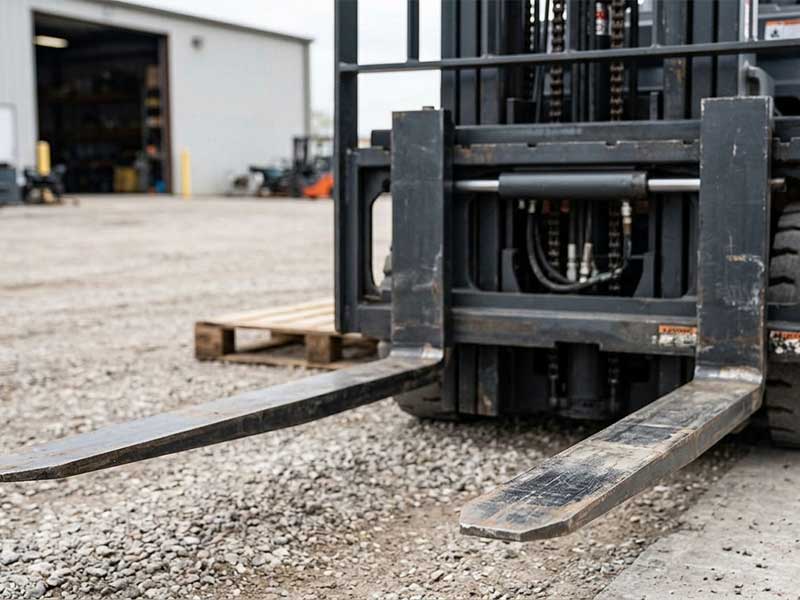
Extended forklift forks bear larger bending moments than standard tines, so material grade requirements are higher. Never use low‑carbon steel or unheated treated plates for extended models:
- – Light‑Duty Extension (Indoor Warehouse): 40Cr alloy steel, balanced toughness and wear resistance, cost‑effective for frequent pallet handling.
- – Heavy‑Duty Extension (Construction/Steel Yard): 4142 high‑strength alloy steel, higher tensile strength, resistant to permanent bending and impact damage under long‑time offset load.
- – Special Environment Extension: Stainless‑cladded extended forklift tines for food and pharmaceutical washdown workshops; spark‑proof models for chemical and flammable material warehouses.
2.5. Mandatory Derated Capacity Recalculation
The core principle of extended forklift forks selection: longer forks improve support range but never increase lifting capacity. After upgrading extended tines, abandon the original forklift rated load and strictly calculate the safe working load based on the new load centre. For B‑end fleets, it is necessary to update on‑site safety operation specifications and train all operators on new load limits to avoid overloading accidents.
Demand for custom‑length forklift forks keeps rising as distribution centres handle longer, oversize cargo. While standard forklift forks remain the highest volume SKU, aftermarket distributors report fast‑growing enquiries for extended forklift tines for lumber, steel tubing and modular building materials.
TrueCast Engineering supplies a full range of wear-resistant spare parts for construction machinery and agricultural equipment, including extended forklift forks. We offer OEM manufacturing, custom fabrication according to your specifications, drawings and load requirements. Flexible for small-batch custom orders as well as bulk wholesale. With precision casting and heat treatment processes, our parts feature reliable wear resistance and consistent quality. Ideal for equipment repair shops and parts distributors worldwide.
FAQ for Forklift Forks Procurement
Q1: Are longer forklift forks the only factor affecting derated load?
A: No. Mast height, load height, tire type, rear counterweight and whether you use side shift also affect capacity. Forklift fork length is the most common variable, but all factors should be included in capacity review.
Q2: Can I use extended forklift forks to lift a heavy load as long as the forklift forks themselves are strong enough?
A: Not safe. Forklift forks strength and forklift stability are separate calculations. The forklift truck’s tipping moment usually limits safe load before the fork metal yields.
Q3: What are the non‑negotiable rules for buying extended forklift forks?
A: Follow the 150% max extension rule and 60% minimum support rule, verify ITA class compatibility, upgrade material grade for long tines, and update derated load capacity for daily operation.
Q4: How often should I order replacement forklift forks for a high‑cycle fleet?
A: Heavy use fleets (multi‑shift operation) typically inspect forklift forks monthly, and replace pairs every 1–3 years, depending on cargo type. Light duty indoor warehouses may last multiple years before hitting wear limits.
Q5: When would longer forklift forks improve safety?
A: For high, top‑heavy pallets. Longer forklift forks spread support points, reduce pallet tipping risk, provided the operator lowers the maximum permitted load to match the new load centre.