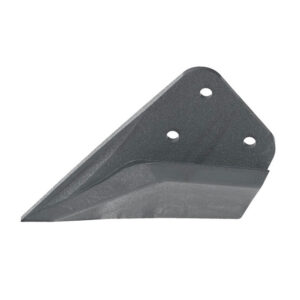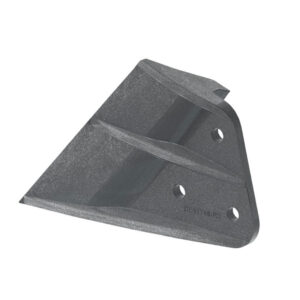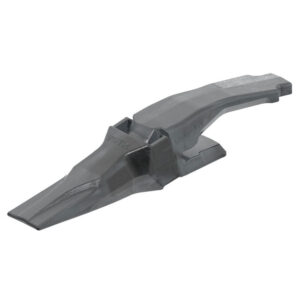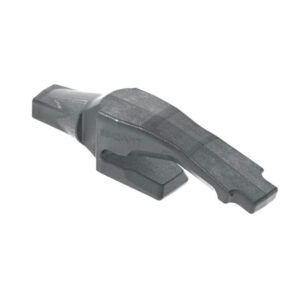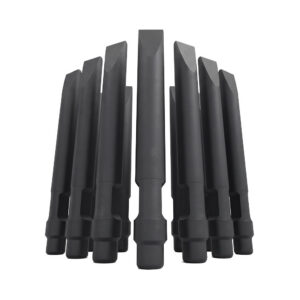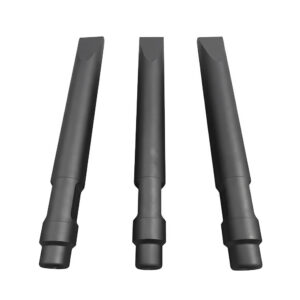



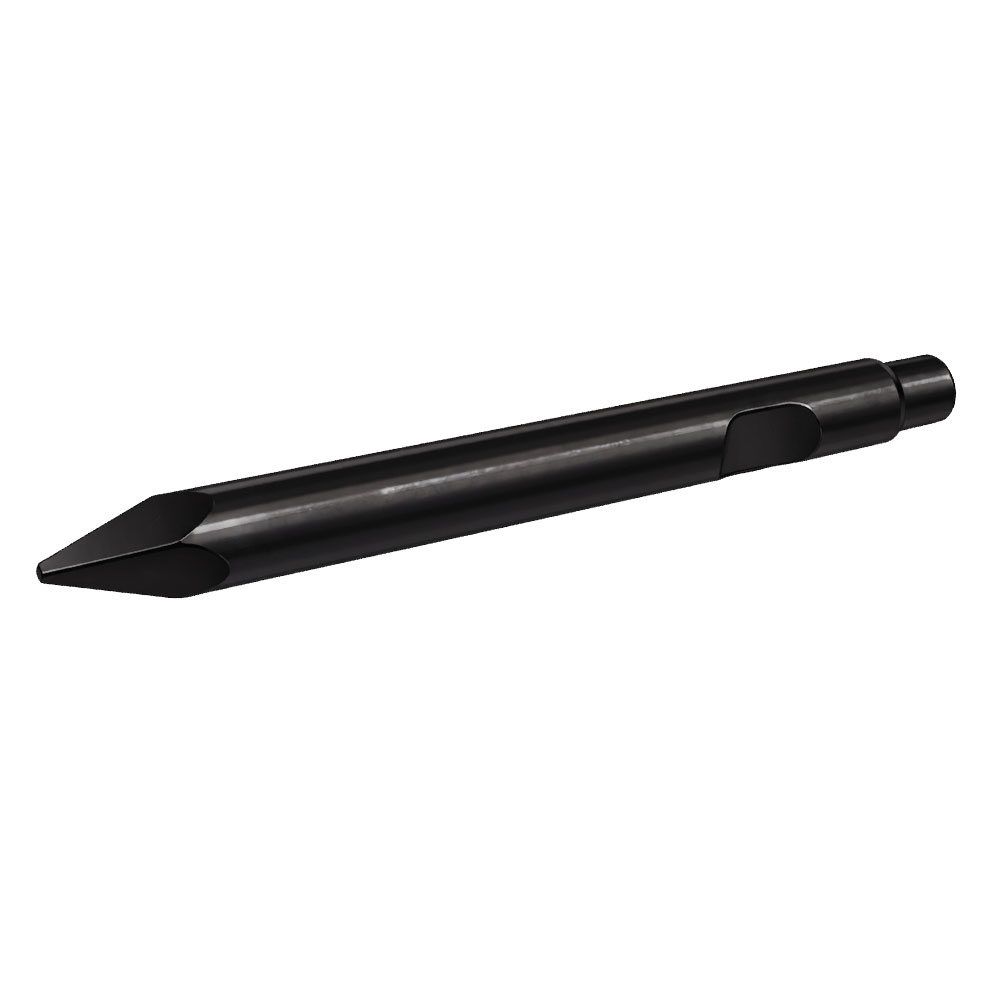
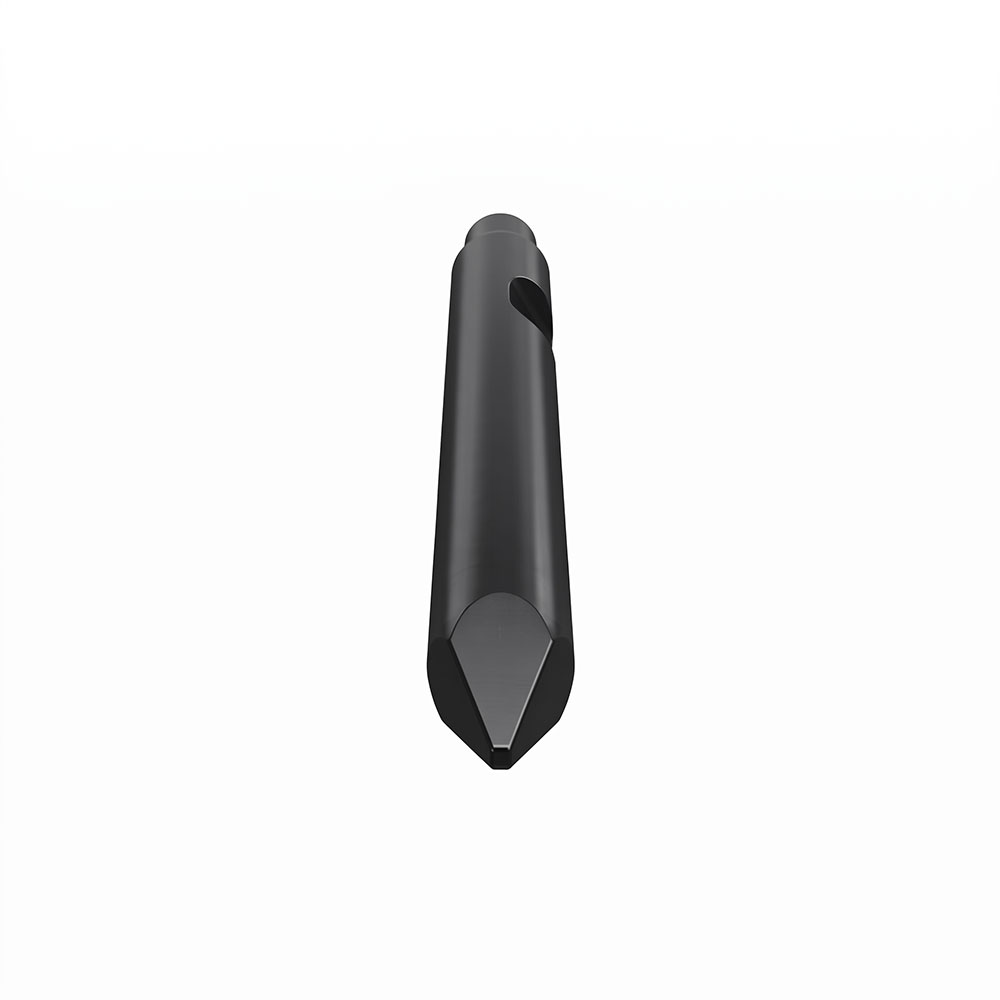
The Moil Point Chisel is one of the most common and versatile working-end tools used with hydraulic breakers (hammers) on excavators.
1. Product Introduction
Material & Manufacturing: Premium chisels are typically forged from high-strength alloy steel (such as 42CrMo or 40CrMo). Through precise forging and multi-stage heat treatment (quenching and tempering), the chisel achieves extreme surface wear resistance while maintaining a tough core capable of withstanding high-frequency, heavy-impact stresses and bending loads.
Hardness Specifications: Surface hardness typically ranges from HRC 48–52 (or HRC 51±3), while core hardness is approximately HRC 35±3, striking the optimal balance between wear resistance and fracture toughness.
Size Range & Compatibility: Compatible with a wide variety of hydraulic breaker brands (e.g., Atlas Copco/Epiroc, Montabert, Rammer, Soosan, NPK, Furukawa) ranging from mini-excavators (1-ton class) to heavy-duty mining excavators (100+ tons). Diameters generally range from 30mm to 250mm, with lengths between 400mm and 1800mm.
2. Key Features
- High-Intensity Point Penetration: The 4our-sided tapered point concentrates impact force instantly into a single point, generating immense pressure ideal for tackling extremely hard, dense materials.
- Multi-Directional Crack Initiation: As the point drives into hard surfaces, it generates radial shear forces and fractures, making subsequent large-scale disintegration much easier.
- High Versatility: A multi-purpose tool adaptable to diverse job sites, balancing operational flexibility with high impact efficiency.
- Superior Fatigue Resistance: Advanced heat treatment prevents “mushrooming” of the striking end and resists premature mid-body snapping during prolonged, high-intensity operation.
3. Applications
Moil Point Chisels are widely used across mining, construction, roadwork, and municipal engineering:
- Mining & Quarries: Hard rock excavation and secondary breaking of oversized boulders.
- Civil Engineering & Demolition: Breaking high-strength reinforced concrete structures, foundation pile caps, and bridge piers.
- Road & Municipal Works: Road surface repair, asphalt and concrete breaking, and excavation of frozen ground.
- Tunneling & Underground Projects: Tunnel heading and rock mass loosening.
4. Procurement Recommendations
When sourcing Moil Point Chisels for your excavators or hydraulic breakers, consider the following key factors:
Verify Exact Equipment Models & Dimensions:
Provide the brand and specific model of your hydraulic breaker (e.g., Soosan SB81, Epiroc HB2000), or accurately measure your old chisel’s diameter, total length, and pin slot/retainer dimensions. Top configurations can vary significantly between brands.
Material and Heat Treatment Quality (Core Cost Factor):
Prioritize products manufactured from genuine 42CrMo alloy steel. Inferior steel with inconsistent heat treatment is prone to mid-body snapping or rapid tip wear.
Match Chisel Type to Work Conditions:
- Moil Point: Best for heavy-duty hard rock penetration and general-purpose concrete breaking.
- Flat Chisel / Moil Wedge: Ideal for trenching, controlled cutting, or horizontal scaling/peeling.
- Blunt Chisel: Best for crushing slag or uniform secondary breaking of large debris without deep penetration.
Supplier Reliability & Value:
Look for Moil Poin Chisel suppliers offering structural warranties or clear quality guarantees. For overseas procurement, partner with experienced manufacturers capable of providing reliable anti-rust packaging, custom branding, and stable export logistics.
5. Frequently Asked Questions (FAQ)
Q1: Why do Moil Point chisels sometimes snap in the middle before the tip is fully worn down?
A: This is typically caused by:
- Blank Firing (Empty Striking): Operating the hammer continuously while it is not firmly pressed against the material;
- Prying Rocks: Improperly using the excavator boom and chisel as a crowbar to leverage or shift boulders, creating excessive lateral shear stress;
- Internal metallurgical or heat-treatment defects in substandard steel.
Q2: How should I choose between a Moil Point (Chisel) and a Flat Chisel?
A:
- Moil Point: Focuses on penetration and point-breaking, making it superior for extremely hard, unlayered solid rock or thick concrete.
- Flat Chisel: Focuses on cutting and splitting, making it better for layered rock, asphalt trimming, or directional splitting where controlled breaking lines are needed.
Q3: How can I extend the service life of my breaker chisels?
A:
- Strictly avoid blank firing.
- Do not hammer continuously on a single spot for more than 1 minute (relocate if the material does not yield to prevent localized overheating and hardness loss).
- Regularly apply high-temperature grease to the bushing and retaining pins.
- Avoid oblique/angled striking and prying operations.