


Case Study: How We Boosted Heavy-Duty Trailer Equalizer Load Capacity by 30% Through FEA & Casting Optimization
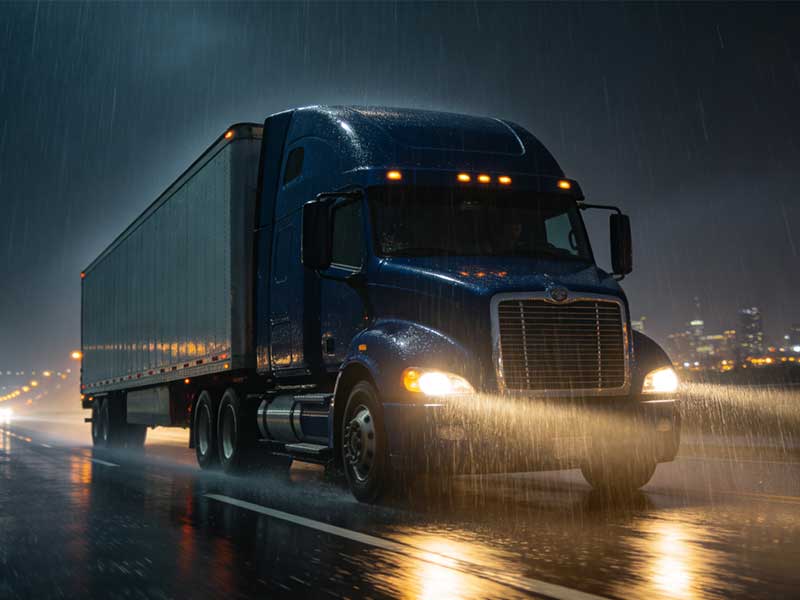
As a dedicated manufacturer and supplier of trailer suspension components, we frequently encounter clients facing severe operational challenges. Recently, a North American manufacturer of heavy-duty specialty trailers approached us with a critical safety and warranty issue: the standard suspension equalizers on their flagship off-road trailers were experiencing frequent fatigue fractures and sudden brittle failures during severe winter operations.
Here is a detailed look at how we utilized Finite Element Analysis (FEA), metallurgical upgrades, and precision casting optimization to completely resolve the breakage issue and increase the component’s load capacity by 30%.
1. The Challenge: Uncovering the Root Cause of Failure
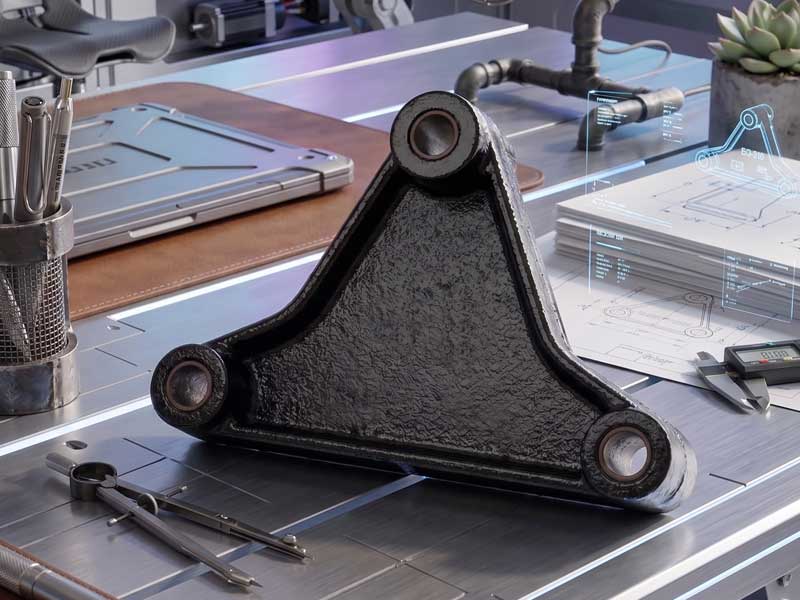
The equalizer is the most critical load-bearing component in a tandem axle suspension system, responsible for distributing impact forces between the axles. The client’s original equalizers, cast from standard QT450-10 ductile iron, were snapping right at the center pivot hole when fully loaded trailers hit continuous potholes at sub-zero temperatures.
Our engineering team initiated a comprehensive failure analysis, utilizing Scanning Electron Microscopy (SEM) on the fractured surfaces alongside chemical and physical testing. We identified three primary culprits:
Table 1: Failure Analysis & Root Cause Identification
| Failure Phenomenon | Location | Root Cause (Engineering/Casting) | Consequence |
| High Stress Concentration | Transition zone between the center pivot hole and side arms. | The transition radius was too small (R3mm), creating a sharp geometric notch. | Induced extreme localized stress peaks under dynamic loading. |
| Internal Micro-Shrinkage | Deep within the thickest wall of the center hub (45mm thick). | Insufficient feeding during the cooling phase of the traditional shell mold casting process. | Created microscopic voids that acted as initiation points for fatigue cracks. |
| Low-Temperature Brittleness | Entire casting body. | Standard QT450-10 ductile iron lacks sufficient impact toughness at -30°C. | Resulted in sudden brittle fracture before yielding under severe cold weather impacts. |
2. The Engineering Solution: FEA-Driven Structural Redesign
To eliminate the stress concentration, we couldn’t simply make the part heavier—that would increase the unsprung dead weight of the trailer. Instead, we used Finite Element Analysis (FEA) to perform targeted topological optimization. Here is how we executed the FEA process to pinpoint and resolve the danger zones:
Geometry Defeaturing & Preparation:
We imported the CAD model and removed non-structural details like draft angles, minor chamfers (<2mm), and surface logos. However, the critical center pivot hole, spring mounting holes, and transition fillets were perfectly preserved.
Strategic Meshing:
We utilized 10-node modified tetrahedral elements (C3D10) to accurately map the complex casting curves. While the global mesh was set to 5-8mm, we applied severe local mesh refinement (1-1.5mm) exactly at the R3mm transition fillet.
Applying Boundary Conditions:
To simulate extreme off-road bumping, we applied a fixed cylindrical hinge constraint to the center hole (allowing rotation but restricting translation). We then applied a bearing load of 15,000 lbs combined with a 2.5G dynamic impact factor to the lower half-cylinder of one side hole, mimicking a leaf spring bottoming out.
Solving & Redesign:
The resulting stress contour plot revealed a dark red danger zone exactly at the R3mm fillet, peaking at 425 MPa—well beyond the 310 MPa yield strength of QT450-10.
Based on this precise data, we increased the transition radius from R3mm to R12mm and introduced an I-Beam rib design. This shifted material to the tension-stressed edges without increasing the overall weight.
3. Manufacturing Upgrades: Casting Simulation & Metallurgy
A perfect digital design must translate into a perfect physical casting. To address the internal micro-shrinkage and low-temperature brittleness, we upgraded our foundry processes:
Advanced Gating & Chills:
Using casting simulation, we redesigned the gating system to a “top riser + bottom pouring” setup. Crucially, we introduced conformal chills at the thickest section of the center pivot hole. This forced directional solidification, allowing the thinner arms to cool in sync with the thick center hub, completely eradicating internal shrinkage voids.
Metallurgical Formulation Upgrade:
We upgraded the material grade to QT500-7 ductile iron. By strictly controlling the nodularization rate (ensuring >88% spheroidal graphite) and adding trace amounts of Nickel (Ni) and Copper (Cu), we achieved a Charpy impact value of over 12J at -40°C.
4. The Results: Proven Reliability Under Extreme Conditions
The first batch of optimized samples underwent 1,000,000 cycles of high-frequency dynamic fatigue testing at an independent laboratory. The results far exceeded the client’s expectations.
Table 2: Performance Validation (Original vs. Optimized)
| Performance Metric | Original Design (QT450-10) | Optimized Design (QT500-7) | Improvement |
| Max Single-Axle Load Rating | 15,000 lbs | 19,500 lbs | + 30.0% |
| Peak Stress at Center Hole (FEA) | 425 MPa | 310 MPa | – 27.1% |
| Dynamic Fatigue Life | Micro-cracks at 280,000 cycles | No cracks at 1,000,000 cycles | > 250% |
| Internal Casting Defect Rate | 4.2% (Shrinkage porosity) | < 0.5% | Significant Drop |
| Unit Weight | 18.2 kg | 18.5 kg | Only + 1.6% |
5. Conclusion
By combining precise FEA simulation with advanced foundry metallurgy, Truecast Engineering didn’t just solve a warranty nightmare; we empowered our client to launch a highly profitable “Arctic Heavy-Duty” trailer chassis line.
If you are looking for a reliable OEM/ODM partner capable of resolving complex structural failures and delivering high-precision, heavy-duty casting components, our engineering and production teams are ready to assist.
Contact us to discuss your next custom casting project.