


Trailer Casting Parts Solution with Strict Full-Cycle Quality Inspection
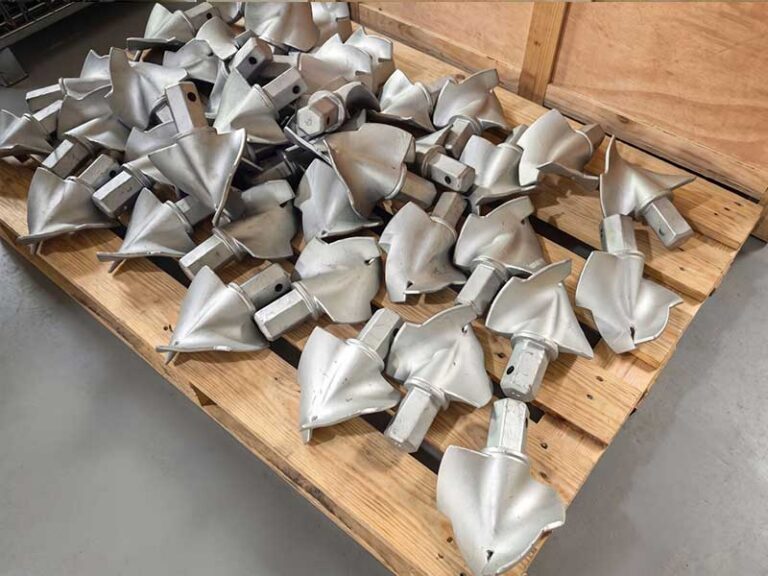
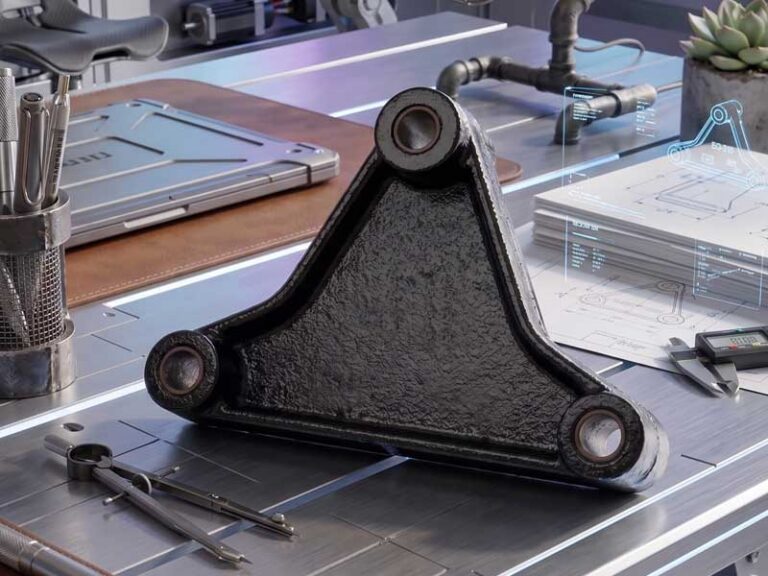
Trailer casting parts are indispensable core load-bearing and safety components for all types of road trailers, directly determining the overall vehicle reliability, driving safety, durability, and lightweight performance.
As a professional trailer casting parts solution provider, Truecast Engineering focuses on material optimization, precision casting technology, and standardized quality control.
Every batch of our trailer casting parts undergoes rigorous full-cycle monitoring and testing to meet the strict quality standards of global trailer manufacturers and aftermarket suppliers.
1. Scientific Material Selection for Trailer Casting Parts
The service life and load resistance of trailer casting parts depend fundamentally on material matching. Different functional components require customized metal materials to adapt to complex working conditions such as heavy load, impact, vibration, and friction. We select high-quality raw materials in strict accordance with international to ensure consistent mechanical properties of finished parts.
|
Material Type
|
Common Grade
|
Core Performance Advantages
|
Typical Trailer Casting Applications
|
|---|---|---|---|
|
Ductile Iron
|
QT400-18, QT500-7
|
Excellent toughness, shock resistance, wear resistance, stable mechanical properties, cost-effective, good casting fluidity
|
Trailer support legs, suspension brackets, equalizers, wheel hubs
|
|
Malleable Iron
|
KTZ450-06
|
High plasticity and toughness, dense structure, strong vibration resistance, no shrinkage or crack defects
|
Trailer wheel hubs, small vibration-bearing connecting parts
|
|
4140, 42CrMo, ZG270-500
|
Ultra-high tensile strength and hardenability, outstanding impact resistance, suitable for extreme heavy-load conditions
|
Trailer fifth wheel coupling, traction pins, heavy-duty bridge accessories
|
|
|
High Manganese Steel
|
Custom Grade
|
Work-hardening characteristic, hard surface and tough inner layer, excellent impact wear resistance
|
Trailer hooks, safety anti-collision castings
|
2. Precision Manufacturing Processes for Stable Trailer Casting Parts Quality
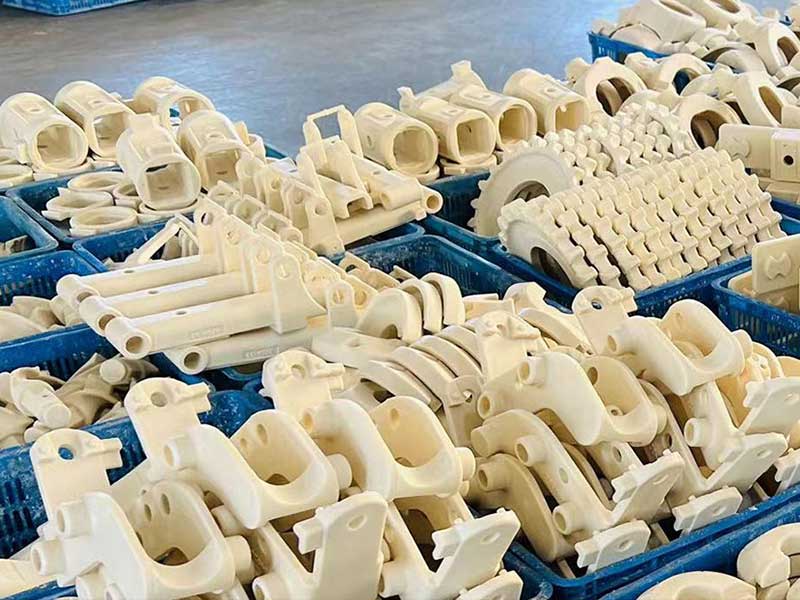
Advanced casting and processing technologies are the core guarantees for high-precision and defect-free trailer casting parts. We abandon traditional backward casting methods and adopt a combination of numerical simulation casting, mature molding processes and post-processing technologies to balance production efficiency and product quality, fully meeting the customized needs of global customers for trailer casting parts solution.
|
Manufacturing Process
|
Applicable Parts
|
Process Advantages
|
Quality Control Points
|
|---|---|---|---|
|
Sand Casting (Resin Sand/Coated Sand)
|
Medium and large trailer chassis, support legs, traction seats
|
Mature technology, low comprehensive cost, good dimensional stability, suitable for mass production
|
Optimize gating and feeding system via ProCAST simulation to avoid shrinkage and porosity defects
|
|
Investment Casting (Precision Casting)
|
Small and complex-shaped trailer connecting parts, anti-collision parts
|
High dimensional accuracy (CT7-9 grade), smooth surface, minimal post-processing allowance
|
Strictly control mold temperature and casting speed to ensure consistent part precision
|
|
Semi-Solid Die Casting
|
Trailer pin handles, high-precision locking parts
|
Dense internal structure, no casting defects, excellent mechanical properties, lightweight
|
Control solid-liquid ratio and die-casting pressure to stabilize part toughness and rigidity
|
|
Heat Treatment (Quenching & Tempering)
|
All load-bearing trailer casting parts
|
Eliminate casting residual stress, improve hardness and fatigue resistance
|
Limit repeated heat treatment times to no more than 2 times to avoid performance degradation
|
3. Strict Full-Cycle Quality Monitoring & Inspection System
What distinguishes our trailer casting parts solution from ordinary manufacturers is our zero-tolerance quality inspection system covering the entire production process.
For trailer safety components, Truecast Engineering implements full-process monitoring from raw material smelting to finished product delivery, adopting international and national authoritative standards to ensure every part meets global safety certification requirements. All inspection records are traceable and can provide official test certificates for overseas buyers.
3.1 In-Process Production Monitoring (Source Quality Control)
We prevent potential defects at the production source through real-time process parameter monitoring, rather than merely screening defective finished products.
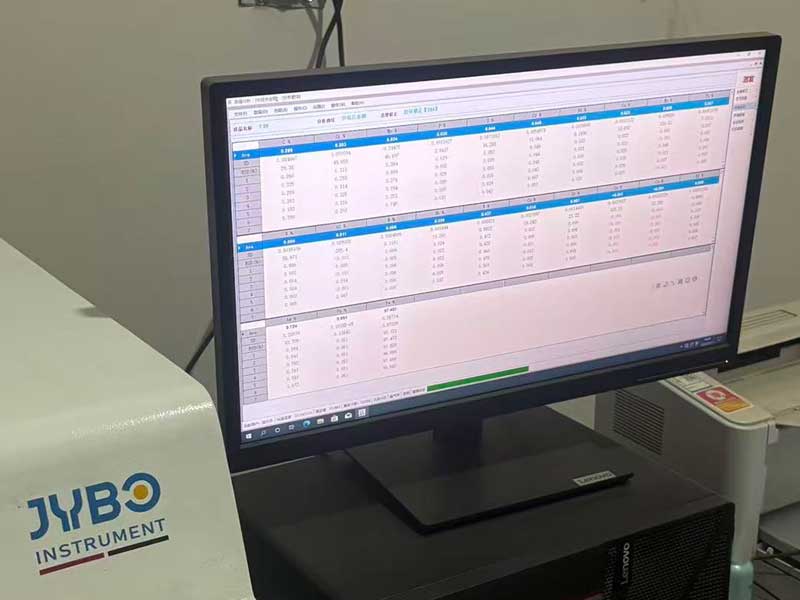
Before molten metal pouring, we use spectrometer rapid analysis to detect chemical composition, strictly controlling the content of carbon, silicon, manganese, sulfur, phosphorus and alloy elements to meet material grade standards.
During pouring, we implement statistical process control (SPC) on key parameters including molten metal temperature, specific gravity, pouring time and cooling curve.
Each furnace batch is equipped with standard test bars, which undergo the same heat treatment as formal castings.
Mechanical performance tests are carried out on test bars; if the first test fails, double re-inspection is conducted, and unqualified furnace batches are completely rejected. Meanwhile, we continuously monitor mold sand performance and mold status to eliminate pores, sand inclusion and other process defects.
3.2 Finished Product Multi-Dimensional Inspection (Core Quality Assurance)
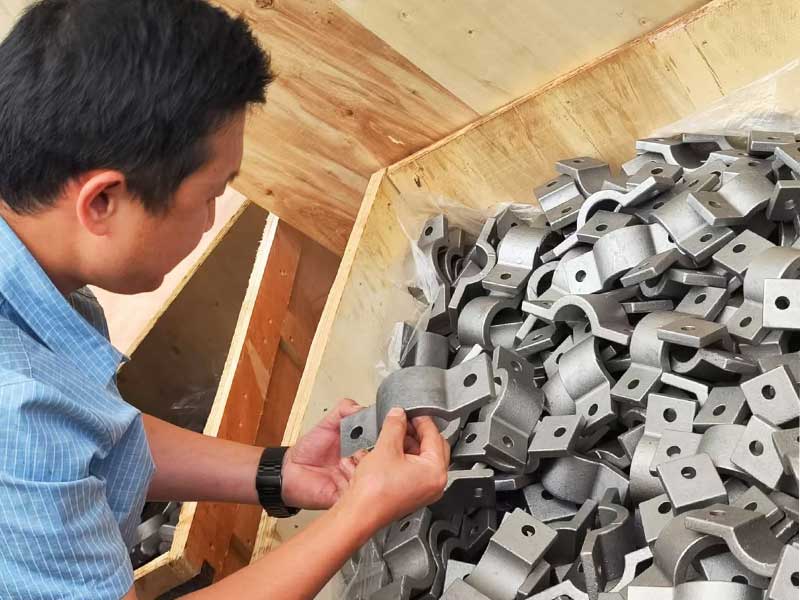
All finished trailer casting parts undergo layered strict inspection, including visual appearance inspection, dimensional precision inspection, mechanical performance test, metallographic analysis and non-destructive testing (NDT).
For international trade, the NDT of trailer casting parts primarily follows three authoritative global standard systems: ISO (International Organization for Standardization), ASTM (American Society for Testing and Materials), and EN (European Standards).
These international standards differ significantly from domestic GB standards in defect judgment rules and acceptance thresholds, serving as the core inspection basis for cross-border orders. For safety-critical parts such as trailer hooks and traction seats, 100% full inspection in accordance with international specifications is mandatory.
|
Inspection Item
|
Adopted International Standard
|
Inspection Purpose & Scope
|
International Inspection Specification
|
|
Ultrasonic Testing (UT)
|
ISO 4992-1 / ISO 4992-2, EN 12680-1:2025
|
Detect internal looseness, cracks, slag inclusion and linear defects in castings. ISO 4992-1 applies to general steel castings, while ISO 4992-2 sets stricter criteria for highly stressed trailer components such as traction seats and support legs. EN 12680-1:2025 is the latest updated European standard for general-purpose steel casting ultrasonic testing.
|
General parts comply with ISO 4992-1 standard grade; high-load safety components strictly follow ISO 4992-2 and EN 12680-1 classification requirements, with no oversized defective indicators allowed in key stress areas.
|
|
Radiographic Testing (RT)
|
ISO 4993, ISO 4996
|
Detect volume defects including internal porosity, shrinkage and inclusions. ISO 4993 specializes in steel and iron trailer castings, while ISO 4996 covers a wider range of metal casting materials, adopting X-ray or gamma-ray film radiographic inspection.
|
Full radiographic inspection for heavy-duty trailer safety parts, defect acceptance level strictly implemented per ISO standard classification and customer contract agreements.
|
|
Magnetic Particle Testing (MT)
|
ASTM A903/A903M-99(2024)
|
Detect surface and near-surface tiny cracks of ferromagnetic steel castings. This latest ASTM standard specifies clear acceptance criteria for linear and nonlinear defect indications, widely cited in international trailer casting procurement contracts.
|
100% mandatory inspection for high-safety ferromagnetic components including trailer traction seats and coupling parts; any over-standard defect indications are deemed unqualified.
|
|
Liquid Penetrant Testing (PT)
|
ASTM A903/A903M-99(2024), ISO 3452 Series
|
Inspect surface open defects such as micro cracks and pinholes applicable to all metal trailer castings. ASTM A903/A903M provides professional steel casting surface acceptance rules, while ISO 3452 offers universal penetration testing operational specifications.
|
Full surface inspection for precision trailer castings; all surface open defects must meet international standard acceptance thresholds without invalid indications.
|
|
Computed Tomography (CT) Inspection
|
ASTM E1814-25
|
Advanced 3D nondestructive testing technology for complex and high-value trailer castings, enabling precise detection of tiny internal defects, dimensional measurement and reverse engineering modeling.
|
Applied to high-precision structural trailer parts; strictly follow ASTM E1814-25 procedural specifications for CT scanning and defect evaluation.
|
|
Brinell Hardness Test
|
ISO 6506 Series
|
Verify casting surface hardness and heat treatment uniformity, ensure mechanical stability of load-bearing trailer parts under long-term working conditions.
|
Multi-point uniform testing for large trailer castings; maximum 2 repeated heat treatments allowed for unqualified parts per ISO standard regulations.
|
|
Dimensional Inspection
|
ISO 8062
|
Control casting dimensional tolerance, geometric accuracy and assembly compatibility, ensure perfect matching with trailer assembly systems.
|
First-piece full inspection + batch sampling inspection, all dimensional errors comply with ISO 8062 international casting tolerance grades.
|
3.3 International Standard Implementation Guidelines & Traceability System
We adopt differentiated international inspection strategies tailored to cross-border order requirements and part safety levels, fully aligning with global buyer audit standards.
Safety-critical trailer casting components implement 100% full NDT inspection in accordance with contracted ISO/ASTM/EN standards, while conventional parts adopt standardized sampling inspection based on stable production processes. All inspection data, test reports and certification documents are completely archived and traceable, providing full international standard compliance certificates for overseas customers.
In international trade practice, inspection standards are strictly implemented based on order agreements: US market orders mainly adopt ASTM system standards, European projects comply with EN and ISO unified specifications, and global general orders follow universal ISO standards. All production and inspection processes comply with IATF16949 international quality management system, with regular PPAP, PFMEA process verification and international standard compliance audits to ensure long-term stable supply of high-quality, globally compliant trailer casting parts.
4. Main Application Scenarios of Trailer Casting Parts
Our high-quality trailer casting parts cover all core systems of road trailers, fully adapting to light, medium and heavy-duty trailer working conditions:
- – Walking & Load-Bearing System: Ductile iron support legs and malleable iron wheel hubs, providing stable bearing capacity during driving and parking
- – Traction Connection System: Alloy steel traction seats and high manganese steel trailer hooks, bearing huge traction and impact loads to ensure connection safety
- – Braking & Safety System: Cast iron brake drums and buffer anti-collision castings, ensuring stable braking performance and passive safety protection
- – Suspension System: Ductile iron suspension brackets and equalizers, resisting alternating dynamic loads and improving driving stability
5. Conclusion
High-quality trailer casting parts are the cornerstone of trailer driving safety and long-term stable operation. Our professional trailer casting parts solution relies on scientific material selection, mature precision manufacturing processes and industry-leading strict full-cycle quality inspection system to provide global overseas buyers with high-precision, high-strength, high-durability trailer casting products. Contact us for more information.