


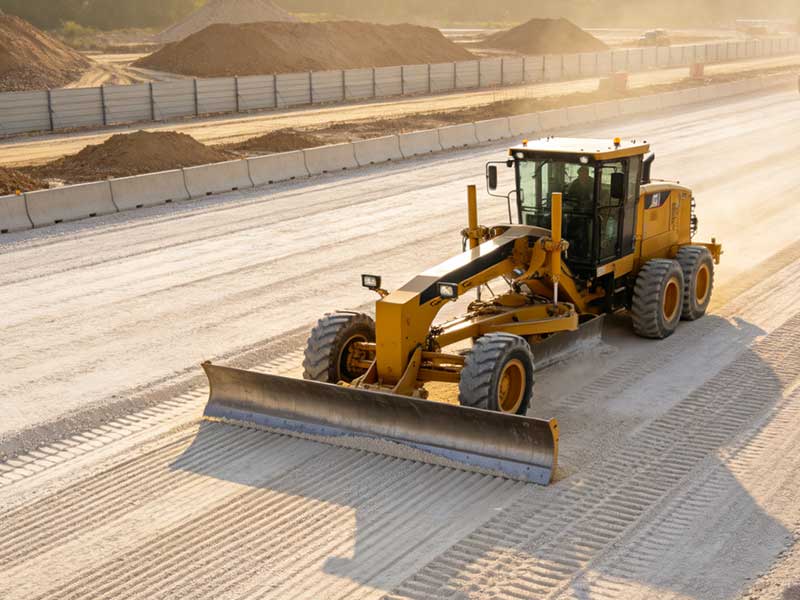
Grader Blades Manufacturing Selection Sourcing Guide
1. Global Grader Blades Market Overview
Grader blades are high‑consumption core GET (Ground Engaging Tool) components for road construction, highway maintenance, mining site grading and agricultural land levelling. Driven by government infrastructure spending, rural road upgrading, mining expansion and agricultural mechanisation, the global grader blades market maintains steady year‑on‑year growth.
Market competition follows a dual‑track pattern: OEM heavy‑equipment brands dominate OEM and high‑performance aftermarket segments, while regional specialised manufacturers deliver cost‑effective, custom‑oriented alternatives. China has evolved into a critical global supply hub with mature industrial clusters for agricultural machinery accessories, precision casting and export‑oriented GET manufacturing.
Global trade tariff adjustments remain a major external risk factor. Procurement teams must track trade policy changes when building multi‑region supplier portfolios to mitigate cost volatility and supply chain disruption.
Table 1: Global Grader Blades Market Key Reference Metrics
| Item | Reference Market Data |
|---|---|
| Primary growth drivers | Road infrastructure investment, mining & forestry application expansion, agricultural mechanisation upgrade |
| Dominant OEM players | Caterpillar, John Deere, Komatsu |
| Key Chinese supply clusters | Shandong (agricultural GET), Zhejiang (precision casting & export processing), Jiangsu (heavy‑duty wear parts) |
| Main market risk factor | Cross‑border tariff negotiation & trade policy uncertainty |
2. Material Grade & Performance Comparison
Base material defines the upper limit of grader blade wear resistance and impact performance. Four mainstream material solutions serve different operating environments, ranging from general carbon‑alloy steel to tungsten‑carbide composite construction.
Table 2: Grader Blades Main Material System Technical Specification
| Material Category | Typical Grade / Composition | Hardness Range | Core Feature | Suitable Working Condition |
|---|---|---|---|---|
| Standard alloy steel | High‑carbon / Boron alloy steel | HRC 25‑45 | Cost‑competitive, moderate wear resistance | Light‑to‑medium‑duty: farm levelling, routine road maintenance |
| Through‑hardened steel | SAE 15B30 modified, ASTM A514 Grade B (T‑1) | HRC ≥43 | Balanced hardness & low‑temperature impact toughness (-40℃ CVN ≥25 ft‑lbs) | Heavy‑abrasion: gravel road, winter snow‑ploughing |
| Tungsten carbide inserted composite | 89% WC +11% Co brazed on steel substrate | HRA 87.5‑89.0 | Ultra‑high wear resistance, service life up to 20× of ordinary steel blades | Extreme abrasive: quarry, hard‑rock mining, heavy‑duty snow removal |
| Surface‑enhanced steel | Tungsten ion‑implanted surface layer 1‑2 mm | Surface HRC ≥58 | Tough core + hard outer layer, avoids overall brittleness | Medium‑heavy repetitive abrasive scenarios |
Note: Through‑hardened SAE 15B30 modified contains Cr 0.35‑0.55 %, Ni ≤0.40 %, Mo ≤0.15 %, delivering reliable through‑hardening performance for thick grader blades.
ASTM A514 Grade B features low‑carbon formula (0.12‑0.21 %) with chromium‑molybdenum alloying for outstanding low‑temperature shock resistance for cold‑region projects.
3. Critical Manufacturing & Quality Verification Process
Even premium alloy raw material cannot reach designed performance without controlled heat‑treatment and precision machining.
Quenching & tempering acts as the core manufacturing procedure for grader blades. Standard workflow heats blank material to 860‑960 °C for oil quenching followed by targeted tempering to harmonise hardness and anti‑shock property; heat‑treatment should be completed after near‑net‑shape machining to minimise post‑process distortion.
Mounting hole dimensional accuracy directly affects field assembly and service stress distribution. Industry‑accepted tolerance for hole spacing is ±1/16 inch (~1.6 mm), non‑cumulative deviation; bolt hole diameter shall exceed nominal bolt diameter by 1/16‑inch to guarantee uniform force distribution during installation.
For bulk B‑end procurement, Mill Test Report (MTR / Certificate of Analysis) for each production batch is non‑negotiable documentation. Valid reports cover chemical composition spectrum analysis and finished‑part hardness test records, enabling buyers to verify material compliance instead of only trusting supplier verbal claims.
Table 3: Grader Blades Acceptance Check‑List for Bulk B‑End Orders
| Inspection Item | Acceptance Criterion | Document / Measurement Method |
|---|---|---|
| Material compliance | Matches ordered alloy grade | Batch MTR / Certificate of Analysis (CoA) |
| Hardness | Meets specified HRC / HRA target range | Hardness tester sampling inspection |
| Mounting hole spacing | Tolerance ±1.6 mm (±1/16 inch), non‑cumulative | Caliper on random sampled finished parts |
| Hole diameter | Oversize 1/16‑inch vs nominal bolt size | Caliper measurement |
4. Working‑Condition‑Oriented Grader Blades Selection Guide
Select grader blades according to actual site abrasion and shock load rather than blindly pursuing highest hardness. Over‑hard material under heavy impact risk will lead to edge chipping; low‑grade material for high‑abrasion jobs causes frequent replacement and machine downtime.
- – Light‑to‑medium‑duty: Agricultural land levelling, ordinary public road maintenance. Choose standard boron alloy steel grader blades (HRC ≥25). Low unit cost and easy replacement fit cyclic light workloads.
- – Heavy‑abrasion duty: Gravel highway, municipal snow‑ploughing. Deploy through‑hardened steel grader blades (HRC ≥43, low‑temperature impact value qualified). Balanced toughness and wear resistance reduce blade turnover frequency.
- – Extreme mining & hard‑rock conditions: Quarry site grading, rocky terrain operation. Adopt tungsten‑carbide inserted grader blades. Although unit price is higher, extended service life drastically cuts downtime and labour expense, bringing optimised total‑cost‑of‑ownership.
Additional structural selection tips:
- 1. Blade profile: Curved grader blades optimise material rolling and spreading; flat‑edge blades apply for special custom scenarios. Confirm hole quantity and hole pitch to match your motor‑grader model.
- 2. Cutting‑edge geometry: Single‑bevel blades suit aggressive heavy cutting; double‑bevel reversible blades double usable service life by flipping top‑to‑bottom when one side wears out.
5. Practical B‑End Sourcing Strategy for Grader Blades
Many purchasing teams evaluate suppliers purely on quoted unit price. Mature B‑end procurement builds assessment covering technical capability, delivery stability, customisation capacity and risk control.
5.1 Supplier Evaluation Dimensions
- 1. Technical capability: Confirm in‑house heat‑treatment facility, CNC machining capacity, ISO 9001 quality management certification and willingness to supply batch MTR documents. Avoid middlemen without independent manufacturing capability.
- 2. Delivery reliability: Target on‑time delivery rate ≥93 %. Evaluate inquiry response speed and production lead‑time transparency for repeat bulk orders.
- 3. Customisation flexibility: Verify support for custom overall dimension, mounting‑hole layout and surface strengthening treatment for special motor‑grader fitments.
5.2 Cost Optimisation & Supply‑Chain Risk Control
- Calculate TCO indicator: Effective cost = Unit price ÷ Expected service life (operating hour). High‑grade grader blades carry higher upfront cost yet minimise machine idle loss and replacement labour cost.
- Adopt multi‑vendor risk‑diversification strategy: Run small‑volume trial orders from 2‑3 qualified suppliers to compare real‑world wear performance and batch consistency before confirming long‑term core supplier. Continuously monitor international steel‑related tariff shifts to adjust sourcing region layout when necessary.
5.3 Brand & Supply‑Chain Reference
- – International OEM & premium aftermarket: Caterpillar, John Deere, Komatsu original parts; Degelman, ESCO, Kennametal (specialised in carbide‑tipped GET solutions).
- – China high‑quality supply base: Shandong industrial cluster for agricultural GET parts; Zhejiang manufacturers represented by TrueCast Engineering for precision‑cast, export‑grade custom grader blades.
Conclusion
Grader blades performance is determined by material metallurgy formula, controlled heat‑treatment process, machining precision and reasonable model‑to‑application matching. B‑end buyers should shift focus from unit price comparison toward total‑cost‑of‑ownership thinking. With reference to MTR certification, dimensional inspection and trial‑order verification, you can locate suitable grader‑blade suppliers for road maintenance, agriculture and mining projects.