


How to Match the Right Disc Plow for Farm Soil & Tractor?
Choosing the correct disc plow directly reduces traction load, downtime and replacement costs, especially for stony, heavy clay or root-infested land where conventional mouldboard plows often jam or wear rapidly.
This guide walks buyers through soil conditions, tractor matching, disc material selection and key technical parameters to help you select a durable disk plow that fits your operation.
1. Where Disc Plow Outperforms Mouldboard Plow?
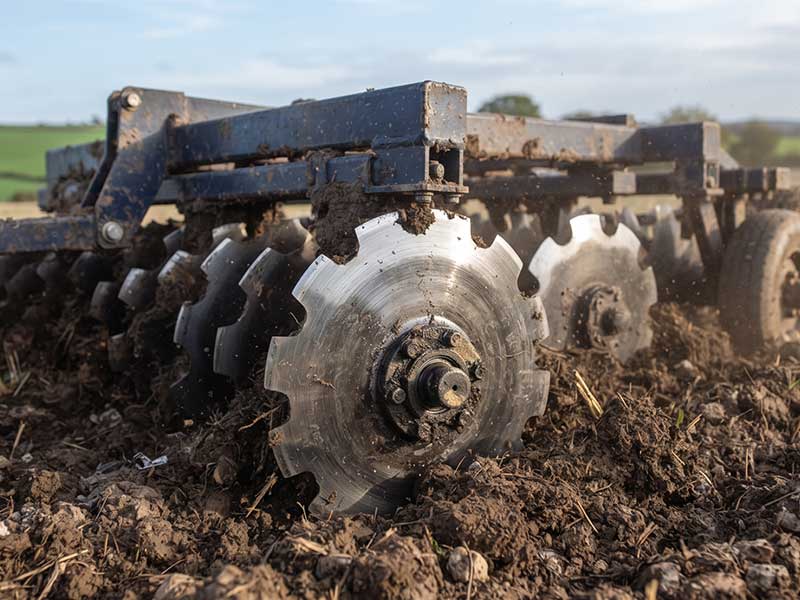
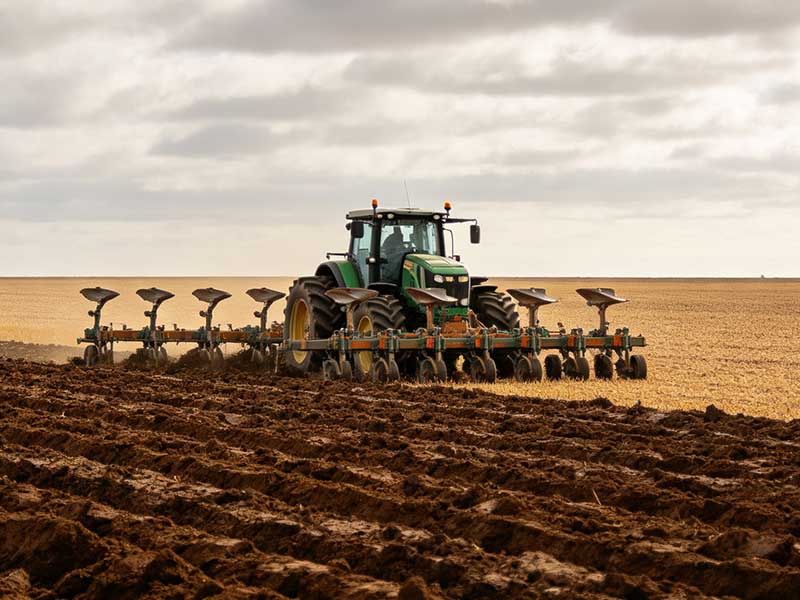
A disc plow uses spherical discs as the working body. When pulled or mounted on a tractor, rotating spherical discs cut, turn and partially break soil.
Unlike mouldboard plows that rely on sliding cutting, the disc plow converts sliding friction into rolling friction, lowering pulling resistance. Its rolling disc design lets it ride over stones, roots and debris instead of getting stuck. This advantage makes disk plow the preferred choice for virgin land, stony fields, dry compacted soil and heavy clay ground with heavy weed residue.
Table 1: Disc Plow vs Mouldboard Plow Field Performance Reference
| Performance Item | Disc Plow | Mouldboard Plow |
|---|---|---|
| Traction resistance | 20–30% lower under same depth | Higher sliding friction, larger pull force |
| Stony / root-filled soil | Can roll over obstacles, low stuck risk | Easily blocked, high share breakage risk |
| Wet heavy clay soil | Self-cleaning rotating disc, less soil sticking | Severe clay buildup on mouldboard |
| Soil inversion quality | Partial turning, good residue mixing | Full furrow inversion |
| Typical service life of working body | Longer uniform wear on disc edge | Concentrated wear on share and mouldboard |
Data source: Agricultural Machinery Research Institute field tillage test report, 2024
2. How to Choose Right Disc Plows?
Step 1: Select Ploughing disc Type by Farm Operation
Three main disk plow configurations dominate the market. Each serves different farm scales and tractor specifications.
- – Trailed disc plow: Equipped with supporting transport wheels, large working width. Designed for high-horsepower tractors and large continuous fields. Stable at high working speed but less flexible for small plots.
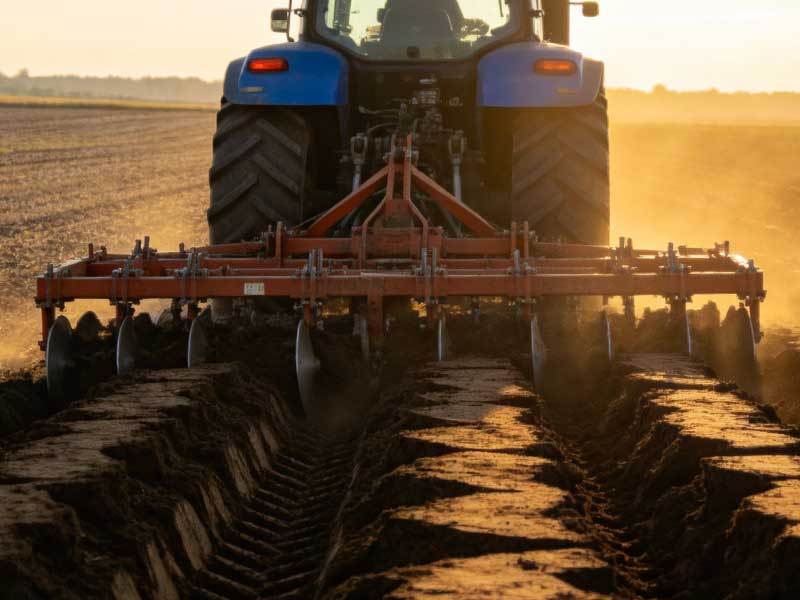
- – Mounted disc plow: Connects via tractor 3-point hitch. Fast lifting and sharp turning. This is the most widely used disc plow for medium and small farms.
- – Reversible (two-way) disc plow: Adjust disc angle to flip soil toward either side. Eliminates permanent dead furrows on the field surface, ideal for precision farming and sloped land.
Table 2: Ploughing disc Type Matching Guide
| Disc Plow Type | Recommended Tractor Power | Working Width Range | Best Application Scenario |
|---|---|---|---|
| Trailed disc plow | 120 HP and above | 2.4–4.2 m | Large commercial farms, flat continuous land |
| Mounted disk plow | 45–110 HP | 1.2–2.8 m | Family farms, small to medium plots, mixed terrain |
| Reversible disc plow | 70–140 HP | 1.8–3.0 m | Hilly fields, no-furrow precision tillage |
Step 2: Disc Material & Heat Treatment Selection
The spherical disc is the core wear part of a Ploughing disc. Disc material and quenching & tempering treatment determine impact resistance and edge retention. Low-grade discs will crack when hitting rocks or quickly lose sharpness, raising frequent replacement costs. Truecasteng Engineering offers boron steel and manganese steel discs as standard options.
Table 3: Disc Material Mechanical Property Comparison
| Disc Material | Hardness (HRC) | Impact Toughness | Typical Application |
|---|---|---|---|
| Boron steel (heat treated) | 48–54 | Good | General farmland, compacted soil, moderate rock content |
| High manganese steel | 42–48 | Excellent | Severe stony land, virgin land with heavy roots |
| Ordinary carbon steel | 32–38 | Poor | Light loam only, not recommended for heavy-duty Ploughing disc |
A qualified diskplow disc must undergo controlled quenching and tempering. This balances high hardness for wear resistance and sufficient toughness to prevent edge chipping under shock loads.
The bearing and sealing assembly also deserves inspection: Ploughing disc bearings work in heavy dust and muddy conditions. Premium multi-layer dust and water seals extend bearing service intervals and cut maintenance hours.
Every disc from TrueCast Engineering passes hardness inspection and penetration testing before assembly.
Step 3: Key Adjustment Parameters for Disk Plow
Two critical angles define disk plow performance: disc tilt angle and disc offset angle.
- – Disc tilt angle: Controls how deep the disc penetrates soil. Larger tilt angle improves penetration for hard dry soil.
- – Disc offset angle: Determines soil turning and throwing effect. Adjust this angle to balance furrow shape and traction demand.
Most buyers overlook matching tractor power to disk plow working width. Overloading tractor causes wheel slip, high fuel consumption and premature hydraulic failure. Underpowered setups cannot maintain stable tillage depth.
When ordering your disc plow, provide your tractor horsepower, target tillage depth, soil type and stone density. Our engineering team can recommend disc diameter, disc quantity and angle preset values.
3. Common Buying Mistakes for Disc Plow Buyers
1. Only compare price and ignore disc material and heat treatment. Cheap discs often use untreated steel and fail quickly on stony fields.
2. Choose too wide disk plow beyond tractor capacity, leading to poor job quality and mechanical damage.
3. Neglect bearing seal quality. Mud and sand ingress will destroy bearings within a short operating time.
4. Select one-way disk plow for sloped fields, leaving permanent furrows and affecting follow-up planting.
Final Disc Plow Selection Checklist
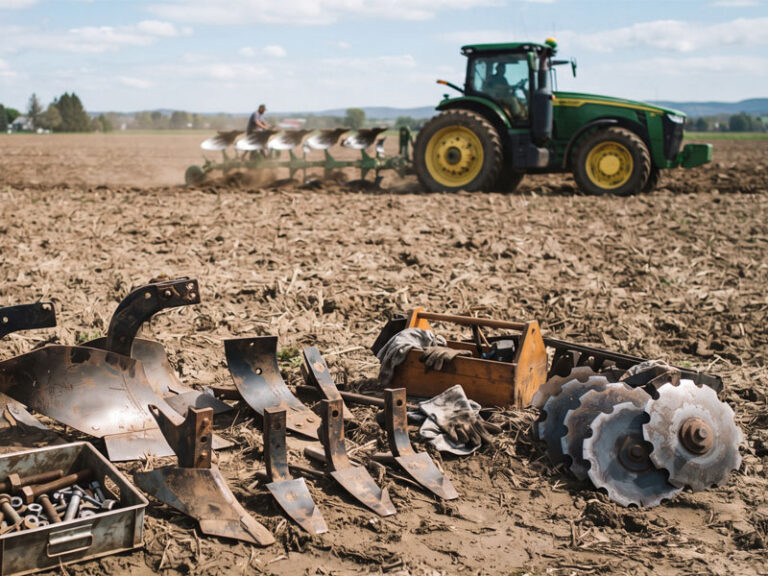
As a leading agricultural GET and casting manufacturer, TrueCast Engineering supplies heavy-duty ploughing disc and replacement parts to agricultural distributors worldwide.
Our product portfolio includes complete assemblies, OEM custom discs, bearings, and reliable wear parts. We offer flexible customization—including tailored dimensions, advanced heat treatment, and regional CE certification compliance—to empower your local market success.
Disc Plow Selection Checklist
✅ Confirm tractor HP and 3-point hitch category
✅ Document soil type, rock and root content
✅ Decide between mounted, trailed or reversible disk plow
✅ Verify disc steel grade and hardness report
✅ Check bearing sealing structure
✅ Confirm spare parts supply for disc plow wear parts
Contact our engineering team today to get technical datasheets and quotation for your disc plow project.