


Agricultural Equipment Casting Parts vs Construction Machinery Bucket Teeth
Both agricultural equipment casting parts and construction machinery bucket teeth are core wear-resistant cast components for heavy-duty machinery, operating in harsh ground-engaging environments with continuous friction, impact, and debris erosion.
The global heavy machinery wear parts market continues to expand steadily: according to industry machinery manufacturing statistics, the agricultural machinery casting wear parts market maintains a 5.2% annual growth rate, while construction machinery bucket teeth market grows at 4.8% yearly, driven by global farmland renovation and infrastructure construction demands.
Although both component categories adopt precision casting processes and high-performance alloy materials to extend service life, their core operating conditions, stress modes, wear failure mechanisms, and material design logics are fundamentally different.
Agricultural casting parts focus on long-term, uniform sliding abrasion resistance for continuous farmland operation, whereas construction bucket teeth prioritize extreme impact resistance and anti-gouging performance for intermittent heavy-load rock and aggregate excavation.
1. Core Application & Operational Wear Environment Overview
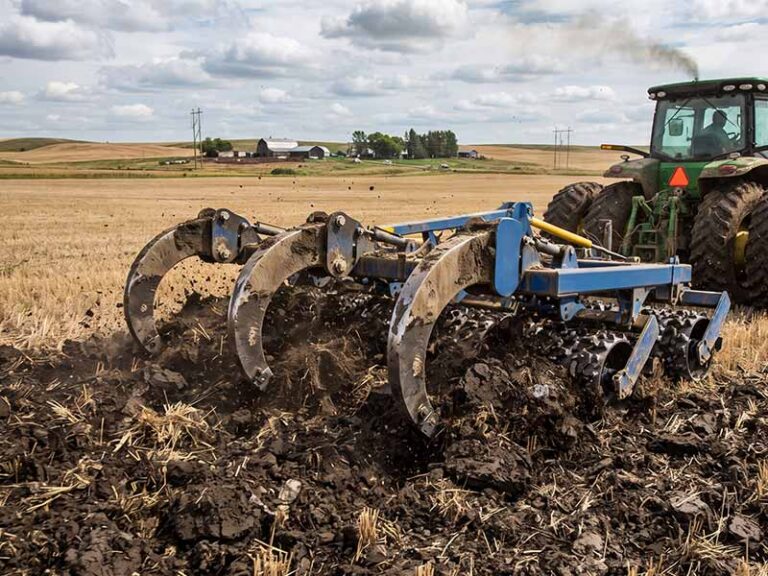
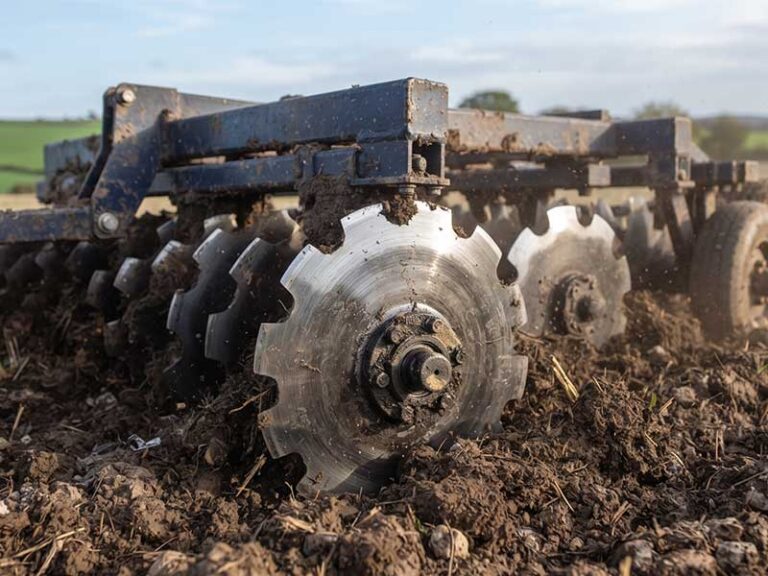
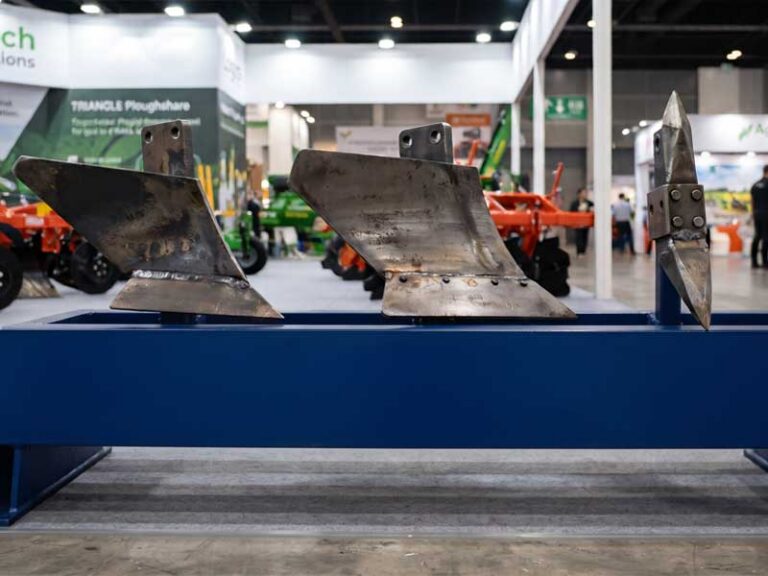
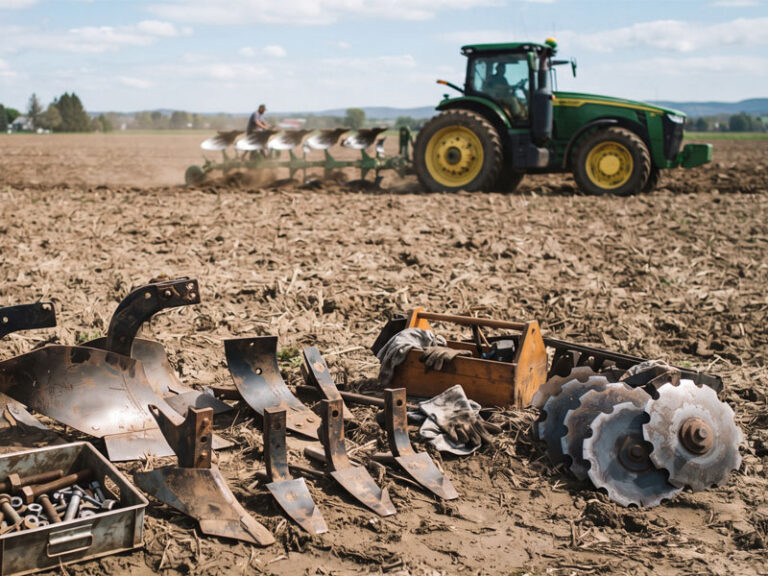
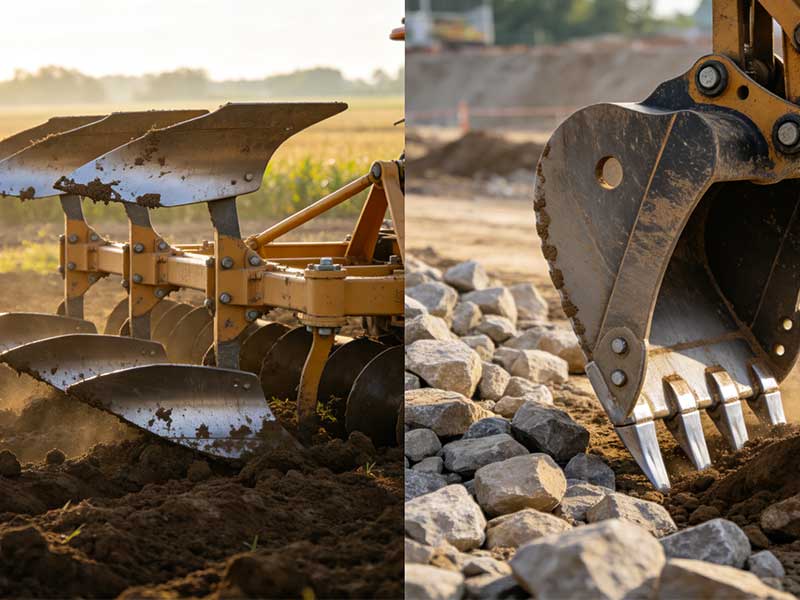
Agricultural equipment casting parts cover three major categories: tillage tools (plowshares, cultivator points, ripper points), harvesting components (threshing teeth, mower guards), and tractor structural load-bearing parts (axle housings, three-point linkage brackets). These parts work continuously in soil, sand, humid farmland, and residual crop debris, with operating hours reaching 8–12 hours daily during farming seasons.
Industry test data shows that agricultural ground-engaging castings bear 30% uniform sliding abrasive wear and 15% mild corrosive wear from soil acidity and fertilizers, with rare sudden heavy impact loads.
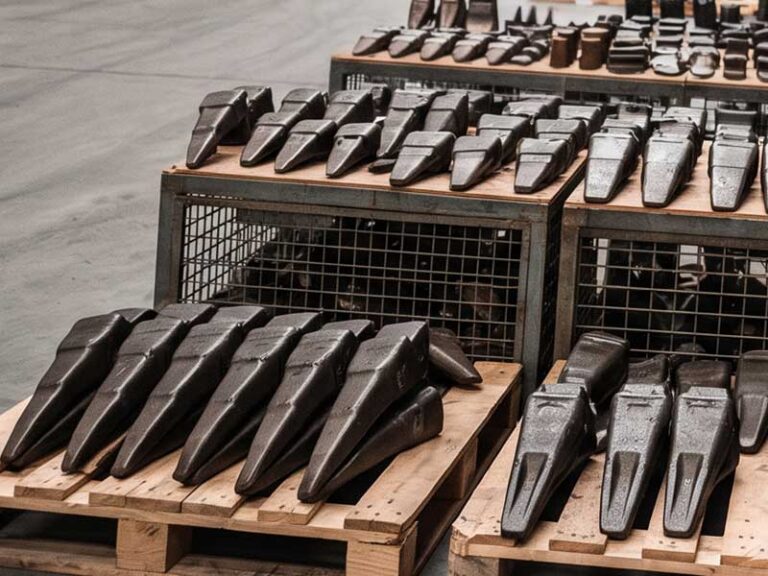
Construction machinery bucket teeth are key wearable components for excavators, loaders, and bulldozers, mainly used for digging bedrock, compacted gravel, concrete residues, and hard aggregates. Their working environment features intermittent, high-intensity impact loads and concentrated gouging abrasion.
Field monitoring data indicates that bucket teeth withstand 65% concentrated impact gouging wear, 20% local extrusion deformation wear, and less than 5% corrosive wear, with instantaneous impact pressure exceeding 1200MPa in extreme working conditions.
2. Material & Metallurgical Specification Comparison
Material formula and heat treatment processes determine the hardness, toughness, and service life of wear-resistant castings. Agricultural equipment casting parts and construction bucket teeth adopt completely different alloy matching and performance balance strategies to adapt to their respective wear environments. The detailed material parameter comparison is shown in the table below:
|
Component Type
|
Core Alloy Materials
|
Typical Brinell Hardness (HB)
|
Key Metallurgical Characteristics
|
Service Life Data (Field Test)
|
|---|---|---|---|---|
|
Agricultural Equipment Casting Parts
|
Boron Steel, High-Chrome White Iron, Austempered Ductile Iron (ADI)
|
450–600 HB
|
Uniform overall hardness, excellent sliding abrasion resistance, moderate toughness, anti-corrosion adaptation to farmland environment
|
800–1200 working hours (tillage parts); 1500–2000 working hours (structural castings)
|
|
Construction Machinery Bucket Teeth
|
Low-alloy high-strength steel (Cr-Mo-Ni composite alloy), high-manganese steel
|
380–520 HB (surface hardened layer); 220–280 HB (ductile core)
|
Hard outer shell + tough core structure, extreme impact resistance, anti-gouging, anti-catastrophic fracture
|
600–900 working hours (rock excavation); 1000–1300 working hours (soil and gravel excavation)
|
Agricultural casting parts represented by boron steel pursue full-section uniform hardness. After integral heat treatment, they maintain stable cutting edge sharpness under long-term fine particle sliding friction, adapting to continuous high-frequency farmland operation. High-chrome white iron is specially used for heavy-duty tillage parts, improving wear resistance by 40% compared with ordinary carbon steel. ADI materials focus on strength-to-weight ratio and fatigue resistance, suitable for tractor load-bearing structural castings that require long-term alternating load resistance.
Construction bucket teeth adopt gradient hardness heat treatment technology. The surface is quenched and hardened to resist gouging and scratching of hard rocks, while the core retains high toughness to avoid overall fracture under instantaneous strong impact. Industry failure data shows that over 70% of bucket teeth damage is caused by impact cracking and local deformation, rather than uniform abrasive wear, which is the core reason for its tough-core material design.
3. Wear Patterns & Failure Modes Comparison
Due to distinct stress environments, agricultural equipment casting parts and construction machinery bucket teeth form completely different wear traces and failure types. Statistical data from machinery maintenance enterprises shows that wear failure accounts for 85% of agricultural casting part replacements, while impact deformation and fracture failure account for 78% of bucket teeth replacements. The detailed wear pattern comparison is as follows:
|
Comparison Dimension
|
Agricultural Equipment Casting Parts
|
Construction Machinery Bucket Teeth
|
|---|---|---|
|
Main Wear Type
|
Uniform sliding/scratching abrasion, mild corrosive wear
|
Concentrated impact gouging wear, local plastic deformation
|
|
Key Wear Zones
|
Underside of tillage parts, rear of cutting leading edge, continuous high-pressure soil flow areas (not just the tip)
|
Tooth tip penetration point, bottom wear shoe of adapter, contact surface with rock/aggregate
|
|
Typical Failure Mode
|
Cutting edge blunting, gradual thickness reduction, increased operation draft resistance; rare cracking or breaking
|
Tooth tip mushroom deformation, deep gouge grooves, root fracture, pin shear and overall shedding
|
|
Secondary Wear Factor
|
Soil moisture, fertilizer chemical corrosion, seasonal alternating dry and wet environment
|
High-frequency vibration stress, extrusion fatigue caused by heavy load
|
A key industry insight for agricultural casting parts: the most severe wear does not occur at the absolute tip of tillage tools, but along the underside and the area behind the leading edge. Long-term high-speed soil flow causes continuous micro-abrasion here, gradually blunting the cutting edge. When the edge wear exceeds 3mm, tractor fuel consumption will increase by 18–25% per acre, directly reducing farming efficiency.
For construction bucket teeth, wear is highly localized and abrupt. When excavating hard bedrock, instantaneous impact force leads to plastic deformation of the tooth tip, forming a “mushroom head”. Continuous impact will expand micro-cracks, eventually causing tooth body fracture. Different from agricultural parts, bucket teeth almost have no corrosive wear, and failure is dominated by mechanical damage.
4. Geometric Design & Manufacturing Tolerance Standards
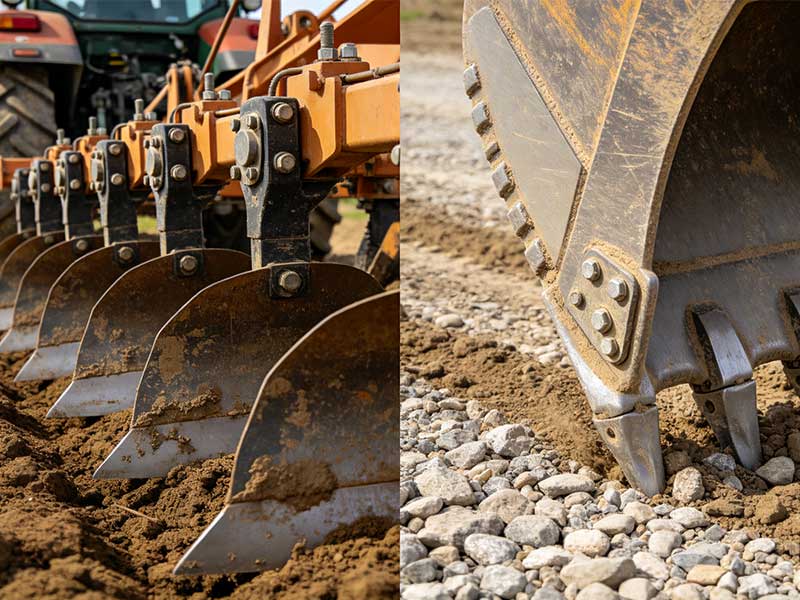
The casting design and manufacturing standards of the two types of components are tailored to their working mechanisms.Agricultural equipment casting parts pursue soil-cutting fluidity and low drag, adopting thin-wall, streamlined, sharp-edge structural design. Precision investment casting and lost foam casting processes are widely used, with dimensional tolerance controlled within ±0.05mm, ensuring seamless fitting with OEM agricultural machinery equipment, accurate mounting hole spacing, and no soil accumulation. Smooth casting surface reduces soil friction resistance, which is the core of optimizing farming energy consumption.
Construction machinery bucket teeth focus on structural rigidity and impact resistance, adopting thick-wall, high-strength bulk casting design. The overall cross-section is thickened to resist extrusion and bending deformation. The matching tolerance between the tooth cavity and adapter nose is extremely strict to prevent pin shear and internal wear caused by assembly gaps. Secondary machining is mainly used to ensure assembly accuracy, while surface smoothness is a secondary indicator compared with structural strength.
5. Conclusion
Agricultural equipment casting parts are “marathon-style” wear-resistant components designed for long-term, uniform abrasive and corrosive wear, relying on high-uniformity hardness and streamlined casting geometry to maintain continuous and efficient operation.
In contrast,construction machinery bucket teeth are “heavy-load impact-resistant” components, adopting gradient hardness metallurgical design and high-rigidity structure to cope with intermittent extreme impact and gouging damage. The distinct differences in material formulation, wear mechanisms, geometric design, and manufacturing tolerance requirements make professional customized casting production critical for machinery operational stability and service life.
As a professional manufacturer focusing on heavy machinery wear-resistant components, Truecasteng boasts rich industry experience in precision casting and CNC machining, perfectly catering to the differentiated production demands of agricultural and construction machinery castings. We specialize in a full range of high-quality agricultural equipment casting parts and construction machinery bucket teeth, covering tillage tools, tractor structural castings, excavator wear teeth, and supporting mechanical accessories.
Equipped with mature lost foam casting, investment casting processes and precise CNC finishing technology, Truecasteng strictly controls material ratio, heat treatment standards and dimensional tolerances, ensuring all products deliver stable abrasion resistance, impact toughness and structural durability for diverse harsh working scenarios. And providing accurate, customized casting solutions and reliable B2B supply services for global machinery procurement and manufacturing clients.