


Excavator Ripper Tooth Selection Guide
Excavator Ripper Tooth: Material Characteristics, Market Analysis and Selection Guide
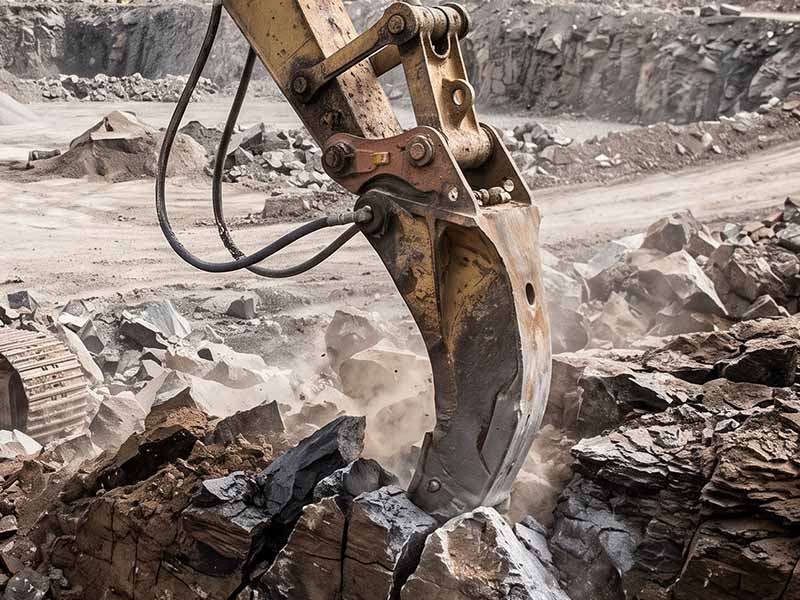
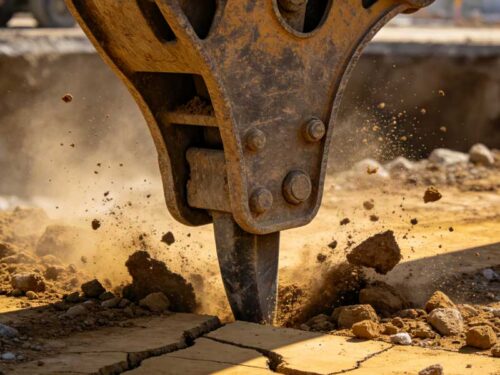
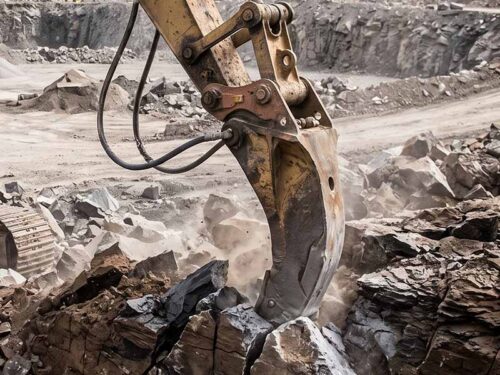
Unlike conventional bucket teeth that suffer from low efficiency and frequent breakage when confronting hard strata, the ripper tooth centrally concentrates the excavator’s full hydraulic force into a single contact point. This enables efficient penetration, tearing, and crushing of frozen soil, weathered rock, shale, aged concrete, and asphalt pavement.
The overall performance, service life, and operational cost of an excavator ripper tooth are fundamentally determined by its manufacturing materials. Carbon steel, AR400 wear-resistant steel, and manganese steel represent the three dominant material grades used in commercial ripper tooth production.
Each material features distinct mechanical properties and responds differently to impact friction and continuous abrasion. To support professional product selection, procurement decisions, and application optimization, this article integrates global market data, mainstream material performance parameters, practical selection criteria, and emerging industry trends to form a complete industry reference for excavator ripper tooth.
1. Global Market Overview & Product Segmentation
Driven by steady investment in global infrastructure renovation, intelligent mining construction, and environmental-friendly non-blasting excavation projects, the market for excavator ripper tooth maintains stable and sustained growth.
According to independent industry statistics from Global Info Research, the global excavator ripper tooth market size reached approximately USD 94.7 million in 2024. Forecasts indicate the market will expand to around USD 113 million by 2031, with a 2.4% CAGR for the 2025–2031 forecast period.
As a critical segmented product within the Ground Engaging Tool industry, excavator ripper tooth benefit from the robust growth of the broader GET market. The global GET market was valued at USD 3.1 billion in 2024 and is projected to reach USD 4.51 billion by 2031 at a 5.6% CAGR, reflecting a continuous upgrade in global demand for high-strength, wear-resistant, and long-life engineering wear parts.
1.1 Mainstream Product Segmentation
Excavator ripper teeth are classified by weight, applicable excavator tonnage and tooth structure to fit diverse scenarios, including municipal construction, road demolition, farmland clearance and large-scale mining. The detailed segmentation is simplified as below:
Segmentation by Product Weight
Available in 7 weight grades: <199kg, 200–399kg, 400–599kg, 600–799kg, 800–999kg, 1000–1199kg, >1199kg.
Lightweight models are for precise operations of mini excavators; Ultra-heavy models are tailored for high-strength rock breaking and mine soil pre-loosening work.
Segmentation by Applicable Excavator Tonnage
Covers all mainstream excavator tonnages: <10-ton, 10–20-ton, 20–40-ton, 40–100-ton, >100-ton.
Matched with different application scenarios:
- Small tonnage for municipal engineering and road renovation,
- Medium and large tonnage for heavy earthwork,
- Large open-pit mining.
Segmentation by Tooth Structure
Divided into single-tooth, double-tooth and triple-tooth types based on working needs.
- Single-tooth: features concentrated penetration force, suitable for hard frozen soil and solid rock.
- Multi-tooth (double/triple): enables efficient large-area soil loosening and pavement stripping.
1.2 Future Industry Development Trends
The excavator ripper tooth industry is undergoing comprehensive upgrades driven by material innovation, construction machinery electrification, and global environmental and mining policies. Three core trends will shape market development in the next few years:
Material Upgrading & Intelligent Sensing
Traditional structural steels are gradually replaced by high-performance new materials such as gradient nanostructured alloys, which significantly balance surface wear resistance and overall structural toughness.
Meanwhile, intelligent ripper tooth solutions with embedded stress sensors are emerging, enabling real-time monitoring of operating load, abrasion status, and structural stress to support predictive maintenance and avoid sudden equipment failure.
Electrification Adaptation Optimization
With the rapid penetration of electric construction machinery, traditional ripper teeth designed for fuel-driven excavators can no longer adapt to low-flow and high-torque hydraulic characteristics of electric equipment.
Customized ripper tooth products optimized for electric excavators have become a key research and development direction to improve operational efficiency and equipment compatibility.
Policy-Driven Demand Growth
Global restrictions on traditional blasting mining and rising requirements for low-disturbance, environmentally friendly construction have greatly boosted market demand for non-blasting pre-loosening equipment.
As a core GET product for hard-stratum mechanical breaking, excavator ripper tooth will maintain steady market growth in intelligent mining, urban renewal, and ecological restoration projects.
2. Core Material Performance Comparison for Excavator Ripper Tooth
Material selection determines the ripper tooth’s penetration efficiency, anti-fracture capability, abrasion resistance, and full-cycle service life. The three mainstream materials—manganese steel, AR400 wear-resistant steel, and ordinary carbon steel—adopt completely different wear-resisting mechanisms and are suitable for distinct working scenarios.
The detailed performance comparison is shown in the table below.
|
Performance Dimension
|
Manganese Steel (11%-14% Hadfield Steel)
|
AR400 Wear-Resistant Steel
|
Ordinary Carbon Steel
|
|---|---|---|---|
|
Hardness & Working Mechanism
|
Features outstanding work-hardening performance with moderate initial hardness. The surface forms an ultra-hard protective layer under continuous impact and extrusion, while retaining high internal toughness to avoid brittle fracture.
|
Delivers stable inherent high hardness (approximately 400HB) after professional quenching and tempering treatment. No external impact activation is required, achieving consistent overall wear resistance.
|
Serves as a basic structural material with low and unstable hardness. Higher carbon content improves hardness but severely reduces toughness.
|
|
Impact Resistance
|
Extremely high. Excels in resisting strong collision and heavy bending loads, making it nearly fracture-proof under high-intensity impact conditions.
|
Medium to high. Provides reliable impact resistance for conventional working conditions but carries minor brittle fracture risks under extreme continuous impact.
|
Low to medium. Prone to crack and break under heavy impact, unable to adapt to long-term high-load operations.
|
|
Wear Resistance
|
Conditionally superior. Performs best in impact-dominated rock and mining scenarios; shows poor durability in pure sliding friction environments without impact force.
|
Extremely high in anti-sliding and anti-gouging abrasion. Ideal for sand, gravel, quartz-containing soil, and concrete stripping working conditions.
|
Poor overall wear resistance. Suffers from fast abrasion in harsh environments and requires frequent replacement.
|
|
Core Advantages
|
Impact-triggered hardening, excellent toughness, anti-breakage, long service life in rock-breaking and mining scenarios.
|
Stable hardness, outstanding scratch resistance, uniform material performance, and low operational failure rate.
|
Low production cost, easy welding and processing for simple structural components.
|
|
Applicable Ripper Tooth Components
|
Replaceable tooth tips and core impact-bearing parts
|
Main shank, side wear protection plates, and reinforcing gussets
|
Low-load adapter plates and non-core auxiliary structures
|
3. Systematic Selection Guide for Excavator Ripper Tooth
Scientific matching of excavator ripper teeth with equipment tonnage, working conditions, and installation parameters is critical to avoiding hydraulic overload, structural fracture, and excessive maintenance costs. The comprehensive selection criteria are summarized in the following table.
|
Selection Factor
|
Detailed Selection Standards
|
Recommended Material & Configuration
|
|---|---|---|
|
Excavator Tonnage Matching
|
Mini excavators (<10 tons): Require lightweight ripper teeth to avoid hydraulic system overload and arm deformation. Medium excavators (10–40 tons): Adapt to standard heavy-duty products for demolition and earthwork. Large excavators (>40 tons): Must adopt reinforced thickened structures to prevent tooth fracture under high load.
|
Mini excavator: Carbon steel bracket + AR400 steel tooth tipMedium & large excavator: Manganese steel tip + AR400 steel main body
|
|
Working Condition Adaptation
|
Mining & rock breaking: High-frequency strong impact requires anti-fracture performance. Concrete & road demolition: Dominated by continuous sliding friction and extrusion wear. Frozen soil clearing: Alternating impact and abrasion. Sandy soil operation: Pure sliding wear without strong impact.
|
Mining scenario: Full manganese steel wearing partsDemolition & frozen soil: Composite manganese steel + AR400 configurationSandy soil scenario: Full AR400 steel structure
|
|
Installation Dimension Matching
|
Pin diameter, pin center distance, and arm inner width must be precisely matched. Mismatched sizes cause on-site cutting and gasket adjustment. Products compatible with mainstream systems (e.g., CAT J-series) ensure convenient global accessory replacement.
|
Standard pin-fixed detachable structure with universal mainstream tooth tip system
|
|
Long-Term Cost Control
|
Integrated carbon steel products have low initial cost but high replacement frequency. Detachable structures with replaceable wear parts effectively reduce later maintenance and downtime costs.
|
Commercial priority: Detachable composite structure with replaceable wearing shields and tips
|
4. Conclusion
The global excavator ripper tooth market maintains steady growth, supported by infrastructure upgrading and intelligent mining construction. As a core GET product for hard-stratum operation, product performance and service life rely heavily on material optimization and model matching. Reasonable selection of ripper tooth specifications and materials based on equipment tonnage and actual working conditions can significantly improve construction efficiency and reduce full-cycle operating costs.
Truecasteng specializes in the R&D, precision casting, and supply of a comprehensive range of bucket teeth and ripper teeth for construction machinery, providing reliable GET (Ground Engaging Tools) replacement parts to contractors, mining operators, and equipment dealers worldwide. Its product line covers over 80% of the mainstream bucket and ripper tooth models on the market, compatible with major equipment brands—such as CAT, Komatsu, JCB, and John Deere—and popular excavator models.
Leveraging standardized material processes, rigorous wear and toughness testing, and extensive product coverage, Truecasteng delivers cost-effective, highly durable GET spare parts and one-stop replacement solutions. The company effectively addresses key customer pain points associated with replacing ripper and bucket teeth, such as model compatibility issues, short service life, and high procurement costs.