


Bolt‑on Reversible Cutting Edges: Material, Machining & Procurement Guide for Heavy Machinery Parts
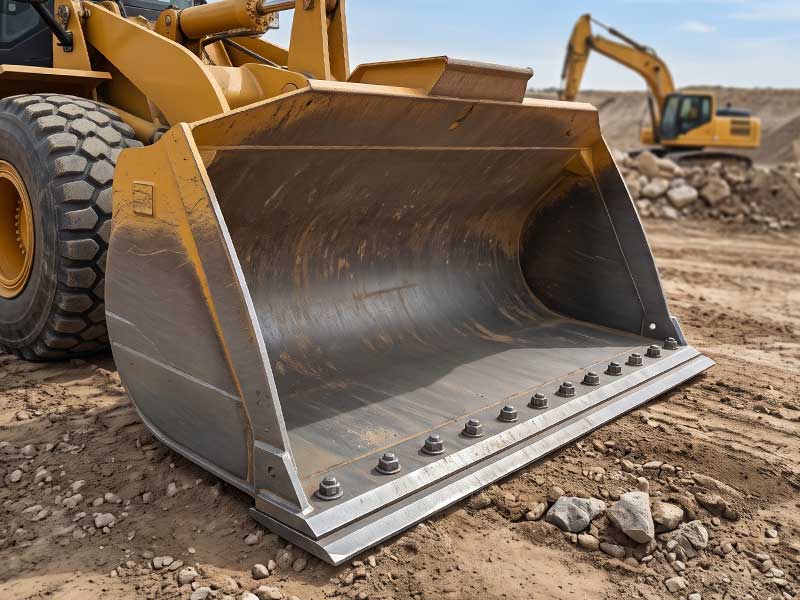
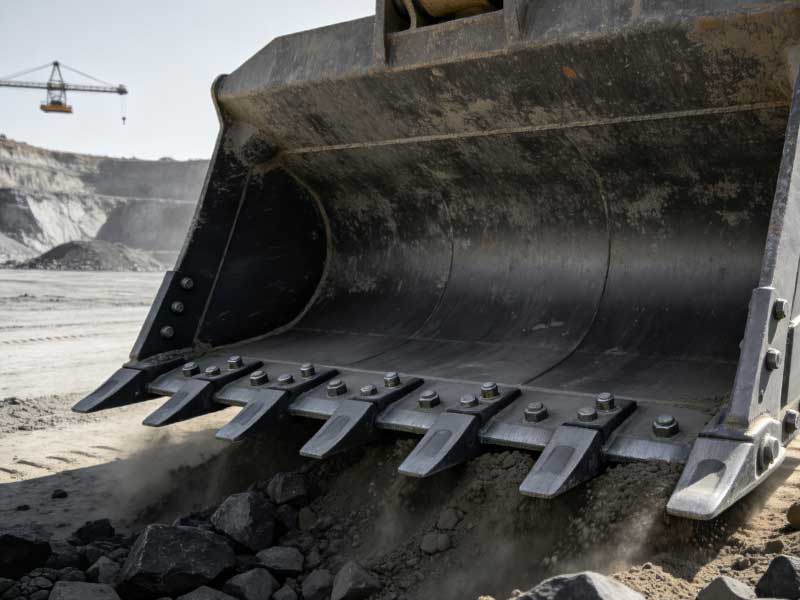
Bolt‑on Reversible Cutting Edges are mission‑critical wear components fitted on buckets of loaders, bulldozers, motor graders and excavators.
Both top and bottom surfaces are machined with precision bevel cutting edges. When one working bevel wears down completely, site operators simply remove bolts, rotate the plate 180°, and deploy the second sharp edge for continuous service.
For fleet owners, rental companies and distributors sourcing excavator parts and heavy machinery parts, this reversible design delivers tangible cost‑saving and uptime benefits over traditional welded‑on blades.
1. Global Market Background for GET Wear Parts
The global Ground Engaging Tools (GET) aftermarket keeps expanding steadily, driven by aging construction fleets and rising focus on minimizing equipment downtime. Industry statistics indicate cutting‑edge products occupy approximately 28% of total GET aftermarket shipment volume, second only to bucket teeth at 42%.
Many B2B buyers now prioritize bolt‑on reversible cutting edges instead of welded alternatives, as project sites face higher labour cost for welding & cutting repairs.
2. Core Design Advantages of Bolt‑on Reversible Cutting Edges
This bolt‑on reversible concept solves three major pain points for end‑users:
2.1. Doubled service life:
One single component delivers two usable wear surfaces, effectively doubling service cycles and lowering per‑unit consumable expenditure.
2.2. Zero‑weld fast replacement:
Weld‑on cutting edges require onsite cutting, welding and grinding with specialized equipment. Bolt‑on versions allow field technicians to flip or replace wear plates within dozens of minutes using only pneumatic wrenches, greatly cutting costly machine downtime.
2.3. Bucket lip protection:
Acting as sacrificial wear parts, bolt‑on reversible cutting edges absorb most abrasive friction and impact loads, protecting the expensive original main lip plate from premature damage.
3. Metallurgy & Material Grade Selection
Material grade and heat‑treatment define the real‑world performance of heavy machinery parts. Two mainstream material options are widely adopted for bolt‑on reversible cutting edges: high‑carbon steel and boron steel.
| Material Grade | Typical Hardness | Key Characteristics | Best‑Fit Application Scenarios |
|---|---|---|---|
| High Carbon Steel | HRC 34‑42 | Lower material cost, moderate hardness, limited impact resistance | Light‑duty operation, low‑abrasion soil, low‑impact jobsites |
| Boron Steel (Quenched & Tempered) | HRC 44‑52 | Excellent hardenability, balanced hardness and core toughness, anti‑fracture under heavy shock | Heavy‑duty excavation, rock digging, high‑abrasion mining & construction sites |
Boron steel represents premium‑grade material for bolt‑on reversible cutting edges. Trace boron alloying elements significantly improve steel hardenability. After standardized quenching plus tempering heat treatment, boron steel substrates achieve high surface hardness while retaining sufficient inner toughness to resist cracking under cyclic heavy impact.
As a trusted Excavator Parts Supplier, TrueCast Engineering strictly implements full quenching‑and‑tempering processes for boron‑steel cutting‑edge production to avoid brittle failure under harsh site conditions.
4. CNC Machining & Countersink / Counterbore Tolerance Control
Secure bolt clamping heavily relies on accurate hole spacing and properly machined recessed holes. Poor dimensional accuracy causes bolt shifting under vibration, plate loosening or bolt shear fracture during operation. Two recessed hole types are frequently mixed‑named as “countersunk hole” in daily communication, yet they serve different mechanical purposes.
| Hole Type | Geometric Feature | Matching Fastener | Core Functional Requirement |
|---|---|---|---|
| Countersink | Conical V‑shaped recess (82° /90° /100° standard angles) | Flat‑head cross‑recess or hex socket screws | Fully sink conical screw head, achieve smooth surface profile |
| Counterbore | Flat‑bottom cylindrical stepped recess | Socket‑head cap screws, plow bolts | Flat bearing surface for bolt head; accommodate spring washers or sealing gaskets |
Countersink and counterbore deliver three critical mechanical values for heavy machinery parts:
- Zero‑interference smooth surface: Fastener heads sit completely below component surface, preventing mud, rock and debris from catching exposed bolt heads. This is vital for both excavator bucket wear plates and agricultural tillage blades.
- Fastener protection against abrasion & shear: In GET assemblies including bolt‑on reversible cutting edges, exposed bolt heads suffer rapid wear and shear damage from rock impact. Recessed hole structures hide bolt heads inside cast or machined substrates and extend fastener service life.
- Uniform stress distribution: Flat counterbore bottom creates stable bearing surface for bolt heads, supporting spring washer installation for anti‑loosening performance under heavy vibration.
Process Challenges: Casting Pre‑treatment Combined with CNC Finishing
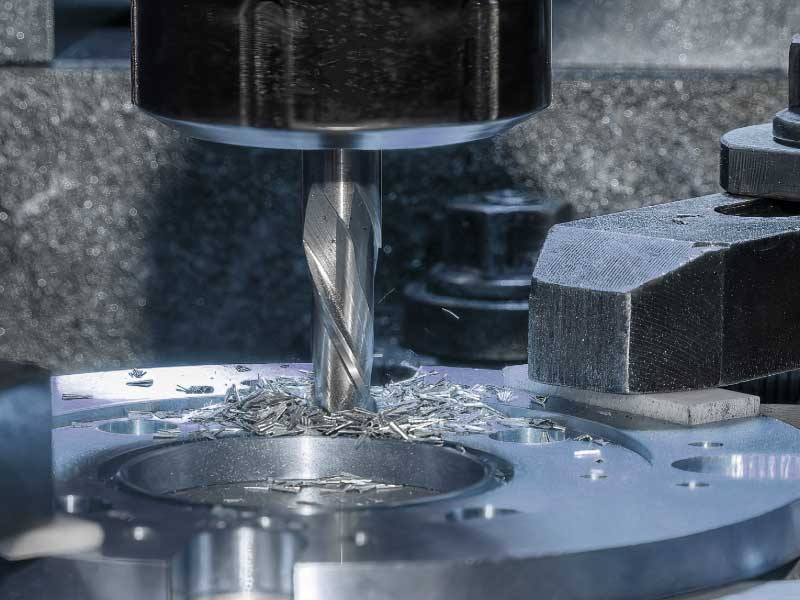
Directly casting final‑size countersink / counterbore holes on rough castings is not practical. Metal shrinkage fluctuation during solidification cannot guarantee tight dimensional requirements. TrueCast Engineering follows proven two‑stage production workflow for bolt‑on reversible cutting edges:
- Casting phase: reasonable machining allowance & stress‑relief design
- Reserve 1.5‑3 mm machining allowance for hole diameter and depth for subsequent CNC cutting. Never produce final‑dimension recessed holes directly on casting blanks.
- Add casting fillet radii at counterbore step transitions, eliminating sharp corners which trigger stress concentration and micro‑cracks during heat‑treatment.
- Control casting flatness of reference datum surfaces. Warped castings must undergo face‑milling before hole machining; uneven datum planes will produce invalid depth tolerance for countersink / counterbore features.
- CNC machining phase: coaxiality and depth tolerance management
- Deploy piloted counterbore cutters with front guide pins. Guide pins insert into pre‑drilled base holes to guarantee perfect coaxiality between base hole and counterbore recess, eliminating offset assembly risk.
- Adopt positive tolerance for counterbore depth (+0.10 mm /‑0.00 mm), ensuring bolt heads stay fully submerged below plate surface and avoiding shear damage from onsite abrasive impact.
- Apply tool‑length compensation via high‑precision tool‑setters. Monitor tool wear in mass‑production runs; automatic Z‑axis compensation prevents insufficient counter‑sink depth caused by cutter wear.
- Select proper hole tolerance bands: H7 / H8 tolerance grades for high‑torque anti‑loosening connections; H11 / H12 clearance fit for general bolt‑head accommodation without strict positioning demand.
Core manufacturing principle: casting quality lays the foundation. Even premium CNC programming and tooling cannot offset assembly errors caused by casting shrinkage, distortion and bad datum flatness.
5. Procurement Advice for B2B Buyers of Excavator Parts
When sourcing bolt‑on reversible cutting edges and other heavy machinery parts from an Excavator Parts Supplier, B2B purchasers should verify below key technical indicators instead of only comparing unit price:
- Material certification: Request material test report confirming boron‑steel substrate and HRC hardness range after quenching & tempering.
- Hole‑feature inspection: Check counterbore depth, coaxiality and hole‑spacing tolerance; validate fillet radii at casting step transitions.
- Reversible‑bevel quality: Confirm both‑side bevel geometry is symmetric for full 180‑degree flipping service.
- Batch production capability & third‑party inspection reports.
Premium bolt‑on reversible cutting edges reduce total‑cost‑of‑ownership for end‑users via doubled service life and minimized machine downtime. TrueCast Engineering delivers OEM & custom bolt‑on reversible cutting edges compatible with mainstream excavator, loader and dozer bucket models, supporting global wholesalers, rental firms and maintenance contractors. Contact our team for drawing review, quotation and sample testing.