


Can Forged and Cast Metals Be Used Together in a Single Component?
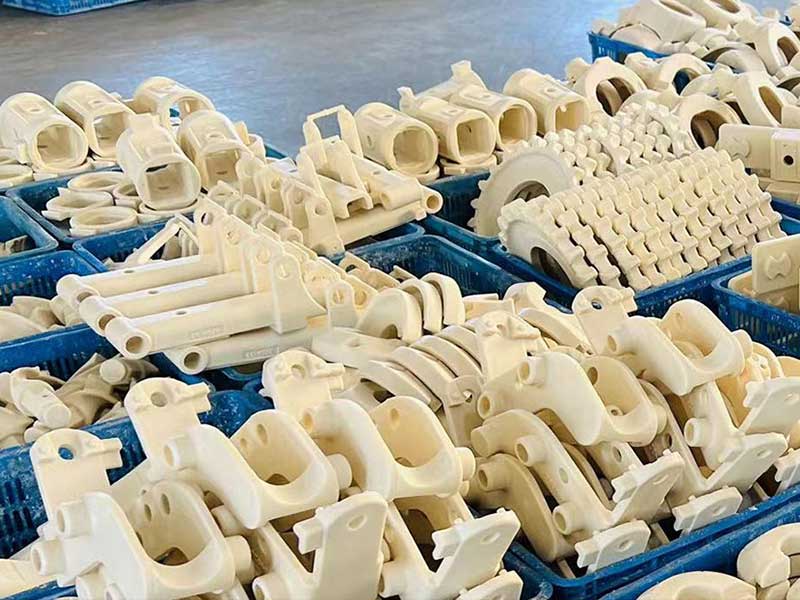
Metal forging and metal casting are the two dominant manufacturing processes for heavy-duty machinery components, especially for ground engaging tools (GET), mining wear parts, and structural mechanical parts. Forging delivers superior tensile strength, fatigue resistance, and impact toughness with aligned internal grain structures, while casting enables low-cost mass production of complex, intricate geometries and custom abrasion-resistant alloy profiles.
A frequent question among mechanical engineers, equipment OEMs, and procurement teams is: Can forged and cast metals be used together in a single component?
The definitive answer is yes. Forged and cast metals can be integrated into one functional assembly or even a single monolithic part via professional hybrid manufacturing technology. This cast-forged composite design perfectly solves the bottleneck of single-process limitations: casting cannot withstand long-term extreme cyclic loads, while forging cannot efficiently produce complex wear-part shapes.
In the global GET market, over 58% of high-end excavator and mining tool assemblies adopt hybrid cast-forged structures (2025 industrial manufacturing data), proving its practical industrial value.
1. Why Combine Forged and Cast Metals in One Component?
Single manufacturing processes have unavoidable performance and cost defects for multi-functional heavy machinery parts. Most engineering components bear dual working loads: local high-stress structural tension and surface abrasive wear. Hybrid cast-forged manufacturing integrates the core advantages of both processes to achieve optimal cost-performance balance.
- – Casting Advantage: Produces complex cavity structures, irregular wear profiles, and supports customized high-abrasion alloy formulation, reducing secondary machining costs by 20–35%.
- – Forging Advantage: Features continuous, aligned grain flow, zero internal porosity, and 30–50% higher fatigue resistance than cast steel, ensuring structural safety for load-bearing connections.
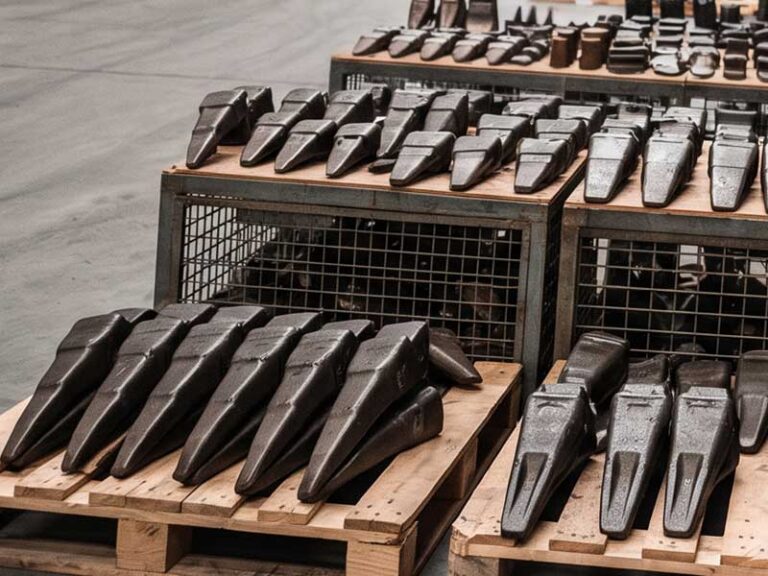
For typical GET parts like excavator bucket tooth assemblies, the wear end needs cast high-manganese abrasion-resistant steel, while the connecting shank and adapter require forged high-strength steel. A hybrid structure avoids the fracture risk of full casting and the high-cost defect of full forging.
2. Three Industrial Methods to Combine Forged and Cast Metals
There are three mature technical solutions for integrating forged and cast metals in a single component or functional unit, covering low-cost mass production and high-precision customized manufacturing scenarios.
2.1. Mechanical Fastening (Most Widely Used in GET Industry)
This is the mainstream hybrid solution for standard heavy equipment wear parts. Manufacturers produce cast wear bodies and forged structural accessories separately, then assemble them via pins, retainers, and bolt structures to form a complete functional component.
Typical Application: Cast excavator bucket teeth + forged tooth adapters, cast side cutters + forged mounting bases. According to 2025 heavy machinery accessory industry statistics, 92% of mainstream OEM bucket tooth assemblies adopt this mechanical hybrid structure.
2.2. Fusion Welding (Custom Modified Components)
By preheating and precise cooling control, compatible cast steel and forged steel materials form a metallurgical fusion bond. This method realizes an integrated connection without assembly gaps, suitable for non-standard customized heavy-duty attachments.
Note: High-manganese cast steel has poor weldability, while chromium-molybdenum low-alloy cast/forged steel has stable welding performance and is the primary material for welded hybrid parts.
2.3. Cast-On Forged Insert (Monolithic Hybrid Manufacturing)
As a high-end integrated process, prefabricated forged high-strength inserts are fixed in the casting mold in advance, and molten cast steel is poured to wrap the forged insert. After cooling, a single monolithic component with dual metallurgical characteristics is formed.
This process eliminates assembly gaps and structural looseness, but requires strict mold precision and temperature control, mainly used for high-load customized mining parts with low production volume.
3. Comparison of Forged & Cast Metal Integration Methods
|
Integration Method
|
Working Principle
|
Core Advantages
|
Key Limitations
|
Main Industry Application
|
|---|---|---|---|---|
|
Mechanical Fastening
|
Separate cast and forged parts assembled by pins/retainers
|
Low failure risk, easy replacement of worn cast parts, low maintenance cost
|
Vibration-induced looseness risk, minor interface wear
|
Standard excavator bucket teeth, GET mass production parts
|
|
Fusion Welding
|
Metallurgical bonding of cast and forged substrates via welding
|
Integral connection, no assembly gaps, flexible customization
|
Strict heat treatment required, easy to produce brittle welding seams
|
Custom heavy equipment attachments, modified structural parts
|
|
Cast-On Forged Insert
|
Molten cast steel wraps pre-placed forged insert to form one piece
|
Monolithic structure, highest structural stability, no loose parts
|
High production cost, complex process control, low production efficiency
|
High-end customized mining wear parts, extreme load components
|
4. Technical Risks & Control Points of Hybrid Cast-Forged Components
Although combined forged and cast metal components have obvious performance advantages, metallurgical differences between the two materials will bring potential application risks without standardized process control.
- – Microstructure Discontinuity: Forged metal has directional continuous grain flow, while cast metal has random grain distribution. The junction is prone to stress concentration and crack initiation under long-term fatigue loads.
- – Material Performance Mismatch: Different alloy compositions lead to different thermal expansion coefficients and hardness. Alternating cold and hot working environments easily induce interfacial cracking.
- – Difficult Quality Inspection: Ultrasonic and magnetic particle testing of hybrid structures has high identification difficulty, requiring professional non-destructive testing (NDT) standards.
5. Engineering Selection Checklist: When to Use Hybrid Cast-Forged Parts
|
Working Condition Scenario
|
Recommended Manufacturing Solution
|
Solution Reason
|
|---|---|---|
|
Dual load: surface abrasion + local structural tension
|
Cast wear part + forged base (mechanical assembly)
|
Balance wear resistance and structural strength, convenient daily replacement
|
|
Integral single-piece requirement + extreme impact load
|
Cast-on forged insert process
|
Avoid assembly gaps, ensure overall structural rigidity
|
|
Full-part cyclic fatigue load
|
Full forging process
|
Eliminate metallurgical discontinuity failure risk
|
|
Complex shape + low static load
|
Full casting process
|
Control production cost while meeting basic performance
|
6. Conclusion
Reasonable combination of forging and casting can effectively avoid the single-process performance defects, reduce overall equipment operating costs, and extend the service life of heavy-duty wear parts, which is the mainstream development trend of precision metal manufacturing in the construction and mining machinery industry.
Specializing in premium construction machinery and agricultural machinery replacement parts, TrueCastEng boasts in-depth expertise and rich practical experience in full-spectrum metal manufacturing processes, including precision casting, professional forging, and optimized hybrid cast-forged production. We proficiently match the most suitable manufacturing solution according to actual working conditions, balancing structural strength, abrasion resistance, geometric accuracy, and production cost. Whether you need standard cast-forged combined GET wear parts or customized high-strength integrated mechanical components, Truecasteng delivers reliable, long-lasting metal parts tailored for heavy-duty engineering and agricultural operation scenarios.