


Mining Excavator Tooth System: GET Wear Parts Selection & Procurement Guide
1. Introduction
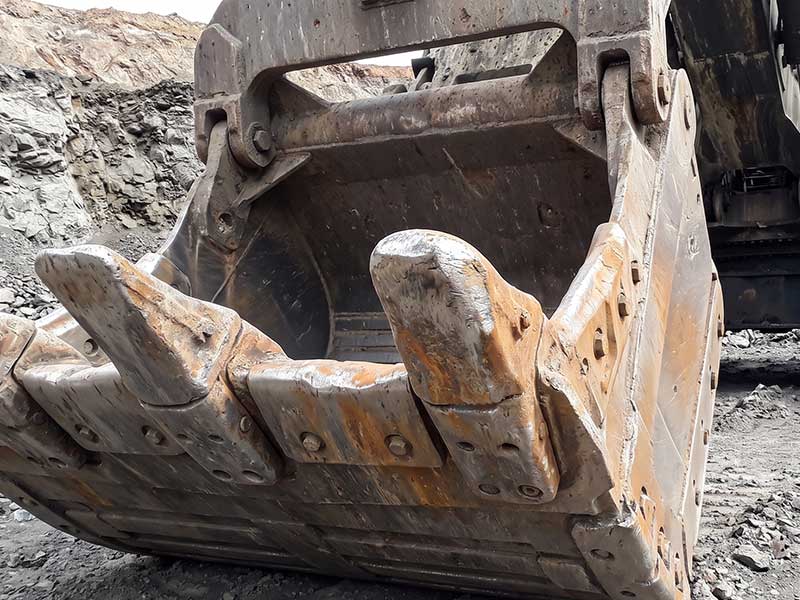
A mining excavator tooth system belongs to critical Ground Engaging Tools (GET), engineered to withstand continuous extreme impact, heavy abrasion and shock loads within open-pit mining environments.
Unlike one-piece solid cutting structures, modern modular mining tooth assemblies separate consumable wear components from structural base parts. This modular design enables fast field replacement of worn bucket teeth without replacing the entire excavator bucket, directly boosting machine availability and cutting operational expenditure.
According to data from Research and Market, The global mining equipment market size was estimated at USD 155.41 billion in 2025, and is projected to reach USD 239.44 billion by 2033, growing at a CAGR of 5.6% from 2026 to 2033. The mining equipment industry is experiencing steady growth driven by rising global demand for minerals, metals, and critical raw materials essential for construction, energy transition, and advanced manufacturing.
Industry statistics indicate 35%–40% of unplanned mining excavator downtime originates from failed or poorly maintained bucket tooth systems. For mid-to-large surface mines, each hour of excavator standstill leads to thousands of dollars in lost ore production, making proper selection, inspection and partnership with a reliable bucket teeth supplier core to mine profitability.
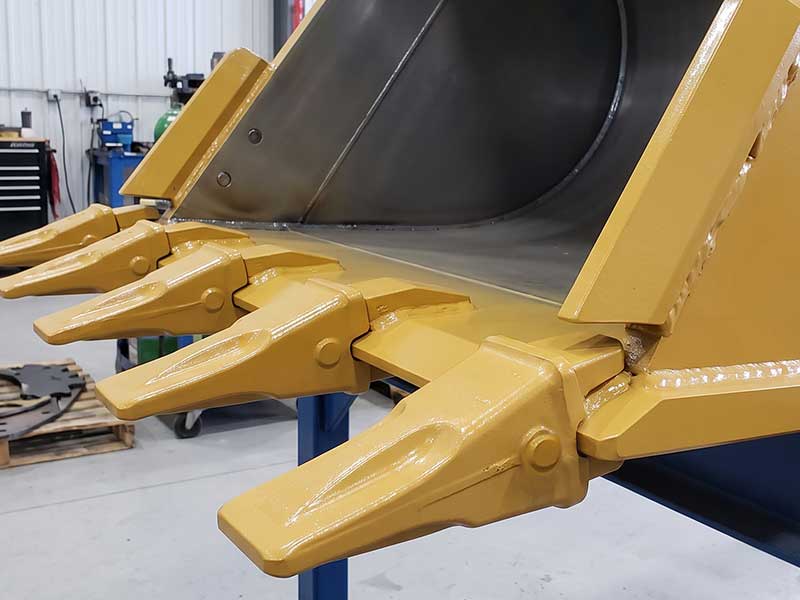
A complete modular mining excavator tooth system consists of three core cooperating components:
- Adapter: The base component linking tooth assembly and bucket lip. It disperses digging breakout forces and protects bucket structure. Popular industry models include 230SP (weld-on) and 230SPL (bolt-on).
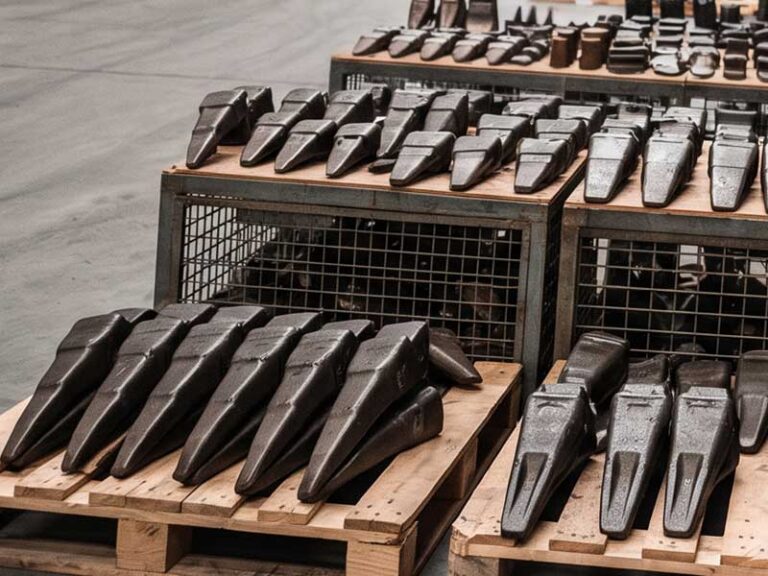
- Tooth Point (Bucket Tooth): The sacrificial wear part that penetrates rock and soil. Manufactured via casting or forging from high-strength alloy steel. Standard part numbers cover U43792, X156H, 156-75, 240, 240010, with customized profiles (rock chisel, spike, heavy abrasion type) for diverse geological conditions. Around 90–95% of tooth system failures stem from abrasive wear, while fracture accounts for less than 10%.
- Locking Mechanism: Pins and retainers that firmly fasten tooth points onto adapters. It resists severe vibration during excavation while supporting quick disassembly for on-site maintenance.
Modular design delivers a fundamental operational advantage:
Bucket teeth act as primary wear part absorbing friction and impact, while adapters and buckets experience slower degradation. Operators only replace consumed teeth, extending the service life of high-value bucket structures.
2. Weld-On vs Bolt-On Excavator Tooth Adapters – Pros, Cons & Application Matching
The selection between weld-on and bolt-on adapters balances structural durability and maintenance flexibility, a key decision for mine fleet managers.
| Comparison Item | Weld-On Adapter | Bolt-On Adapter |
|---|---|---|
| Installation Method | Permanently welded onto bucket lip | Fastened by heavy-duty plow bolts |
| Structural Strength | Maximum integrity; integrated with bucket lip, resistant to extreme breakout force | Good strength, limited under heavy twisting impact |
| On-site Replacement Cycle | 1–3 working days; requires cutting, grinding, preheating and welding | 2–6 hours; operable with pneumatic hand tools |
| Hot Work Requirement | Mandatory certified welding operations | No hot work needed, lower mine safety risks |
| Primary Weakness | Welding heat may alter bucket lip metallurgy; complicated replacement | Bolts risk loosening or shearing under continuous vibration; regular re-torque inspection required |
| Bucket Lip Protection | Moderate; repeated welding weakens base metal | Excellent; no thermal damage to bucket edge |
| Recommended Scenarios | Large mining excavators, hard rock, high-impact open-pit mining | Medium excavators, aggregate sites, mines prioritizing minimum downtime, mild abrasion ground |
| Representative Model | 230SP | 230SPL |
3. Wear Signs & Replacement Standards for Excavator Tooth Adapters
Most maintenance teams focus solely on replacing worn bucket teeth, ignoring adapter degradation. A worn adapter causes new teeth to rattle, concentrate stress on locking pins, and trigger premature tooth fracture. Operators should perform regular visual inspection and simple functional testing for adapters.
Critical Wear Indicators
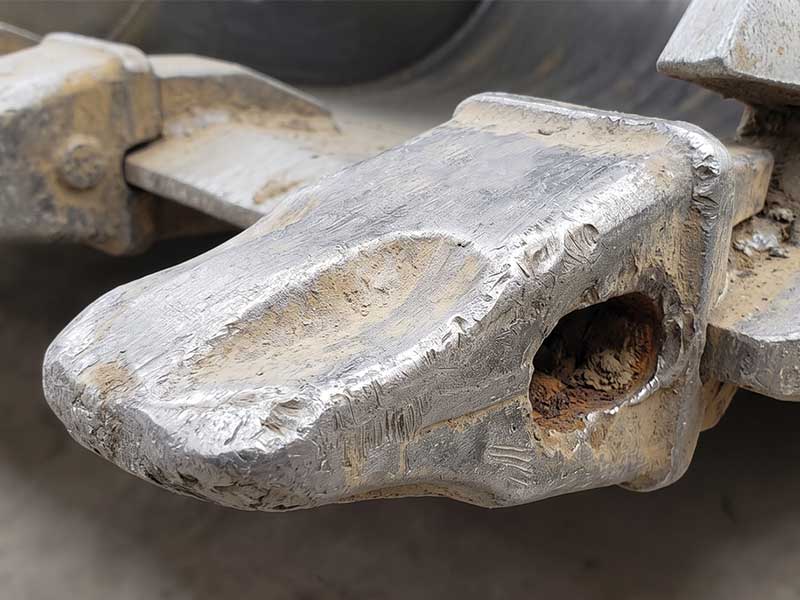
- Nose Profile Loss (Washing): The sliding contact surface of the adapter nose is ground rounded and thin. New teeth cannot fully seat and generate excessive movement under load.
- Pin Hole Wallowing: Circular pin holes deform into oval shapes due to hammering vibration. New locking pins fail to maintain tight assembly.
- Bottom Strap / Leg Abrasion: Direct contact with ore gradually reduces steel thickness of the lower adapter leg.
- Structural Cracking: Hairline cracks emerge at high-stress zones, including lip contact crotch and welding seams.
4. Adapter Replacement Triggers & Field Judgment Standards
| Wear Condition | Replacement Requirement | Operational Risk If Continued Usage |
|---|---|---|
| Excessive tooth free play | Install brand-new tooth and pin; visible manual wobble means immediate replacement | Rapid tooth breakage, frequent pin shearing |
| Bottom strap thickness reduction | Thickness falls below 70–80% of original OEM dimension | Structural bending, adapter fracture during digging |
| Pin hole wallowing | Visible oval deformation of pin bore | Tooth detachment risk, secondary damage to bucket lip |
| Propagating structural cracks | Cracks extend into main adapter body (minor surface weld cracks are repairable) | Catastrophic adapter failure during excavation |
Field technicians can adopt a simple verification rule: loose fit of brand-new bucket teeth equals end-of-service-life adapter, regardless of remaining steel thickness on the adapter body.
5. Typical Service Reference Lifespan of Mining Excavator Tooth System Components (Open-Pit Mining)
Service intervals vary based on rock hardness, daily operating hours and excavation method. Data collected from iron ore and hard rock surface mines:
| GET Component | Typical Service Life (Hard Rock Mining) | Typical Service Life (Weathered Ore / Mild Abrasion) | Replacement Characteristic |
|---|---|---|---|
| Bucket Tooth (Tooth Point) | 250–450 working hours | 600–900 working hours | Regular scheduled consumable wear part |
| Lock Pin & Retainer | 500–800 working hours | 1000–1500 working hours | Replace together with every 2–3 tooth sets |
| Weld-On Adapter | 3000–5000 working hours | 5000–8000 working hours | Long-cycle structural component |
| Bolt-On Adapter | 2500–4000 working hours | 4000–6500 working hours | Require regular bolt inspection every 150 hours |
6. Key Tips for Mine Operators to Optimize Mining Excavator Tooth System Performance
Match tooth profile to ground conditions: Select rock chisel teeth for hard granite and basalt; adopt heavy abrasion teeth for sandy, highly abrasive ore. Mismatched profiles can shorten tooth service life by up to 40%.
- Implement joint inspection routine: Inspect adapters simultaneously whenever replacing bucket teeth, avoiding secondary component damage.
- Standardize locking assembly maintenance: Check pin tightness during daily machine pre-start inspection to eliminate tooth rattling.
- Cooperate with professional bucket teeth supplier: Stable aftermarket GET supply reduces emergency procurement lead time and lowers overall wear part total cost of ownership.
7. Conclusion & Supplier Information
The mining excavator tooth system is a low-cost yet high-impact GET assembly. Rational modular configuration, regular wear inspection and standardized replacement rules can significantly reduce excavator downtime, stabilize mine production output and control wear part expenditure.
As a professional bucket teeth supplier, TrueCast Engineering supplies a complete range of mining excavator tooth system products, covering standard bucket teeth, rock teeth, weld-on & bolt-on adapters, locking pins and full GET assemblies.
We support flexible small-batch OEM and ODM customization, offering casting and forged wear parts compatible with mainstream excavator model specifications. Whether you require standard catalog part numbers or custom-profile mining GET wear parts tailored to unique mining geological conditions, TrueCasteng delivers consistent quality and reliable global supply solutions for mining contractors and mine operators worldwide.