


Why Custom Heat Treatment is Critical for Trailer Suspension Castings?
Custom heat treatment defines the reliability of trailer suspension castings far more than raw casting material alone. Many trailer OEMs and fleet buyers treat cast suspension brackets, hangers and pivot seats as simple off-the-shelf cast parts, but generic normalizing or one-size-fits-all quench-and-temper cycles often lead to inconsistent hardness, hidden residual stress, premature fatigue cracking and costly field failures.
As a precision casting manufacturer supplying heavy-duty agricultural and commercial trailer markets, TrueCast Engineering designs every quenching and tempering cycle around the working load, road shock cycles, section thickness and climate exposure of each trailer suspension casting, rather than applying a fixed heat-treatment recipe across all castings.
Trailer suspension castings operate under cyclic bending, impact shock and variable static load, typically on rough farm tracks, gravel routes and long-haul highway surfaces. Industry field analysis shows mechanical failure accounts for 77% of trailer roadside incidents, and a large share of suspension component cracks trace back to poorly controlled heat treatment, not casting porosity or raw material defects.
Standard heat treatment can hit a target hardness reading on a test coupon, yet fail to deliver uniform properties across thick-thin transition zones common in suspension hanger castings. Custom heat treatment solves this by tuning heating ramp rates, austenitization soak time, quenching medium, cooling gradient and tempering hold to match each casting’s geometry and performance specification.
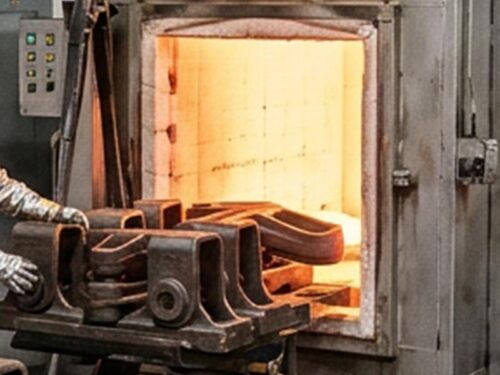
1. Quenching & Tempering Curve Logic for Trailer Suspension Castings
A typical QT (quench and temper) workflow for ductile iron trailer suspension castings follows a predictable thermal profile:
- Ramp to austenitization temperature, soak for microstructure homogenization,
- Controlled rapid quench to form martensite.
- Then reheat for tempering to relieve brittleness and lock in the target hardness-toughness balance.
The curve shape is non-negotiable:
- too fast a quench creates surface cracking and distortion;
- too slow a quench fails to achieve required hardness.
- Tempering temperature is the primary dial for adjusting final hardness and impact toughness for trailer suspension castings.
Table 1: Standard QT Cycle Profile for Ductile Iron Trailer Suspension Castings
| Stage | Temperature Range | Hold Time Rule | Cooling Medium | Metallurgical Purpose |
|---|---|---|---|---|
| Austenitization | 860–900 °C | 60 min per 25 mm section thickness | Furnace air | Dissolve carbon, form uniform austenite |
| Quench | Rapid cool from austenitization | N/A | Polymer / oil quench | Transform to martensite, raise base hardness |
| Tempering | 380–620 °C | 90–120 min | Forced air cool | Reduce brittleness, relieve quenching stress, tune final HRC |
| Stress trim cool | <200 °C | Passive cool | Still air | Minimize post-treatment distortion before machining |
This cycle is our baseline, but custom heat treatment modifies each variable. For a heavy 20-ton agricultural trailer suspension casting with thick bosses and thin webs, we extend soak time and use graded quenching to avoid hard spots and soft cores. For light-duty utility trailer suspension castings, we shift to higher tempering temperature to prioritize elongation and shock tolerance over peak surface hardness.
2. Hardness Shift Across Tempering Temperatures
Hardness is the most commonly specified QC parameter for trailer suspension castings, yet buyers often overlook how tempering directly trades hardness against Charpy impact toughness. Off-the-shelf heat treaters run a narrow fixed window; custom heat treatment lets engineers lock the exact operating point matching the trailer’s duty class.
Table 2: Hardness & Mechanical Property Variation by Tempering Temperature (ASTM A536 Ductile Iron Suspension Castings)
| Tempering Temp (°C) | Typical Surface Hardness (HRC) | Charpy V-Notch Impact (J) | Tensile Strength (MPa) | Best Trailer Suspension Application |
|---|---|---|---|---|
| 400 | 44–48 | 14–18 | 980–1050 | Heavy haul, high wear pivot castings |
| 500 | 36–40 | 22–28 | 820–900 | General semi-trailer suspension hangers |
| 600 | 28–33 | 34–42 | 650–740 | Agricultural trailer, high shock off-road service |
This table illustrates the core engineering tradeoff for trailer suspension castings. If you only specify “36–40 HRC” without locking tempering parameters, a supplier may hit the hardness number but deliver low toughness, leading to sudden brittle fracture under field impact. Custom heat treatment validates both hardness and impact values on production test bars for every batch.
3. Field Performance Data: Custom vs Generic Heat Treatment for Suspension Castings
Market and fleet feedback consistently shows that suspension castings with application-specific QT cycles deliver far longer fatigue life. A cross-fleet benchmark covering agricultural and commercial trailer operators measured average service life for identical ductile iron suspension hanger castings, split between generic batch heat treatment and custom heat treatment matched to axle load rating.
Table 3: Fleet Benchmark — Service Life & Failure Rate Comparison
| Heat Treatment Type | Target Hardness Window | Average Fatigue Cycles (ASTM E466) | Reported 2-Year Field Failure Rate | Typical End Use |
|---|---|---|---|---|
| Generic Batch QT | 35–42 HRC | 85,000–105,000 | 11.2% | Low-cost replacement trailer parts |
| Custom QT | Application-tuned 28–48 HRC | 140,000–185,000 | 2.7% | OEM trailer suspension, high-cycle off-road |
The gap comes from two factors: uniform through-section hardness and controlled residual stress. Generic heat treatment prioritizes throughput and low cost; custom heat treatment adds thermocouple tracking per load, hardness mapping on critical casting sections, and hold-time adjustments for variable wall geometry of trailer suspension castings. For trailer OEMs, the lower failure rate directly cuts warranty claims, roadside service calls and recall risk.
4. Common Risks Skipping Custom Heat Treatment for Trailer Suspension Castings
Even premium ductile iron or alloy steel trailer suspension castings degrade quickly under standard heat treatment. The top failure modes we see from customer returns include:
1. Hardness gradient mismatch:
Surface hits spec HRC, but the core remains soft, creating progressive crack growth under cyclic suspension load.
2. Unrelieved quenching stress:
Castings distort after CNC machining or develop delayed cracking weeks after installation.
3. Poor low-temperature toughness:
Parts pass room-temperature hardness tests but fracture in cold winter operation on northern fleets.
4. Over-tempering for cost:
Heat treaters extend tempering runs to fit more batches, dropping fatigue strength below engineering print requirements.
Custom heat treatment for trailer suspension castings eliminates these risks by tying every thermal cycle to your drawing, load rating, operating environment and fatigue requirement. We do not select a tempering temperature based only on hardness; we map hardness at bearing seats, load bosses and thin rib sections to ensure the whole casting performs as designed.
5. Our Custom Heat Treatment Workflow at TrueCast Engineering
When you order trailer suspension castings with custom QT from our foundry, the process starts before casting:
- 1. Review OEM print, axle load, duty cycle and minimum impact / hardness requirements.
- 2. Run casting simulation to identify hot spots, thick sections and high-stress zones that will distort or harden unevenly.
- 3. Program a unique quenching and tempering curve with ramp, soak and cooling rates for that part family.
- 4. Furnace batches include test coupons pulled from the same melt and heat treated together.
- 5. Hardness inspection at multiple casting locations + Charpy impact verification before release.
- 6. Supply heat-treatment certificates with thermal log data for traceability, suitable for OEM quality systems.
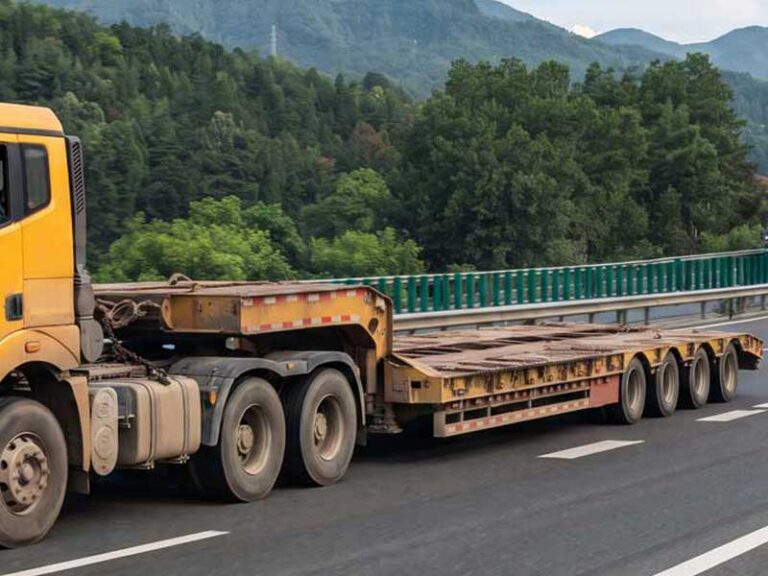
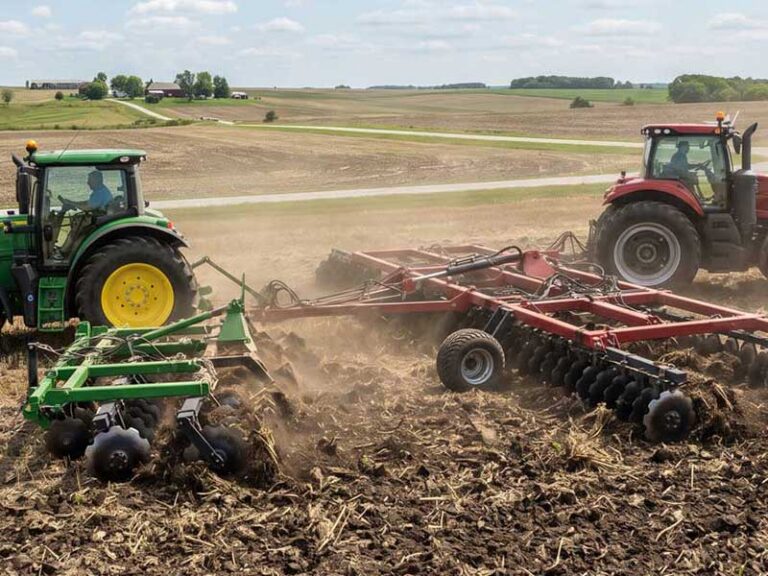
We support ductile iron, alloy steel and boron steel trailer suspension castings for agricultural trailers, semi-trailers, low-bed trailers and utility trailers, with documentation aligned to ISO 9001 and major trailer OEM quality expectations.
If your engineering team needs custom QT process sheets, hardness test reports or quotation for trailer suspension castings with tailored heat treatment, contact TrueCast Engineering to share your drawing and duty specifications.