


Selection Guide for Tooth Bucket vs. Smooth Bucket
Smooth Bucket vs Tooth Bucket: Differences, Selection & Customization Guide
Excavator and loader buckets are core attachments that determine construction efficiency, surface finishing quality and equipment service life. Smooth buckets and tooth buckets are the two most mainstream bucket types in the construction machinery industry, with distinct structural designs, manufacturing processes and application scenarios.
Many project contractors and equipment purchasers struggle to distinguish their differences and select the optimal bucket for working conditions. As a professional tooth bucket supplier, we elaborate on the full differences between smooth bucket and tooth bucket, including manufacturing process, application scenarios, selection criteria and customized production solutions, providing reliable reference for global buyers.
1. Core Definition Overview
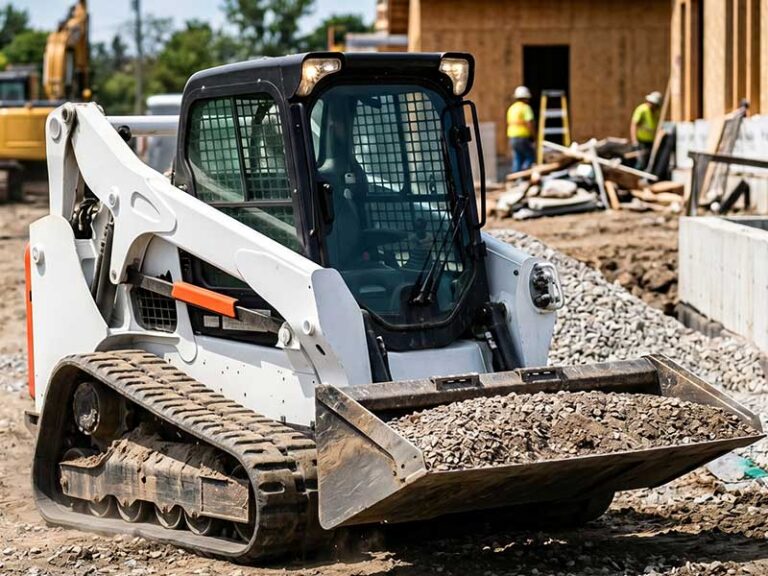
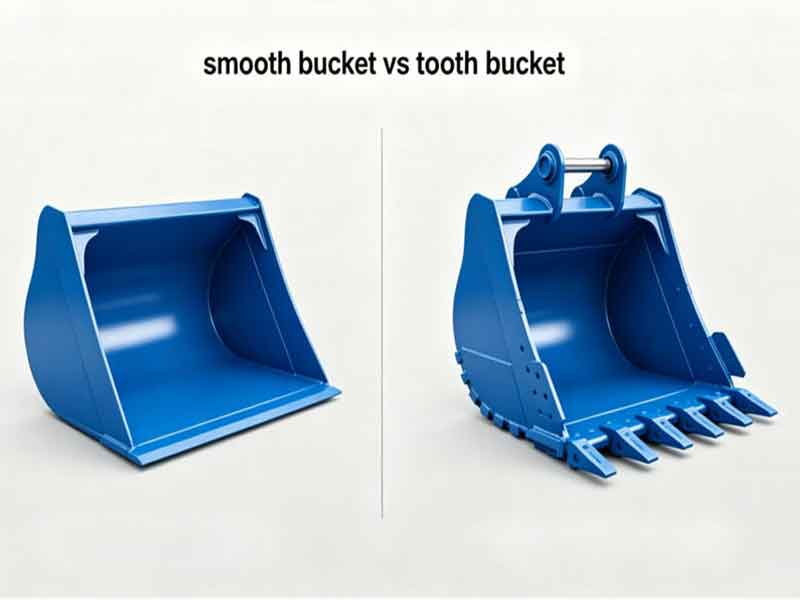
A smooth bucket, also named grading bucket or clean-up bucket, features an integral flat cutting edge without any bucket teeth, adopting an all-welded smooth liner structure. It focuses on flatness, sealing performance and finishing accuracy.
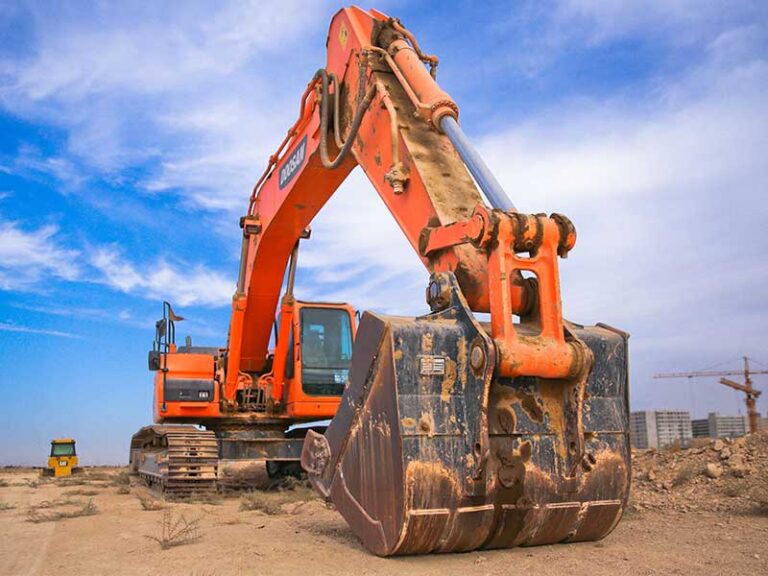
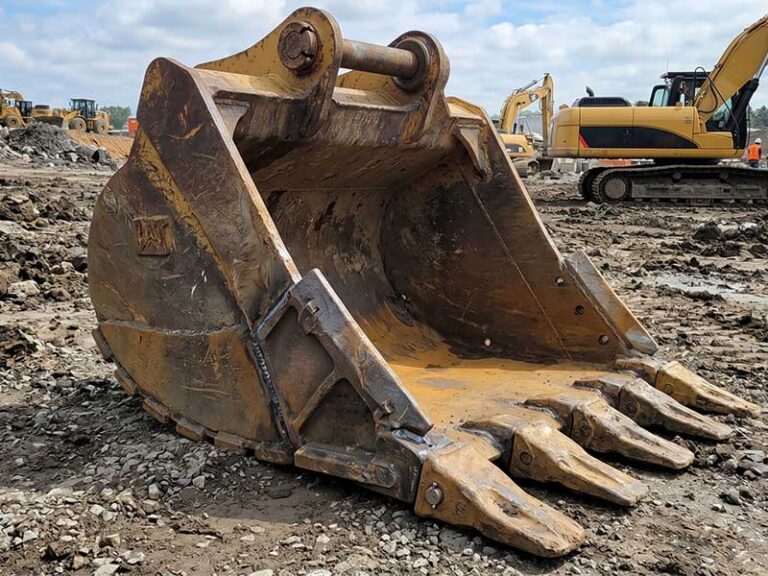
A tooth bucket is a heavy-duty digging bucket equipped with standard or customized bucket teeth, tooth adapters and protective plates. It is designed for high-strength penetration, breaking and digging operations, and is the most widely used engineering bucket in earthwork and mining projects.
2. Process & Performance Comparison (Table)
The manufacturing process directly determines the bucket’s durability, load resistance and working performance. The following table intuitively compares the process differences and core performance of smooth bucket and tooth bucket:
|
Comparison Item
|
Smooth Bucket
|
Tooth Bucket
|
|---|---|---|
|
Manufacturing Process
|
Integral steel plate cutting and bending, overall welding forming; thickened flat cutting edge, no tooth assembly process; integral tempering and wear-resistant spraying; simple process, low assembly error, high overall flatness.
|
Adopts split casting + welding composite process; independent casting of bucket teeth and adapters, precision welding of tooth seats on the bucket lip; multi-layer wear-resistant plate reinforcement; secondary heat treatment for tooth parts to improve impact resistance; complex process with high precision requirements for tooth position assembly.
|
|
Structural Features
|
Flat and seamless cutting edge, smooth inner wall, no protruding parts, good material tightness, not easy to leak loose materials.
|
Equipped with high-hardness bucket teeth, tooth tips are pointed and wear-resistant; tooth intervals are standardized; reinforced bucket lip and side plates, strong impact resistance and penetration.
|
|
Wear Resistance & Durability
|
Uniform overall wear, no local stress concentration; vulnerable to chipping and deformation when contacting hard rocks; suitable for low-intensity working conditions.
|
Bucket teeth are made of high-manganese wear-resistant cast steel, with strong anti-impact and anti-wear ability; wearable teeth can be replaced independently, reducing overall maintenance cost and extending bucket service life.
|
|
Processing Accuracy
|
High forming flatness, precise cutting edge, capable of completing flat finishing operations.
|
Focus on structural strength, tooth position error is strictly controlled, meeting high-strength digging requirements, with relatively low finishing accuracy.
|
3. Application Scenario Comparison
3.1 Smooth Bucket Main Uses
Smooth buckets are dedicated to precision finishing and loose material handling scenarios, focusing on operation flatness and material carrying stability. Firstly, it is suitable for site cleaning, soil leveling, road surface trimming and foundation finishing, which can form flat and smooth ground surfaces without tooth marks. Secondly, it is ideal for handling loose materials such as sand, gravel, grain and silt, with tight sealing and no material leakage. In addition, it is widely used in trench bottom finishing, pipeline backfilling and landscape renovation projects, meeting the high flatness requirements of construction standards. It is not suitable for hard soil, frozen soil, rock breaking and high-strength digging operations.
3.2 Tooth Bucket Main Uses
As a mainstream heavy-duty engineering bucket, tooth buckets adapt to harsh and high-intensity working conditions. Relying on the sharp penetration of bucket teeth, it can efficiently break compacted soil, hard clay, frozen soil and weathered rock, greatly reducing the digging resistance of excavators and loaders. It is widely used in earthwork excavation, foundation pit digging, mountain blasting residue cleaning, mine ore loading and demolition construction. For working conditions requiring frequent impact and breaking, the replaceable bucket tooth design of tooth buckets can effectively reduce equipment loss and improve construction efficiency, which is irreplaceable by smooth buckets.
4. How to Choose Between Smooth Bucket and Tooth Bucket
The selection of buckets should be based on working conditions, material characteristics and construction purposes, with targeted selection to balance efficiency and cost:
4.1 Choose Smooth Bucket If:
- – The project requires high-precision flat finishing, such as road leveling, site cleaning and trench bottom trimming;
- – The working materials are loose and fine materials including sand, silt, gravel and cultivated soil;
- – Low-frequency digging, no hard material breaking operation, focusing on construction surface quality;
- – Avoiding ground tooth marks and ensuring flat construction finished surface is required.
4.2 Choose Tooth Bucket If:
- – Main operations are heavy digging, breaking and loading, involving compacted soil, frozen soil, rock and concrete residue;
- – Long-term high-intensity construction in mines, mountainous areas, foundation pits and other harsh working conditions;
- – Need to improve digging efficiency and reduce equipment operating load;
- – Allow minor surface damage, and prioritize construction speed and breaking capacity.
5. Tooth Bucket Customization Solution & Required Technical Data
Standard tooth buckets cannot fully adapt to personalized working conditions of different regions and projects. As a professional tooth bucket supplier, we support full-custom tooth bucket and bucket tooth customization for global customers, including structural optimization, material upgrading, tooth type matching and size customization. The detailed customization process and required core data are as follows:
5.1 Customizable Items
- – Bucket Tooth Type Customization: Support standard general teeth, rock teeth, heavy-duty teeth, sharp chisel teeth, flat teeth and special anti-wear teeth, adapting to soil, rock, mine and other different working conditions;
- – Structural Customization: Customize bucket capacity, bucket depth, plate thickness, number of teeth, tooth spacing and reinforcing plate structure;
- – Material Customization: High-manganese steel, alloy wear-resistant steel and ultra-high strength cast steel are optional to meet different wear resistance and impact resistance requirements;
- – Adaptation Customization: Customize pin shaft size, installation spacing and interface size to match different brands and models of excavators and loaders;
- – Surface Treatment Customization: Wear-resistant spraying, overall quenching, anti-rust coating and other processes to extend service life.
5.2 Core Data Required for Customization
To ensure 100% matching between customized products and customer equipment and working conditions, customers need to provide the following key technical data:
- – Equipment parameters: Excavator/loader brand, model, tonnage, standard bucket capacity;
- – Working condition parameters: Main digging materials (soil/rock/frozen soil), construction intensity, daily working hours;
- – Size parameters: Required bucket width, depth, capacity, pin hole diameter, pin spacing;
- – Tooth configuration requirements: Number of bucket teeth, tooth type, required wear resistance grade;
- – Special requirements: Reinforcement requirements, surface treatment standards, customized logo, packaging and shipping requirements.
6. Truecasteng Company Introduction
Truecast is a professional Chinese casting manufacturer focusing on R&D, production and customization of tooth buckets and bucket teeth. With years of professional casting and processing experience, we have built a complete production system integrating mold development, precision casting, heat treatment, finishing and quality inspection.
As a reliable tooth bucket supplier, our products cover all mainstream types of bucket teeth and tooth buckets in the market, including general-purpose tooth buckets, heavy-duty rock tooth buckets, mine-specific tooth buckets, and supporting standard bucket teeth, adapter teeth and wear-resistant accessories. We support standardized mass production and personalized customized services to meet the diverse needs of engineering, mining, municipal construction and other fields.
Adhering to strict quality control standards, all our products adopt high-quality wear-resistant alloy materials and secondary heat treatment processes, with stable performance, strong impact resistance and long service life. Up to now, we have established long-term stable cooperative relationships with global customers from Southeast Asia, Europe, Africa, Australia and other regions, providing cost-effective bucket products and one-stop customized solutions for global engineering machinery supporting markets. We always take quality as the core, customer demand as the orientation, and strive to become the most trusted tooth bucket and bucket tooth supplier in the global construction machinery industry.