


How to Procure The Right Forged Steel Outrigger?
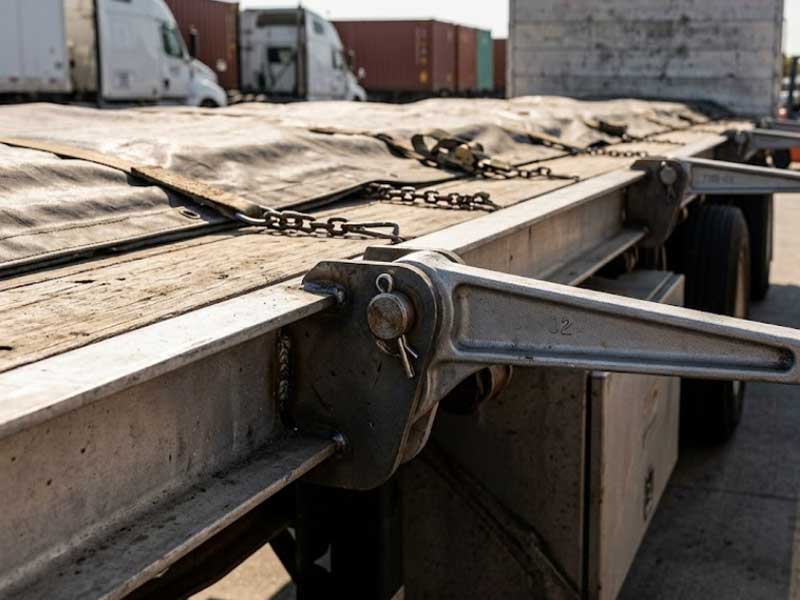
A forged steel outrigger is a high-strength load-bearing structural component widely applied in construction machinery, lifting equipment, trailer stabilization, and marine engineering.
Different from cast and welded outriggers, it adopts professional steel forging technology to optimize the internal metal grain structure, featuring outstanding toughness, fatigue resistance, and pressure resistance. As a core safety component for equipment stabilization, it directly determines the operational safety and load capacity of engineering machinery.
This article comprehensively introduces its product types, forging craftsmanship, manufacturing flow, market sales characteristics, and key B2B procurement standards, providing professional reference for industrial buyers, equipment manufacturers, and engineering practitioners.
1. Core Classification of Forged Steel Outriggers
Forged steel outriggers are classified by structural form, functional scenario, and forging process, with four mainstream types dominating the industrial market. Each type has exclusive application scenarios and mechanical performance advantages, adapting to different load and working environment requirements.
|
Outrigger Type
|
Structural Features
|
Load Capacity
|
Typical Application Scenarios
|
|---|---|---|---|
|
Fixed Forged Steel Outrigger
|
Integral one-piece forging, fixed mounting structure, no telescopic function, simple and sturdy
|
2-8 tons
|
Small trailers, light-duty engineering vehicles, fixed cargo support equipment
|
|
Telescopic Forged Steel Outrigger
|
Multi-section forged sleeve structure, manual/hydraulic telescopic adjustment, flexible stroke control
|
5-20 tons
|
Crane trucks, aerial work platforms, medium-sized construction machinery
|
|
Swing Forged Steel Outrigger
|
90° rotatable forging structure with multi-position locking device, flexible angle adjustment
|
3-12 tons
|
Mobile engineering equipment, temporary construction support, logistics cargo stabilization
|
|
Heavy-Duty Forged Steel Outrigger
|
Thickened integral closed-die forging, reinforced base and connecting parts, high structural rigidity
|
20-50 tons
|
Large cranes, port handling equipment, marine engineering machinery
|
2. Professional Forging & Manufacturing Process
The superior performance of forged steel outriggers stems from standardized forging and precision manufacturing processes. Compared with casting parts, forging eliminates internal porosity, shrinkage cavities, and crack defects, realizing continuous and compact metal grain distribution, which greatly improves structural stability and service life.
The mainstream industrial processes are divided into three core forging methods, with complete standardized manufacturing procedures.
2.1 Mainstream Forging Process Types
Different forging processes match different product specifications and production batches, balancing precision, strength and production efficiency:
Process 1: Closed-Die Forging (Impression-Die Forging)
The most widely used process for standard outriggers. Heated steel billets are extruded and formed through precise mold cavities, featuring high dimensional accuracy, uniform wall thickness, and stable product consistency. It is suitable for mass production of standard telescopic and swing outriggers with strict tolerance requirements .
Process 2: Open-Die Forging
Adopts flat dies for free forging, applicable to heavy-duty and customized special-shaped outriggers. It allows flexible size adjustment, optimizes internal grain flow lines, and maximizes the mechanical strength of thickened structural parts, meeting the ultra-high load demand of large engineering equipment .
Process 3: Press Forging
Forms steel through continuous and stable mechanical pressure, with uniform material deformation and low internal stress. It is mostly used for medium-sized standard outriggers, effectively reducing product deformation and improving assembly accuracy .
2.2 Complete Manufacturing Workflow
The production of forged steel outriggers follows a strict closed-loop quality control process from raw material inspection to finished product delivery, ensuring full product reliability:
Step 1: Raw Material Inspection & Cutting
Select high-quality carbon steel or alloy steel billets, verify material certificates and chemical composition, and cut raw materials accurately according to product specifications to avoid material waste and performance deviation .
Step 2: Constant Temperature Heating
Heat the steel billet in a professional heating furnace, strictly control furnace temperature, heating rate and holding time according to process standards to ensure uniform material ductility and avoid overheating or underheating defects .
Step 3: Precision Forging Forming
Complete preliminary shaping, upsetting and final forming through matching forging equipment, optimize metal grain structure, and eliminate internal material defects .
Step 4: Heat Treatment
Conduct quenching and tempering treatment on forged blanks to balance product hardness and toughness, reduce internal forging stress, and improve fatigue resistance and impact resistance .
Step 5: Finishing & Machining
Perform precision turning, milling and drilling on forged parts to ensure assembly dimensional accuracy, followed by surface polishing and deburring.
Step 6: Surface Anti-Corrosion Treatment
Adopt galvanizing, paint spraying or oxidation resistance treatment to adapt to outdoor, humid and corrosive working environments and extend service life.
Step 7: Quality Testing & Delivery
Conduct load test, dimensional inspection, flaw detection and fatigue test on finished products, and deliver after meeting industrial standards.
3. Market Sales Characteristics & Application Demand
Forged steel outriggers belong to industrial mechanical accessories, mainly facing B2B market demand, with stable market scale and strong industry specificity. Its sales market and customer groups have obvious industrial attributes, different from civilian consumer goods.
3.1 Core Sales Channels
Direct Factory Sales: Mainstream sales mode for large-scale manufacturers, directly supplying complete machinery factories, engineering equipment enterprises, and large leasing companies, supporting customized size and process requirements, with stable long-term order cooperation.
Industrial Distributor Agency: Cover regional small and medium-sized equipment maintenance factories and engineering teams, focusing on standard spot products, meeting urgent spare parts replacement demand.
Cross-Border E-Commerce Sales: Mainly export standard forged steel outriggers, serving global engineering machinery supporting markets, with standardized packaging and unified quality inspection standards .
3.2 Market Demand Characteristics
The market demand is mainly driven by infrastructure construction, engineering equipment renewal, and mechanical maintenance. Forged products replace cast outriggers year by year due to higher safety and longer service life. Standard products are in large demand with fast delivery, while customized heavy-duty products have high unit value and high technical threshold. The core market competition focuses on forging quality, load stability and after-sales service.
4. Key B2B Procurement Considerations (Core Guide for Enterprise Buyers)
Forged steel outriggers are safety-related load-bearing components, and B-end procurement needs to focus on performance, quality certification, process standardization and matching degree to avoid safety hazards and economic losses caused by unqualified products. The key procurement inspection indicators are sorted as follows:
|
Procurement Inspection Dimension
|
Key Judgment Standards & Requirements
|
|---|---|
|
Material Qualification Verification
|
Require suppliers to provide official steel material certificates, chemical composition test reports and mechanical performance parameters; confirm the use of high-quality carbon steel/alloy steel, reject recycled inferior raw materials .
|
|
Forging Process Confirmation
|
Priority to closed-die/press forged products for standard models; heavy-duty models must adopt open-die integral forging, no split welding or secondary repair welding, to ensure overall structural strength.
|
|
Load & Safety Performance
|
Verify rated load, ultimate bearing capacity and fatigue test data; the actual bearing capacity must be 1.2-1.5 times the equipment design load to reserve safety margin .
|
|
Dimensional & Assembly Accuracy
|
Check product tolerance, flatness and hole position accuracy; ensure perfect matching with supporting equipment, no jamming or loose assembly.
|
|
Heat Treatment & Surface Quality
|
Confirm complete quenching and tempering process, no internal residual stress; surface anti-corrosion layer is uniform and free of peeling, cracks, and rust spots.
|
|
Certification & After-Sales Service
|
Priority to suppliers with ISO industrial certification and product quality inspection reports; confirm warranty period, after-sales maintenance and customized processing support.
|
5. Summary
Forged steel outriggers are indispensable high-strength safety components in the engineering machinery industry. Its unique forging process endows the product with far better mechanical performance than casting and welding products. With multiple types covering light, medium and heavy load scenarios, it has stable market demand and wide application fields. For B2B buyers, standardized process verification, strict material inspection and performance parameter matching are the core of high-quality procurement. Choosing formal forging manufacturers with complete qualifications and standardized processes can effectively ensure equipment operation safety and reduce long-term maintenance costs.