


How should construction machinery bucket teeth be stored for the long term?
Bucket teeth are high-wear manganese steel castings that endure extreme impact and friction during operation.
For construction equipment parked idle for months or seasonal shutdowns, improper storage easily causes rust adhesion, stress cracks, pin seizure, fitting clearance failure and material embrittlement. These hidden damages lead to premature breakage, difficult installation and reduced service life after re-operation.
As a professional manufacturer of high-strength construction wear parts,TrueCast Engineering summarizes standardized long-term storage and maintenance specifications for bucket teeth, helping global clients maximize part durability and cut replacement costs.
1. Core Risks of Improper Long-Term Parking
Most bucket tooth failures after long idle periods are not caused by working wear, but by static storage damage:
- – Corrosion & Pin Seizure: Residual mud and moisture trigger internal rust on fitting surfaces and pin holes, resulting in stuck pins and unremovable teeth.
- – Static Stress Cracks: Long-term ground extrusion on tooth tips produces invisible micro-cracks, which expand rapidly under working impact.
- – Fitting Gap Failure: Rust accumulation enlarges the gap between teeth and adapters, causing eccentric stress and easy tooth fracture.
- – Collision & Deformation: Random stacking causes chipped tooth tips and deformed mating surfaces.
2. Standard Long-Term Maintenance Solutions
2.1. Dismounted Storage (Recommended for Idle Over 3 Months)
Complete disassembly is the most reliable way to protect bucket teeth during long-term storage.
- – Thorough Cleaning: Remove all mud, sand, and old rust from tooth inner cavities, mating slopes and pin holes with steel brushes and air compressors. Residual grit will cause cracking during reinstallation impact.
- – Inspection & Screening: Check for micro-cracks, edge chipping and deformation. Teeth with tiny cracks are not suitable for long-term storage, as cracks will expand with temperature and humidity changes.
- – Professional Anti-Rust Treatment: Coat thick anti-rust grease on pin holes and adapter mating surfaces (key anti-rust areas). Spray a thin removable anti-rust film on outer working surfaces. Do not apply thick paint on fitting surfaces, as hardened paint will block assembly.
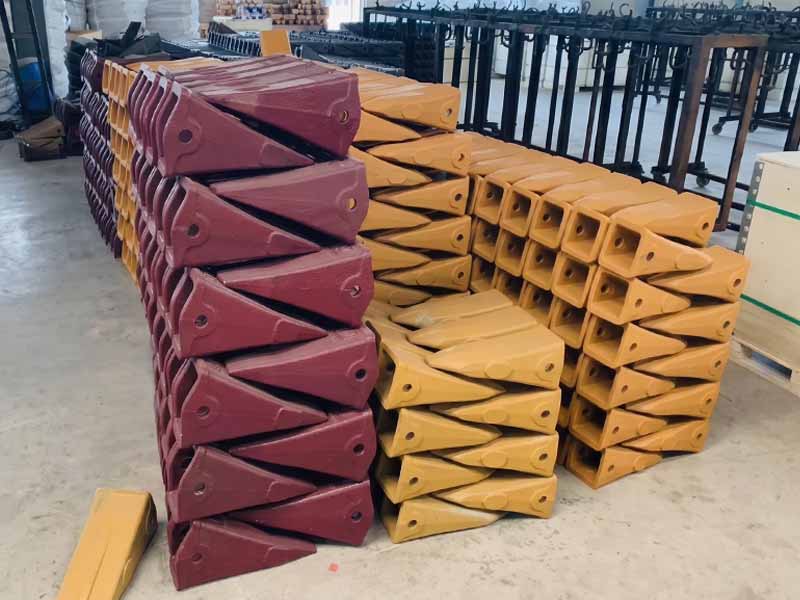
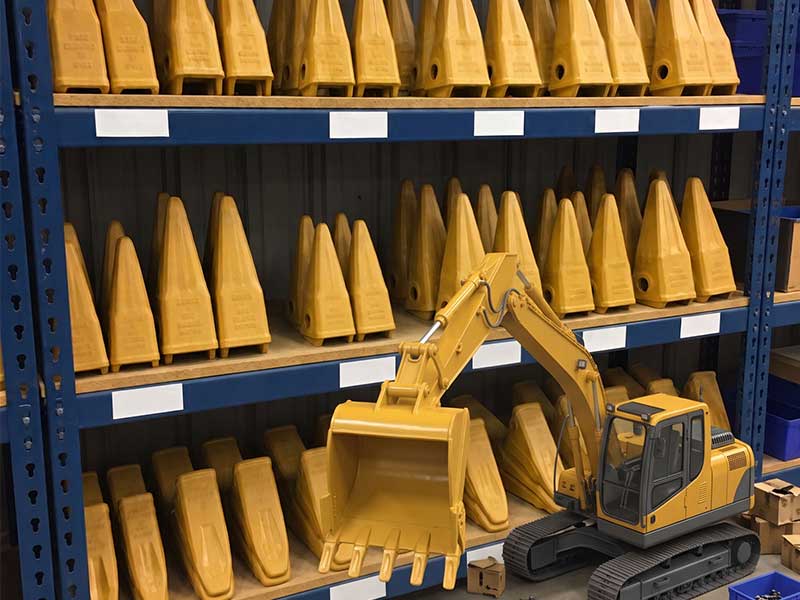
- – Standard Stacking: Place teeth on wooden pallets or metal brackets to isolate ground moisture, avoid direct ground contact. Pad soft materials on tooth tips to prevent collision damage; store pins and locks separately after anti-rust lubrication.
- – Environment Requirements: Priority for indoor dry warehouse storage. For outdoor storage, cover with waterproof tarpaulins and avoid low-lying waterlogged areas.
2.2. On-Machine Storage (Suitable for 1–3 Months Idle)
If disassembly is unavailable, follow standardized on-machine protection to reduce damage:
- – Place the bucket flat on the ground with tooth tips suspended, eliminating long-term static extrusion stress.
- – Flush and dry all mud and water inside bucket gaps completely to cut off rust sources.
- – Spray penetrating anti-rust oil on pin gaps to prevent pin hole rust and seizure.
- – Cover the bucket to avoid long-term sun exposure and rain erosion.
2.3. Regular Inspection During Storage
– Indoor Storage:
Inspect anti-rust coating every 3 months; polish and re-coat for rust spots.
– Outdoor Storage:
Check every 1–2 months, drain tarpaulin condensed water in time to avoid damp corrosion.
2.4. Pre-Operation Inspection Before Reuse
- – Wipe off anti-rust grease and conduct full visual & percussion inspection, focusing on root stress areas for new cracks.
- – Check the fitting gap between teeth and adapters; replace parts with excessive rust gaps to avoid impact fracture.
- – Renew rusted or deformed pins and lock pieces completely to prevent tooth falling off during operation.
3. Common Maintenance Mistakes to Avoid
- – ❌ Stacking teeth directly on muddy ground, causing continuous moisture corrosion.
- – ❌ Painting thick paint on inner mating surfaces, resulting in assembly jamming.
- – ❌ Leaving tooth tips pressed on the ground for months, inducing static stress cracks.
- – ❌ Retaining old rusted pins and locks, leading to tooth falling risk.
4. FAQ | Frequently Asked Questions
Q1: Is it necessary to remove bucket teeth for 2-month equipment shutdown?
A1: For 1–3 months of idle time, on-machine standardized protection is acceptable. Thorough cleaning, anti-rust oil spraying and suspended placement are required. For shutdowns over 3 months, dismounted storage is strongly recommended for full protection.
Q2: Why do stored bucket teeth crack even without working?
A2: Bucket teeth are made of high-manganese cast steel, sensitive to static stress and humid chloride environments (rain, saline soil). Long-term ground pressure and damp corrosion will expand micro-cracks, causing failure before use.
Q3: Can ordinary engine oil replace professional anti-rust grease for storage?
A3: No. Ordinary engine oil will drain and fail quickly under wind, rain and temperature changes. Only special anti-rust grease and removable anti-rust film can provide long-term effective protection for mating surfaces.
Q4: How to deal with slight rust on bucket teeth after long storage?
A4: Polish surface rust with a fine steel wire brush; do not grind the mating fitting surface. Re-apply anti-rust lubricant, and check for hidden cracks by percussion before reinstallation.
Q5: How long is the service life of properly stored spare bucket teeth?
A5: With dry indoor storage and regular anti-rust maintenance, bucket teeth can be stored for 2–3 years without performance degradation, maintaining original hardness and impact resistance.
Conclusion
Long-term bucket tooth maintenance focuses on moisture isolation, stress relief and anti-rust protection. Standard storage maintenance effectively avoids invalid damage, reduces replacement frequency and lowers overall equipment operation costs.
TrueCast Engineering adheres to strict casting and heat treatment standards for all bucket teeth. We provide high-durability wear parts and professional technical maintenance guidance for global construction machinery clients. Contact Us for More Info.