


How to Identify High-Quality Plough Points & When Should You Replace Your Plough Points?
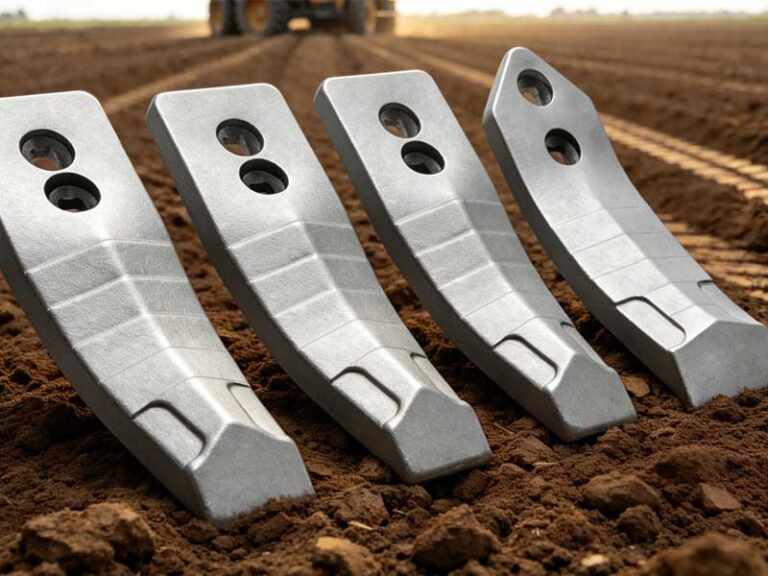
High-quality plough points directly decide tillage consistency, fuel consumption, and long-term operating costs for farms, contractors, and agricultural machinery distributors.
This guide breaks down practical inspection methods, material benchmarks, and clear replacement rules built on our casting factory field data and feedback from North American, Australian, and European tillage operators.
How to Identify High-Quality Plough Points
Buyers often judge plough points only by price, but surface paint and simple shape hide critical casting and heat-treatment defects.
A reliable plough point balances surface hardness for abrasion resistance and core toughness to survive rock impact — a balance that cheap cast or stamped parts rarely achieve. We use four practical evaluation layers: material certification, casting surface inspection, mechanical property testing, and fit tolerance verification.
1. Verify Base Material & Heat Treatment
Material selection is the foundation of performance. Most budget plough points use ordinary cast steel with minimal quenching, while premium plough point castings rely on boron steel, 42CrMo alloy, or manganese cast grades with controlled heat treatment.
| Material Grade | Typical Hardness (HRC) | Tensile Strength | Best Soil Application |
|---|---|---|---|
| 30MnB5 Boron Cast Steel | 45–52 | 1550–1700 MPa | Sandy loam, moderate rocky fields, general commercial tillage |
| 42CrMo Alloy Casting | 42–48 | 1400–1600 MPa | Heavy clay, stony ground, deep tillage over 25 cm |
| High Manganese Cast Steel | 38–44 (work-hardening) | 1100–1300 MPa | Highly rocky, impact-heavy pasture and stony farmland |
When reviewing supplier samples, always request material certificates and batch hardness reports. A common red flag is a plough point that is fully hard through the section: high surface HRC without a softer, tough core means the casting will chip or crack on impact, even if it looks sharp on arrival.
2. Inspect Casting Geometry, Edges and Surface Defects
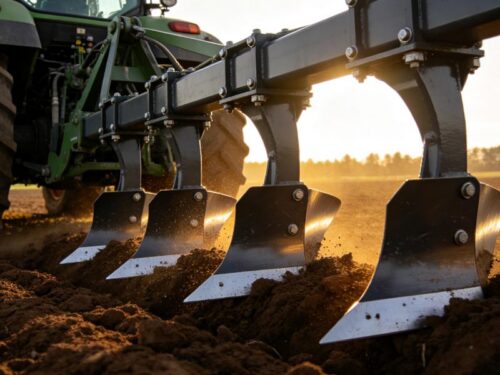
Even excellent material fails if casting gating, machining, and edge profiling are poorly controlled. Quality plough point castings feature a gradual self-sharpening edge profile, consistent section thickness, clean bolt holes, and smooth transition curves without sharp internal corners that concentrate stress.
Check for these warning signs:
- – Visible shrinkage cavities, sand inclusions, or cold lines on the working face; these casting defects expand rapidly under cyclic soil loading
- – Uneven edge thickness or lopsided tip geometry, which creates side pull, increases tractor load, and accelerates uneven wear
- – Rough, un-machined mounting bosses or misaligned bolt holes, forcing field re-drilling and loose fit during operation
- – Overly thin tip sections that sacrifice structural integrity for initial sharpness
At TrueCast Engineering, our casting patterns are CNC-machined, and critical mating surfaces are finish-machined after heat treatment to hold tolerance within 0.5 mm for most standard plough point models. This precision fit reduces vibration and distributes wear evenly across the casting.
3. Compare Field Wear Performance Benchmarks
Lab hardness only tells part of the story; real service life varies dramatically by soil.
Industry field data shows that standard stamped low-carbon plough points often wear through within 80–120 hectares in high-sand fields, while properly heat-treated cast boron steel plough points from our production batches regularly deliver 180–280 hectares before reaching replacement criteria under identical soil conditions.
| Soil Type | Average Service Life – Budget Plough Points | Average Service Life – Premium Cast Plough Points (30MnB5) |
|---|---|---|
| Loamy, low abrasive | 160–220 ha | 320–420 ha |
| Sandy loam / moderate silica | 80–120 ha | 180–280 ha |
| Stony, heavy clay | 40–70 ha | 90–150 ha |
Results assume consistent working depth, similar tractor speed, and no major rock strikes.
This table is especially useful for procurement teams calculating total cost of ownership. A slightly higher upfront price for cast plough points often cuts annual part spend and downtime significantly, because fewer field stops are needed for swapping tips.
4. Confirm Inspection & Compliance
Serious casting suppliers document non-destructive testing.
For high-volume OEM orders, we offer MT (magnetic particle inspection) and UT (ultrasonic testing) sampling to detect internal casting flaws that visual checks cannot catch.
Ask whether your supplier can provide traceability: heat numbers, batch test logs, and compatibility verification for popular plough brands including Lemken, Kuhn, Kverneland, and Amazone.
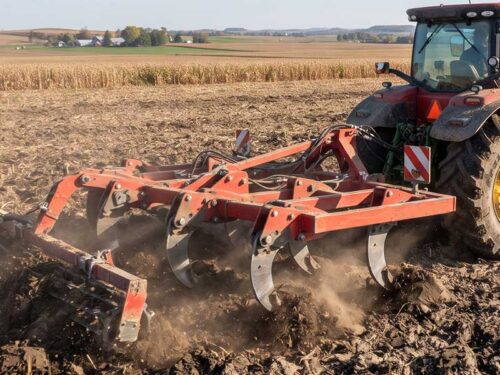
When Should You Replace Your Plough Points?
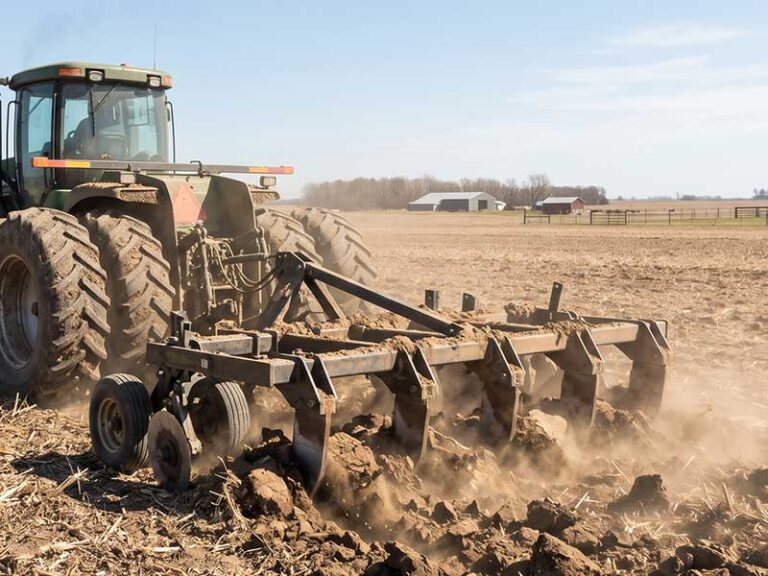
Knowing when to replace plough points protects your plough body, reduces fuel use, and maintains consistent inversion and residue burial.
Many operators wait until the tip is completely worn away, but performance loss starts long before total failure.
We split replacement guidance into visual triggers, measurement thresholds, and cost-based scheduling.
1. Key Visual & Operational Warning Signs
Replace immediately if you observe any of the following:
- – The cutting tip has lost its original profile and becomes rounded or blunt; penetration force rises sharply, and the plough rides upward instead of holding depth
- – One side wears faster than the other, creating crooked furrows and side loading on the plough beam
- – Chipping, cracking, or spalling along the working edge — once a crack appears in a cast plough point, it will propagate rapidly with vibration
- – Bolt hole elongation or deformation; loose mounting can shear fasteners and damage the plough leg
Even without obvious cracks, worn plough points increase draft pull. Independent tillage testing confirms that heavily worn points can raise fuel consumption by 12–20% while leaving cloddy, poorly inverted soil that hurts germination rates and weed control.
2. Measured Replacement Thresholds
For repeatable maintenance scheduling, we recommend setting clear dimensional limits rather than relying only on visual judgement. Our factory’s service guideline table is widely adopted by our bulk buyers for their in-house maintenance checklists.
| Wear Measurement | Action Recommendation | Notes |
|---|---|---|
| Tip length loss < 15% | Continue use; inspect at next field stop | Monitor for uneven wear |
| Tip length loss 15–25% | Schedule replacement before next heavy tillage run | Fuel draw begins to climb noticeably |
| Tip length loss >25% / edge crack visible | Replace immediately | Risk of plough leg damage and unstable depth control |
Wear measurement thresholds for cast plough points, shared with our agricultural machinery OEM and distribution clients. Measure from original tip reference line on unused identical parts.
For reversible plough points, remember both sides wear. If one face is worn past the threshold, flipping will only give limited extra life; plan for a spare set before the planting season rush.
3. Planned Replacement vs Emergency Swap
Seasonal planning is one of the biggest advantages for dealers and large farming operations.
If your region runs spring and autumn ploughing cycles, we recommend holding safety stock of plough point castings before peak tillage windows. Emergency orders often carry higher freight costs and longer lead times, while scheduled bulk sourcing from a dedicated casting supplier locks in pricing and guarantees consistent batch quality.
If you operate across mixed soil zones, separate your stock: keep boron cast plough points for sandy and stony fields, and use standard cast variants for mild loam to optimise cost without sacrificing uptime.
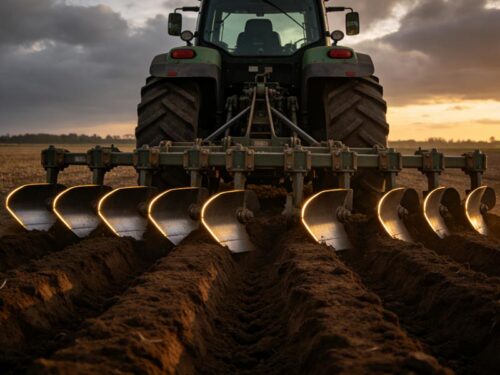
Why Source Plough Point Castings Directly from a Specialised Casting Manufacturer
As a manufacturer focused on agricultural casting parts, TrueCast Engineering designs and produces plough point castings from pattern making through heat treatment and final inspection, rather than acting only as a middleman. This gives our OEM and wholesale customers three core advantages.
- First, we control the casting process, quenching parameters, and inspection workflow. Many generic trading companies outsource casting and heat treatment separately, leading to inconsistent hardness and high reject rates once parts reach the field.
- Second, we support full OEM customisation: new patterns based on customer drawings, modified hole layouts, special alloy grades, and custom surface coatings for distributors building their own private-label tillage parts line.
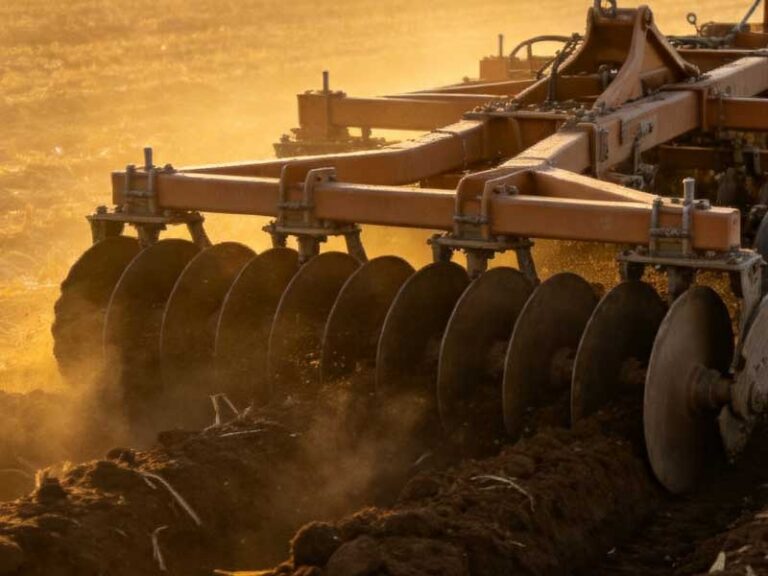
- Third, we offer consolidated shipments of matched tillage wear parts, including disc harrow components, cultivator sweeps, and share assemblies, alongside our plough point castings.
We regularly receive requests from buyers who previously sourced low-cost plough points only to face high warranty claims and unhappy end users. A good casting partner does not merely supply a part; they supply predictable performance, batch traceability, and technical support for selecting the right plough point casting for each soil and plough model.
If you are looking for a reliable supplier of cast plough points and other precision agricultural casting parts, reach out to TrueCast Engineering for sample testing, custom casting drawings, and bulk pricing. Our engineering team can match existing part numbers or co-develop new plough point castings optimised for your target soil markets.