


Bolt‑on Reversible Cutting Edges: Material Performance & Wear Resistance by Working Condition
1. Introduction
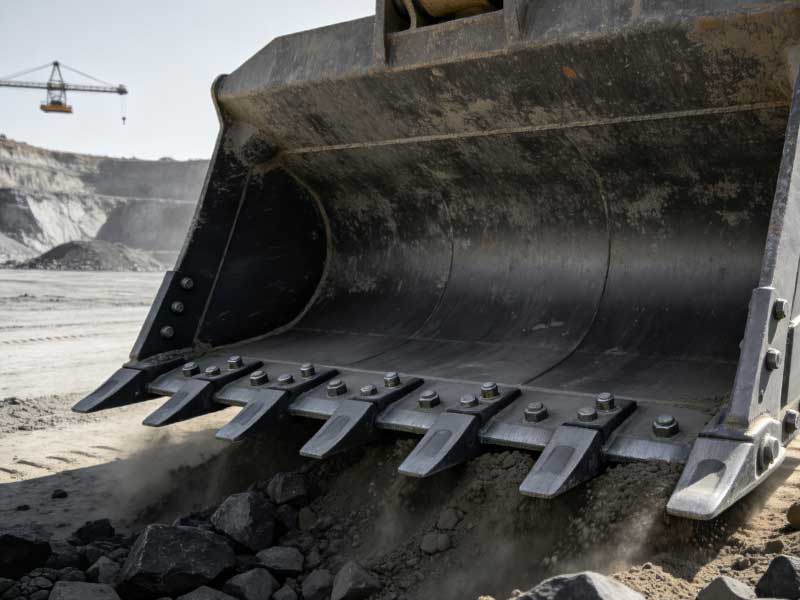
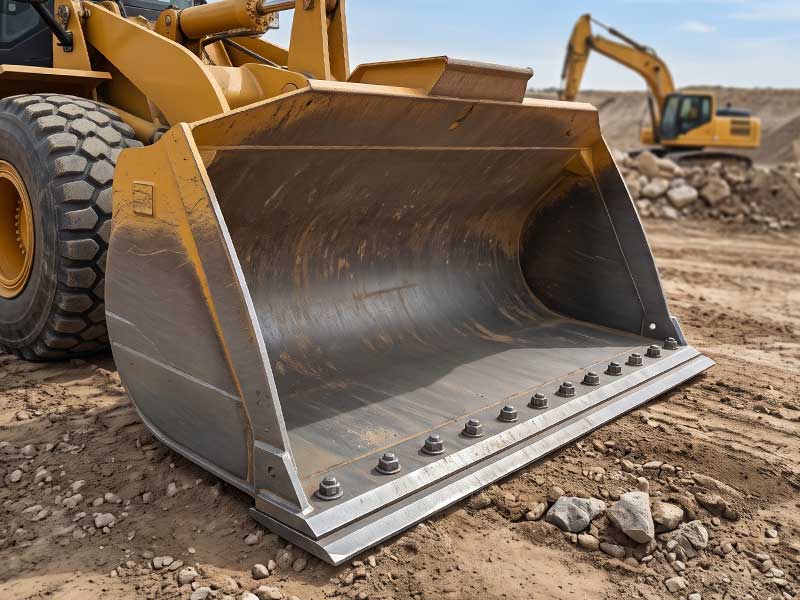
Bolt‑on reversible cutting edges are critical sacrificial wear parts for excavator buckets, loaders, bulldozers, and motor graders. While products may feature identical dimensions, bevel geometry, and precision CNC counterbore machining, their base material grade fundamentally determines service life, anti‑bending stability, anti‑chipping performance, and true reversible usability on job sites.
For B2B distributors, fleet managers, and procurement specialists, the biggest driver of premature failure is not manufacturing defects, but mismatched material and application. Selecting the right steel grade for your working conditions directly reduces unplanned downtime, cuts replacement frequency, and lowers total‑cost‑of‑ownership (TCO) for heavy machinery fleets.
2. Industry Market Insight: Why Cutting Edges Fail Early
Latest GET aftermarket failure statistics reveal a critical industry pain point:
- – Around 46% of premature reversible cutting edge failures result from incorrect material selection, not production flaws.
- – High‑carbon steel dominates 36% of low‑to‑medium‑duty aftermarket sales, ideal for soft‑soil, low‑impact operations.
- – Quenched & tempered boron steel holds 51% market share in heavy‑duty quarry and rock‑excavation segments, thanks to its balanced hardness and toughness.
A professional excavator parts supplier does not only offer low‑priced products but provides targeted material matching consulting to fit real job site conditions.
3. Steel Performance Comparison Across 5 Typical Working Conditions
The following table systematically compares high‑carbon steel (HRC 34‑42) and quenched & tempered boron steel (HRC 44‑52) in mainstream construction scenarios, with clear material selection recommendations for fleet procurement.
|
Working Condition
|
Site Characteristics
|
High‑Carbon Steel (HRC 34‑42) Performance
|
Boron Steel (HRC 44‑52) Performance
|
Recommended Material
|
|---|---|---|---|---|
|
Light‑duty loam earth‑moving
|
Soft soil, minimal stones, low impact, landscaping, site grading
|
Acceptable wear resistance, rare chipping, service life meets standard requirements, low procurement cost
|
Over‑qualified with excellent performance but higher unit cost
|
High‑Carbon Steel
|
|
Mixed soil & scattered gravel
|
Loam mixed with small gravel, occasional light impact, municipal excavation
|
Moderate wear speed; prone to bending under occasional heavy impact; reversible function works normally in most cases
|
Superior wear resistance and anti‑deformation ability, with a significantly extended service cycle
|
Boron Steel (preferred for high‑hour fleets)
|
|
Gravel & cobblestone excavation
|
Large gravel volume, frequent abrasive friction, medium impact load
|
Fast abrasive wear, local bending risk, edge chipping when striking cobblestones; flipped side wears rapidly
|
Balanced hardness and toughness, slow and uniform wear, low chipping risk, fully realizes double‑side reversible value
|
Boron Steel
|
|
Quarry & hard rock digging
|
Hard rock, severe shock impact, high abrasive load
|
Severe edge chipping, plate bending, extremely short service life; permanent deformation common after impact
|
Strong heavy impact resistance, gradual abrasive wear, only tiny chipping under extreme rock strikes, long overall service life
|
Boron Steel
|
|
Frozen ground excavation
|
Hard frozen soil, cyclic repeated impact load
|
Brittle bevel chipping easily; plate bends frequently under cyclic shock
|
Excellent low‑temperature toughness, resists cyclic impact, stable double‑side service performance
|
Boron Steel
|
4. Core Material Performance Differences: High‑Carbon Steel vs Boron Steel
The performance gap between the two steel grades stems from chemical composition, cross‑section metallurgical structure, and heat‑treatment processes, rather than surface hardness alone. Below are the four key functional differences that determine field service results.
4.1. Abrasive Wear Resistance & Reversible Service Life
Abrasive wear is caused by continuous friction with soil, sand, gravel, and rock particles, and is the main factor cutting short cutting edge service life.
High‑carbon steel only forms a thin hardened surface layer. Under medium and high‑abrasion conditions, the shallow hardened layer wears away quickly, exposing the soft ferrite‑rich core. Once the soft core is exposed, material loss accelerates sharply. After 180° flipping, the unhardened reverse bevel wears out rapidly, making the theoretical double‑life reversible design ineffective. It only delivers stable performance in soft‑soil, low‑abrasion scenarios.
Quenched & tempered boron steel achieves full‑plate through‑hardening with uniform martensite microstructure across the entire plate section. Both upper and lower bevels maintain consistent high hardness (HRC 44‑52). Wear proceeds slowly and evenly, and the flipped second bevel delivers the same anti‑abrasion performance as the first side, fully unlocking the dual‑service‑life advantage of reversible cutting edges.
4.2. Impact Resistance & Anti‑Chipping Performance
Sudden impact from boulders, hard rock, and frozen ground is the main cause of edge chipping and plate scrapping.
High‑carbon steel has poor hardenability, resulting in a soft inner core even with a hard surface. Under heavy impact, the cutting bevel is prone to large‑area chipping, and the whole plate suffers permanent bending deformation. Deformed plates distort counterbore hole positions, causing shear force on plow bolts, which leads to bolt loosening, breakage, and secondary bucket lip damage.
Trace boron elements in boron steel greatly improve steel hardenability, forming a hard surface and tough core integrated microstructure. This structure effectively absorbs impact energy, avoiding sudden catastrophic chipping or bending. Even in harsh quarry environments, damage develops gradually instead of instant failure, improving operational safety and stability.
4.3. Anti‑Deformation & Machined Hole Stability
Precision CNC counterbore machining is meaningless if the plate deforms during operation. Hole position accuracy directly affects the convenience of flipping and reinstalling cutting edges.
High‑carbon steel is easy to bend under impact load, causing severe distortion of counterbore holes and hole spacing. Post‑deformation plates cannot be smoothly rotated or reinstalled, completely losing the core value of reversible design.
Boron steel maintains excellent plate flatness under long‑term load and heavy impact. It retains counterbore coaxiality and standard hole spacing tolerance after thousands of working hours, ensuring operators can freely flip the plate 180° for secondary use as designed.
4.4. Low‑Temperature Toughness for Frozen Ground Construction
Material toughness drops sharply in low‑temperature environments, bringing higher fracture risks for winter construction.
High‑carbon steel becomes extremely brittle in freezing conditions. Strikes on frozen soil easily cause bevel chipping and local fracture, leading to frequent part replacement in winter projects.
Professionally quenched and tempered boron steel retains stable low‑temperature toughness, resists cyclic frozen ground impact, and avoids sudden brittle failure, adapting to long‑term winter and frozen ground operation.
5. Key Material Factors That Determine Wear Resistance
Surface hardness cannot represent real wear performance. Carbon content, boron alloying, cross‑section hardness, and heat treatment jointly control the service life of reversible cutting edges.
|
Influencing Factor
|
High‑Carbon Steel Performance
|
Boron Steel (Quenched & Tempered) Performance
|
Practical Site Impact
|
|---|---|---|---|
|
Carbon & Alloy Composition
|
Medium carbon content; only thin surface martensite layer, no core hardening
|
Optimized carbon + trace boron; full‑plate tempered martensite structure
|
Carbon builds hardness; boron enables through‑hardening for thick plates
|
|
Cross‑Section Hardness
|
HRC 34‑42 surface, soft ferrite core
|
Uniform HRC 44‑52 from surface to core
|
Uniform hardness ensures double‑side service life after flipping
|
|
Heat Treatment Effect
|
Poor through‑hardening, only single‑side shallow hardening
|
Stable quenching & tempering for full‑plate hardening
|
Surface‑only hardening invalidates reversible design; through‑hardening maximizes part value
|
|
Abrasion Removal Rate
|
Fast material loss under gravel and rock friction
|
Slow, uniform abrasive wear with stable material loss
|
Determines first‑side service hours and flipped edge usability
|
6. Common Procurement Pitfall: Chasing Low Unit Price Over TCO
Many buyers select low‑cost high‑carbon steel cutting edges for heavy‑duty quarry, rock, and frozen ground projects to save upfront costs, resulting in severe long‑term losses:
- – Extremely short service cycles and frequent shutdowns for replacement
- – Plate bending causes bolt shear failure and secondary damage to bucket lips
- – Failed reversible function, wasted dual‑bevel design value
- – Increased labor and maintenance costs for fleets
Professional Procurement Tip: Evaluate total operating cost instead of unit price. Although boron‑steel cutting edges have a higher initial cost, their longer service life, fewer replacements, and zero unexpected downtime bring far better economic benefits for high‑hour heavy‑duty fleets.
7. Sourcing Guidance by Application Scenario
- – Light‑duty landscaping & soft‑soil grading (low‑hour machines): High‑carbon steel bolt‑on reversible cutting edges are the most cost‑effective option with sufficient performance.
- – Municipal excavation & mixed gravel sites (medium‑hour fleets): Prioritize boron steel to reduce maintenance frequency and improve fleet efficiency.
- – Quarry, hard rock & frozen ground (heavy‑duty high‑utilization buckets): Must adopt quenched & tempered boron steel. Always request cross‑section hardness MTR reports from suppliers to avoid unqualified surface‑only hardened products.
8. Final Wear‑Related Material Inspection Checklist for Buyers
To avoid premature failure and material mismatch, verify the following indicators before bulk procurement:
- 1. Confirm the product adopts full through‑hardening, not single‑side surface induction hardening.
- 2. Check cross‑section hardness data (both surface and core) to ensure uniform hardness distribution.
- 3. Mandatorily select quenched & tempered boron steel for high‑abrasion and high‑impact working conditions.
- 4. Never judge wear resistance only by surface hardness spot checks — soft core causes hidden premature wear risks.
TrueCast Engineering supplies OEM and custom bolt‑on reversible cutting edges in high‑carbon steel and premium quenched & tempered boron steel for global heavy machinery distributors, rental companies, and fleet operators.
We provide full material test reports (MTR) including cross‑section hardness inspection, professional application matching consulting, and custom drawing optimization services. Our products deliver stable wear resistance, impact resistance, and reversible usability across all working conditions, helping clients reduce fleet operating costs and improve equipment uptime.
Contact us today for technical drawing review and customized quotation.